Mia Heller wanted to make water treatment more accessible. As a Virginia high school student, she developed a prototype that used magnetic fluid to help remove microplastics, then recovered much of that fluid for reuse.
Her reported results were striking: 95.52% microplastic removal and 87.15% ferrofluid recovery. Those figures appear in her official science-fair project abstract. They describe her experimental system’s performance, rather than a guarantee for a household product.
The work took Heller from a regional science fair to the 2025 Regeneron International Science and Engineering Fair, where she received a special award.
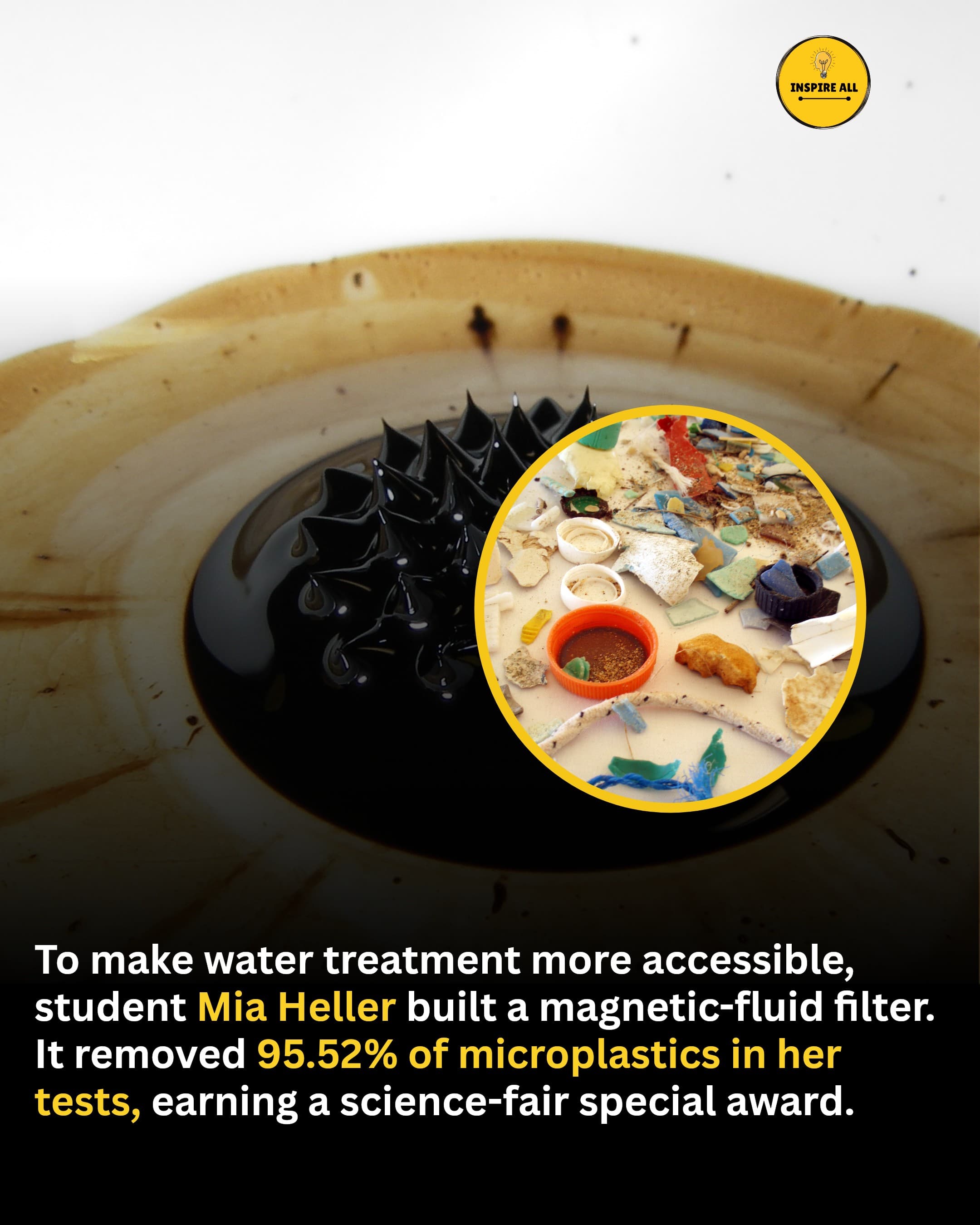
Featured photograph: Ferrofluid responding to a magnet. This is an illustrative science photograph, not Heller’s prototype. Photo: Steve Jurvetson, via Wikimedia Commons, CC BY 2.0. Original photograph used without editorial alteration.

A student project with a practical goal
Heller represented Mountain Vista Governor’s School in Warrenton, Virginia. Her project paired plastic removal with recovery of the material used to treat the water.
Before the international competition, she earned a Grand Award at the Virginia Piedmont Regional Science Fair. North Fork’s March 2025 announcement named Heller and fellow winner Micah Appiah as the students who had earned trips to the international fair in Columbus, Ohio.
That regional recognition gave a student’s water-treatment experiment a much wider audience.
How the magnetic approach worked
Heller’s abstract describes a prototype that pumped oil-based ferrofluid into water containing microplastics. The mixture then passed through a magnetic separator and a layered filter.
The system was designed to separate the plastic particles and recover the ferrofluid so it could be used again. Her reported testing included PET particles, a type of plastic.
The two percentages measure different things. The 95.52% figure concerns plastic removal. The 87.15% figure concerns recovery of the treatment fluid. Neither means that every contaminant was removed.
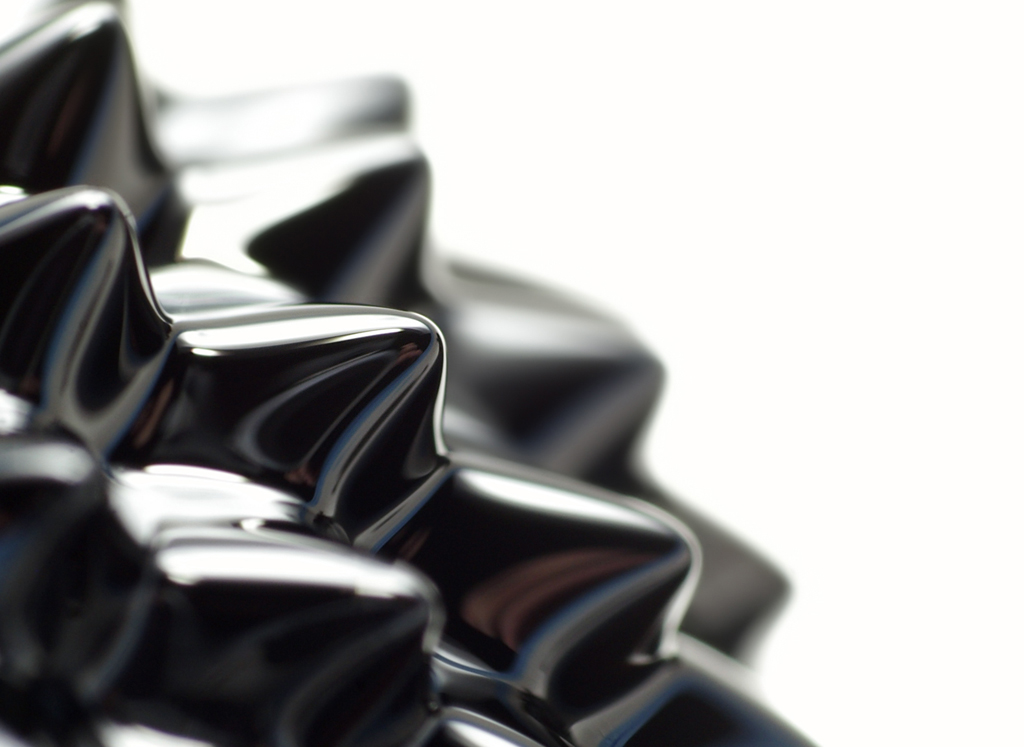
Photo: Opoterser, via Wikimedia Commons, CC BY 3.0. Original photograph used without editorial alteration.

Why tiny plastic particles matter
NOAA defines microplastics as plastic pieces smaller than five millimeters, roughly the size of a pencil eraser. Larger plastic debris can break into smaller pieces. Microbeads manufactured for some products are another source.
NOAA also emphasizes that researchers are still studying these particles and their effects. Collecting consistent data is part of understanding where the plastic goes and what happens to it.
That makes careful measurements valuable. A promising removal percentage is a starting point for more questions about which particles were captured and under what conditions.
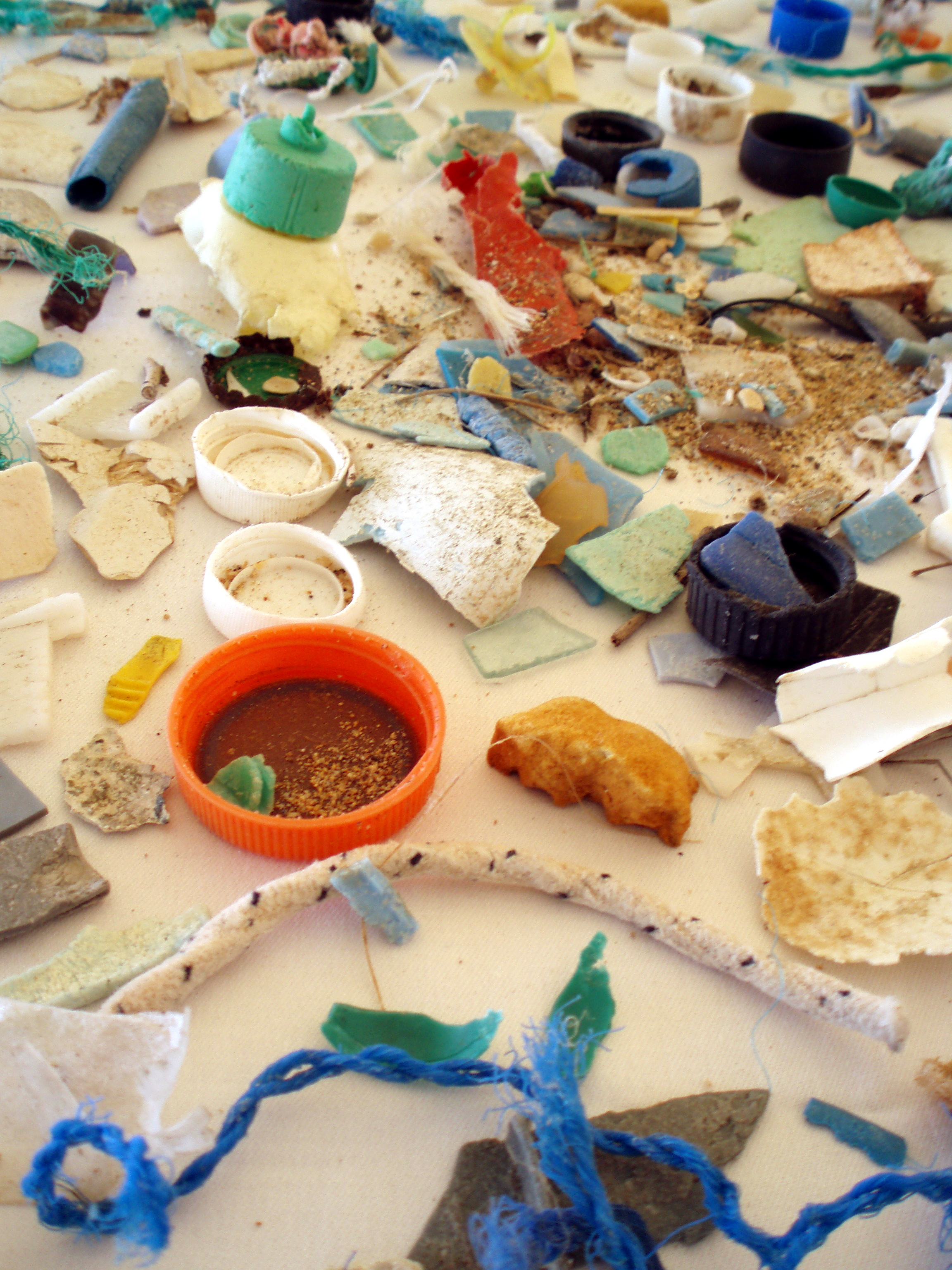
Photo: NOAA Marine Debris Program, via Wikimedia Commons, CC BY 2.0, also marked public domain as U.S. government work. Original photograph used without editorial alteration.

Recognition, with more questions ahead
The official 2025 ISEF special-awards list places Heller’s project among the recipients of a $500 Second Award from the Patent and Trademark Office Society. It was a special award, rather than the fair’s overall second prize.
The abstract alone does not establish that the output is safe to drink. Independent testing would need to examine remaining contaminants, treatment-fluid residues and performance over repeated use before drawing conclusions about a consumer drinking-water system.
Heller’s environmental interests have continued. A 2026 Our Future Is Science biography lists her as a first-year University of Virginia student studying public policy and applied statistics. It describes her research as focused on accessible, low-cost environmental solutions.
Her achievement is concrete: she developed a prototype, measured its performance and brought the work to an international science fair. The next step is the patient work of finding out how far those encouraging results can go.