A New Chapter Begins in Big Bear
Two new eaglets have officially joined the famous Big Bear bald eagle family, capturing the attention of wildlife fans across the United States.
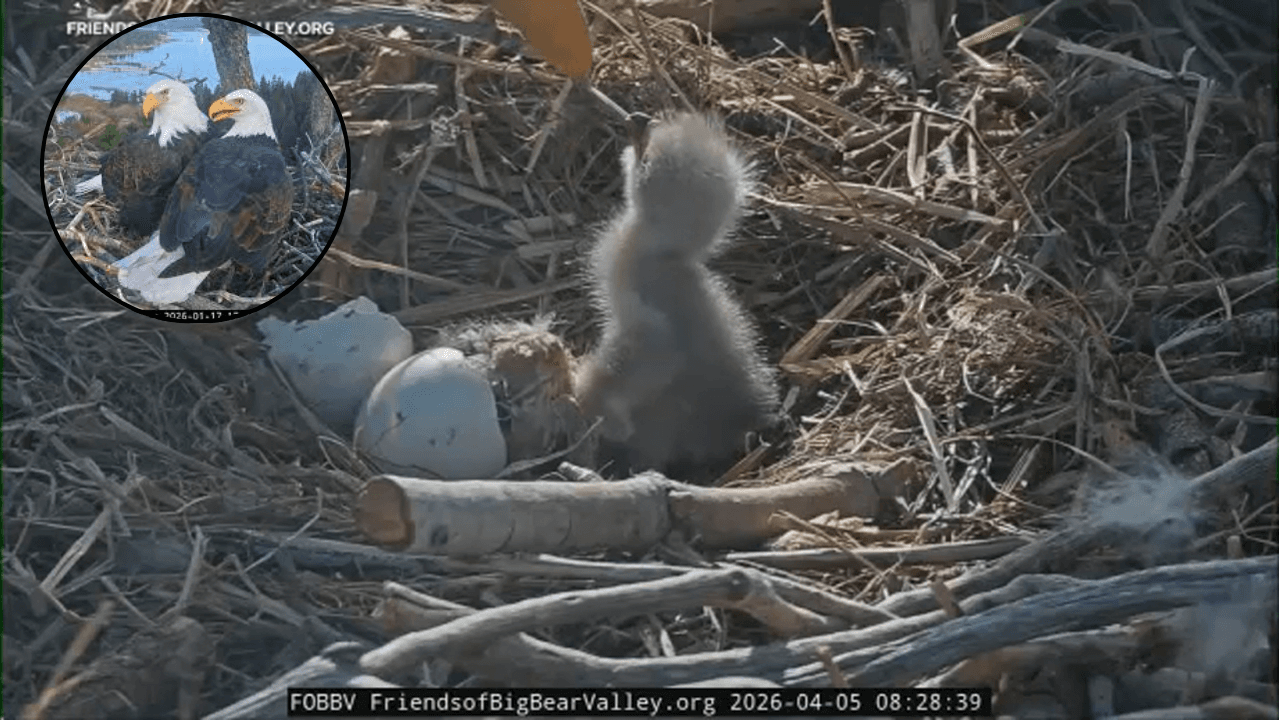
The first chick hatched late Saturday at 9:33 p.m. Pacific Time after nearly 36 hours of effort. The second eaglet followed Sunday morning, fully emerging from its shell around 8:30 a.m., according to the nonprofit Friends of Big Bear Valley.
The organization runs a 24 hour livestream of the nest in California’s San Bernardino National Forest. Viewers across the country watched the emotional moment unfold in real time.
Fragile First Moments Caught on Camera
Shortly after the second chick hatched, the first eaglet received its first successful feeding. Early feeding is a delicate process because newborn eaglets lack strong neck muscles.
This is why they are often called “bobbleheads.” Parents feed them tiny bites of fish and other prey, along with saliva that contains important nutrients and antibodies.
Footage from the livestream showed the fluffy hatchlings moving slightly as they adjusted to life outside the shell. Soon after, Shadow returned to the nest and settled beside the chicks, beginning the shared responsibility of care.
According to Reuters, bald eagle nesting behavior often involves both parents taking turns feeding and protecting their young.
A Viral Wildlife Story That Keeps Growing
Jackie and Shadow have become internet sensations in recent years. Their nest has drawn a massive online following, with thousands tuning in daily to watch their lives unfold.
Jackie laid the eggs earlier this year in January. The couple has had mixed success in previous seasons.
In 2024, all three eggs hatched, but one chick died during a harsh winter storm in March. The two surviving eaglets were later named Sunny and Gizmo.
The renewed success this year has brought excitement and relief to longtime viewers who have followed the pair’s journey closely.
Why Bald Eagles Matter in America
Bald eagles are not just viral stars. They are also a national symbol of the United States and a conservation success story.
Once endangered due to habitat loss and pesticide use, their population has rebounded significantly over the past few decades. The U.S. Fish and Wildlife Service has highlighted this recovery as one of the country’s major environmental achievements.
You can learn more about eagle conservation efforts from the U.S. Fish and Wildlife Service.
What Comes Next for the Eaglets
The next few weeks will be critical for the young birds. Wildlife watchers will continue to monitor their growth, feeding patterns, and survival.
If all goes well, the eaglets will begin developing stronger muscles and feathers before eventually preparing for their first flights in the coming months.
For now, millions remain tuned in, watching every small movement. What started as a simple nest in the forest has become a shared national moment of hope, resilience, and new life.