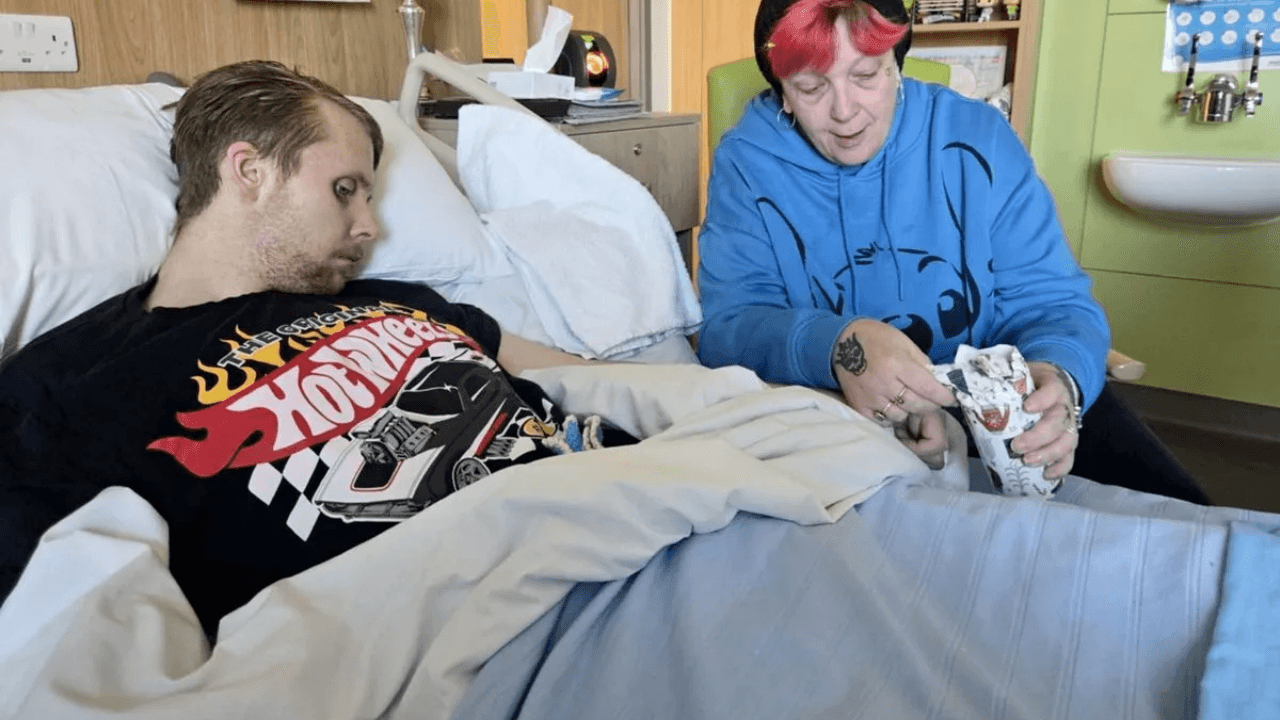
Britain’s youngest known dementia patient has died at the age of 24 after battling a rare and aggressive form of the disease.
Andre Yarham, from Dereham in Norfolk, was diagnosed with early-onset dementia just weeks before his 23rd birthday.
Doctors later told his family that scans showed Andre had the brain of a 70-year-old.
A Rare and Cruel Diagnosis
Andre was diagnosed with frontotemporal dementia, a rare type of the condition that affects behavior, speech, and movement.
According to medical experts, this form accounts for only about one in 20 dementia cases.
The illness was caused by a protein mutation and progressed at a devastating speed.
Early Signs Spotted by Family
Andre’s mother, Sam Fairbairn, said she first noticed changes in her son in 2022.
He became absent-minded and often stared blankly when spoken to.
At times, he appeared not to register what people were saying at all.
An MRI scan in 2023 confirmed the devastating diagnosis.
Rapid Decline in His Early Twenties
After his diagnosis, Andre’s condition worsened quickly.
His speech faded until he could no longer form words.
He struggled to walk, eat, and even hold a cup.
Within months, he required full-time care.
Life as a Full-Time Carer
Sam became Andre’s primary carer, helping him bathe, dress, and eat.
She described the diagnosis as a devastating blow to the entire family.
Andre became part of just 0.1 percent of people in the UK diagnosed with dementia before age 65.
Final Months and Hospitalization
In September, Andre was moved into a nursing home as his condition deteriorated.
Within a month, he went from walking independently to needing a wheelchair and hoist.
In December 2025, he was rushed to hospital with a severe infection.
Doctors later told the family he was nearing the end of life.
Andre Dies at Hospice
After three weeks in hospital, Andre was transferred to Priscilla Bacon Lodge Hospice.
He died peacefully on December 27.
He was 24 years old.
Mother Donates His Brain to Research
Sam Fairbairn described her son as a “cheeky lad” with a great sense of humor and a heart of gold.
She and her family made the decision to donate Andre’s brain to medical research.
They hope his donation will help scientists better understand dementia.
“If Andre helps just one family have more time with a loved one, that would mean the world,” she said.
Raising Awareness of Young-Onset Dementia
Sam said there is not enough awareness of how cruel dementia can be, especially in young people.
She urged families to seek medical advice if they notice unusual changes in behavior or memory.
“There are tests available. Go to your GP,” she said.
Andre’s story has become a powerful reminder that dementia does not only affect the elderly.
Through his final gift to science, his family hopes his legacy will help protect others in the future.