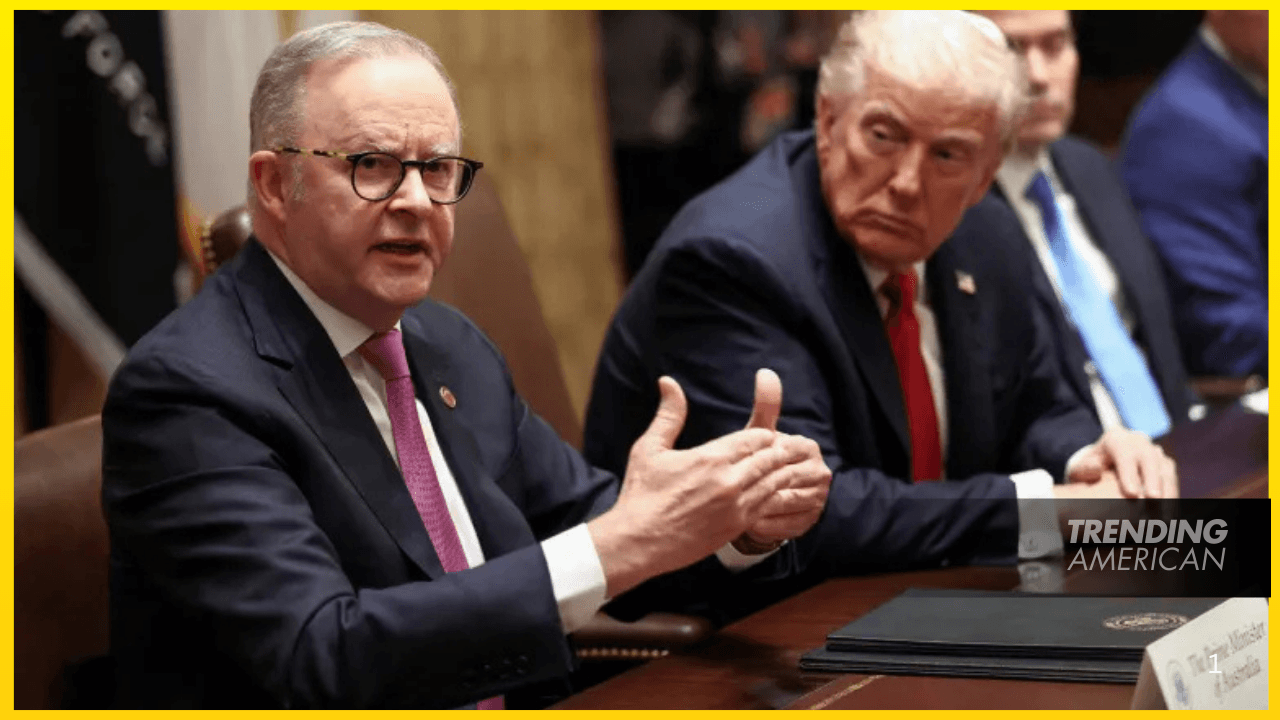
Donald Trump’s lawless presidency has become a stress test for the liberal international order that Australia has long relied upon. The US-led rules-based order has provided security guarantees and economic openness that many Australians have taken for granted. Yet as the ex-president flouts norms, disdains treaties, and treats alliances as transactional bargaining chips, Canberra must ask: at what point does loyalty to a volatile ally erode our own strategic autonomy? This question is not merely theoretical. It is playing out in the UN halls, in defence planning, and in the daily calculus of Australian policy makers.
Anthony Albanese’s recent address to the United Nations is important—emphatic in its call for defending sovereign states, rejecting aggression, and upholding international law. But as Greens Senator David Shoebridge and others remind us, words are not enough. The practical implication is that Australia should recalibrate its heavy reliance on the US and search for a more diversified, rights-based approach to global security.
Beeson notes that the world sees a ‘coalition of the unwilling’—the EU, ASEAN, Mercosur, the African Union—holding firm to cooperation among the less powerful, while a single power’s unpredictability threatens to pull everyone off balance. Australia should align with these multilateral currents rather than cling to a single security guarantor.
On the economic front, strategic independence is not a rejection of alliance but a rebalancing. Australia should deepen its capacity to shape and protect its own supply chains for critical minerals, semiconductors, and energy security. Defence policy should emphasise deterrence and resilience—investing in advanced capabilities, electronic warfare, cyber deterrence, and allied interoperability—while avoiding unnecessary entanglements in another nation’s quarrels.
Ultimately, the pivot is political as much as strategic. It requires cross-party agreement on a hedged but principled foreign policy, anchored in international law and a robust UN-centered order. It means embracing a broader multilateralism, engaging with regional players, and advocating reform of global governance structures to reflect a more inclusive, rules-based order that can endure shifts in great-power politics.
To be clear, this is not a call for retreat or isolation. It is a call for realism and responsibility: to safeguard Australian security and prosperity by reducing vulnerable dependencies, expanding diplomatic options, and committing to a rules-based system that benefits all, not just a single nation. If Australia can master that balancing act, it will preserve its standing as a middle power with influence, not merely a client of the United States, and it will contribute to a more just and stable international order.