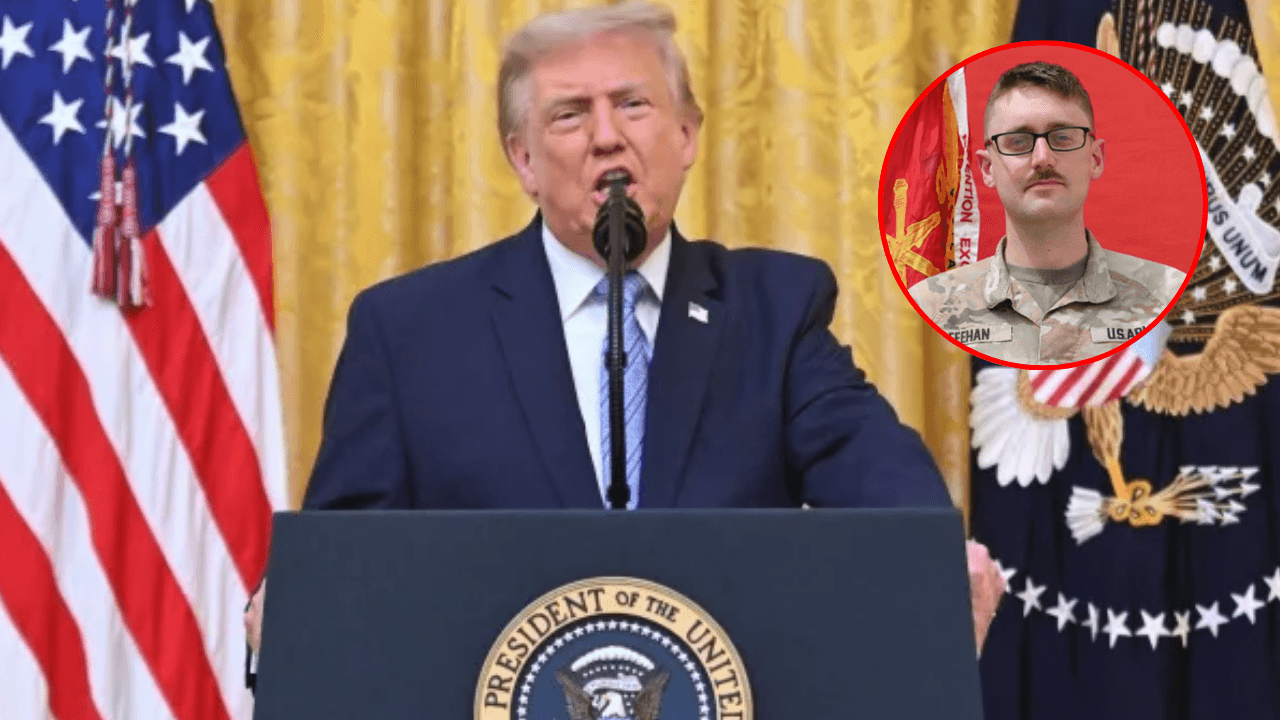
An Iran missile attack that killed two young U.S. soldiers has pushed Washington closer to a wider war.
President Donald Trump issued a sharp warning to Iran after the Pentagon identified two U.S. Army soldiers killed during a missile and drone attack on an American base in Jordan.
The soldiers were identified as Pvt. Isabella Gonzales, 19, of Carrollton, Texas, and First Lt. Tyler James Feehan, 25, of Ewa Beach, Hawaii, according to the Associated Press.
The two died after Friday’s attack on Muwaffaq Salti Air Base, east of Amman, as U.S. and partner forces defended against Iranian ballistic missiles and drones.
Trump Promises Retaliation
Trump said Iran would pay heavily for the deaths of American troops.
“Every time Iran kills an American Soldier they will pay for that killing many times over,” Trump wrote on Truth Social.
The president said his message had been passed to Secretary of War Pete Hegseth, Joint Chiefs Chairman Gen. Daniel Caine and other military leaders.
The warning came as the U.S. carried out another night of strikes against Iran and moved more military aircraft toward the region, according to U.S. officials cited by major media reports.

Two Young Soldiers Identified
Gonzales served with a missile defense command based in Ansbach, Germany. Feehan was assigned to an Army missile defense command at Fort Bragg, North Carolina.
U.S. Central Command said the soldiers were killed while defending American and partner forces from Iranian ballistic missile and drone attacks.
A third service member was initially listed as missing. CENTCOM said unidentified human remains were recovered Sunday from the strike site, and examinations are underway.
The Associated Press reported that the deaths were the first direct U.S. troop casualties from Iranian fire since the current Iran war began. Read the AP report here: Associated Press report on the U.S. soldiers killed in Jordan.
Other Troops Were Hurt
Four other U.S. service members were evacuated to hospitals in Jordan after the attack, according to U.S. officials. They were later discharged.
Another American service member died Saturday in a separate incident in northern Iraq during the controlled detonation of unexploded material from a downed Iranian one way attack drone.
A second service member suffered a minor injury in that incident and remained under medical care.
The Washington Post reported that nearly 100 U.S. troops have been injured over the last two weeks of the Iran war, with many injuries described as minor concussions. Read the report here: Washington Post report on U.S. troop injuries.
Rubio Calls the Fallen Troops Heroes
Secretary of State Marco Rubio offered condolences to the families of the fallen troops.
“These are heroes that pay the ultimate price,” Rubio told reporters Sunday.
Rubio also said Washington remains open to diplomacy with Tehran, but only if any deal is real and enforceable.
His comments showed the split inside the U.S. message. The Trump administration is promising military punishment while also leaving a diplomatic door open.
Operation Epic Fury Expands
The deaths come during Operation Epic Fury, the U.S. campaign against Iran that began on Feb. 28, 2026.
U.S. Central Command said in a March fact sheet that the operation was launched at the direction of the president. CENTCOM described the campaign as targeting Iran’s military support infrastructure, ballistic missile systems, drone systems and air defenses.
More details on the operation are available in CENTCOM’s official fact sheet here: U.S. Central Command Operation Epic Fury fact sheet.
Trump said the latest strikes were carried out in honor of the fallen troops. He also said Iran had been badly damaged militarily.
Iranian Attacks Spread Across the Region
Iran responded with attacks targeting U.S. partner nations across the Middle East.
Missile warning sirens sounded in Bahrain. Kuwait said its air defenses fired against an incoming barrage.
The United Kingdom Maritime Trade Operations center also reported that a vessel was burning in the Strait of Hormuz after being struck by a projectile near Oman.
Those attacks show how quickly the conflict can spread beyond Iran and U.S. forces. Gulf nations, shipping routes and energy markets are all now exposed to the risk of escalation.
A War With Rising Costs
The latest deaths bring new pressure on Trump as the conflict with Iran grows more dangerous.
Supporters of the strikes argue that Iran must face consequences for killing American troops. Critics warn that each retaliation can pull the United States deeper into a regional war.
For the families of Gonzales and Feehan, the debate is personal. Two young soldiers left home to serve and died while defending a base under attack.
Trump’s warning now signals that the U.S. response may grow stronger. But it also raises the question facing Washington and Tehran alike: how far will each side go before the conflict becomes impossible to contain?