Iran warning over a possible U.S. ground invasion has raised fears of a wider Middle East war.
Iran warned the United States against any ground operation targeting Kharg Island, a critical oil export hub in the Persian Gulf, as President Donald Trump weighs broader military options against Tehran.
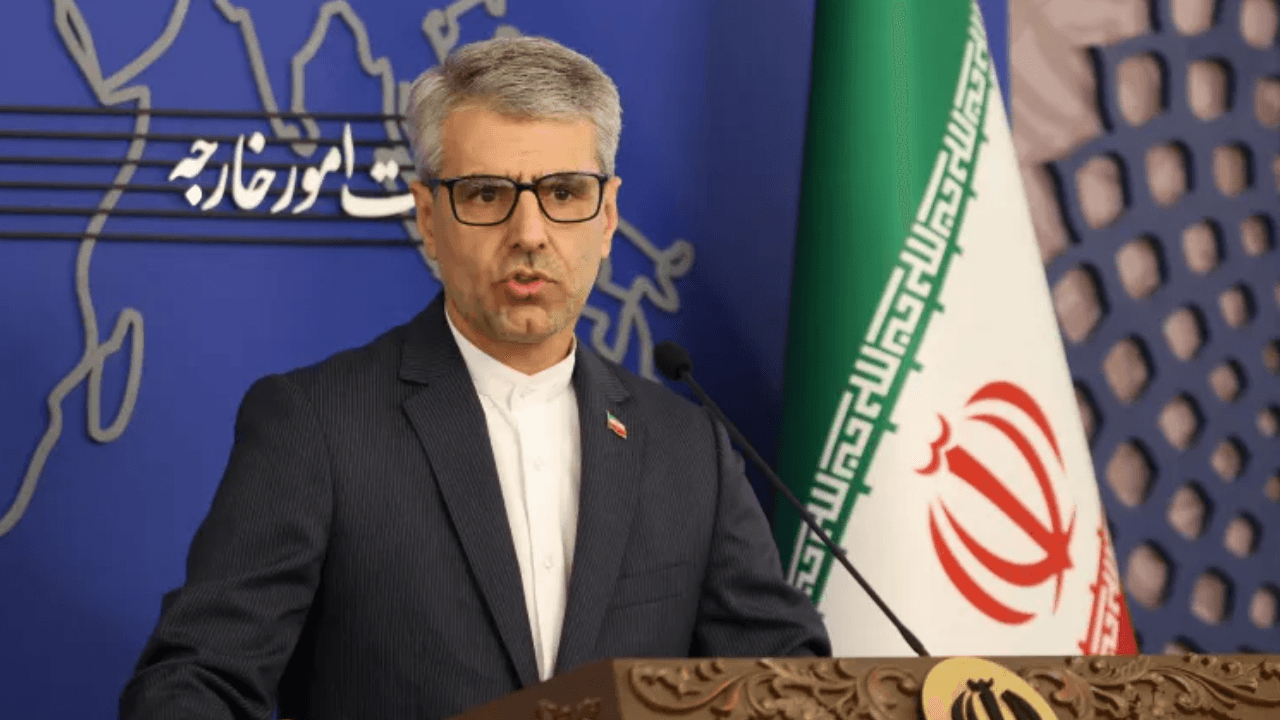
Iranian Foreign Ministry spokesperson Esmaeil Baghaei said U.S. forces would face consequences if Washington attempted what he called an “adventure” against Iranian territory.
The warning comes as U.S. and Iranian tensions continue to escalate around the Strait of Hormuz, one of the world’s most important energy routes.
Iran Sends a Direct Warning
Baghaei said there are people in Iran who are “counting down the minutes” to confront U.S. forces if American troops enter Iranian territory.
His comments came during a media briefing in Tehran as diplomats continued indirect talks through regional mediators.
The Guardian reported Monday that Baghaei said diplomatic messages were still being exchanged through intermediaries, even as fighting continued. Read more here: The Guardian report on U.S. Iran tensions.
Why Kharg Island Matters
Kharg Island sits off Iran’s coast in Bushehr province and has long been central to Iran’s oil exports.
Al Jazeera reported that about 90 percent of Iran’s crude oil exports pass through Kharg Island. The island’s deep waters allow large tankers to dock and load crude.
That makes Kharg a tempting military target and a dangerous one. Seizing or striking it could place major pressure on Iran’s economy, but it could also expose U.S. forces to missile, drone and maritime attacks.
More background on the military risks around Iranian islands is available from Al Jazeera’s analysis of U.S. options.
Trump Reportedly Considered Expanding Operations
The Wall Street Journal reported that Trump discussed possible expanded military operations, including the seizure of Kharg Island and other territory near the Strait of Hormuz.
The report also said U.S. officials considered possible strikes on Pickaxe Mountain, a fortified site believed by U.S. and Israeli officials to be linked to Iran’s nuclear program.
Trump has not publicly announced a final decision to send ground forces to Kharg Island.
That uncertainty has left the region watching for whether Washington will keep pressure on Iran through air and naval operations or take the far riskier step of putting American troops on Iranian soil.
Strait of Hormuz Remains the Flashpoint
The Strait of Hormuz sits between Iran and Oman and carries a major share of global oil and gas shipments.
Oman’s Foreign Ministry said on July 14 that it was continuing neutral cooperation with all parties to restore freedom of navigation through the Strait in line with international law.
Oman and Iran also issued a June statement reaffirming their commitment to safe passage through the waterway while stressing their sovereignty and rights over territorial waters. Read Oman’s statement here: Oman Foreign Ministry statement on Hormuz.
Baghaei said Iran believes future management of the Strait should be handled by Iran in consultation with Oman and through dialogue with regional countries.
Iran Says Deal Text Is Clear
Baghaei also defended an interim memorandum of understanding between Tehran and Washington.
He said the document is short, clear and made up of 14 clauses. He argued there is no excuse for the United States to break it.
Dawn reported that Baghaei said there was “no ambiguity” in the text and warned Washington against violating its commitments. Read the report here: Dawn report on Baghaei’s comments.
Experts Warn Seizing an Island Is Not the Same as Holding It
Military analysts say the United States has the power to seize a small Iranian island in a narrow tactical sense.
But holding that island would be much harder. It would require supplies, defenses, political control and protection from Iranian retaliation.
Andreas Krieg of King’s College London told Al Jazeera that temporarily capturing an island is very different from holding it and turning it into a strategic advantage.
That warning points to the central risk for Washington. A short military move could become a longer ground commitment in a region already under pressure.
A Dangerous Test for Trump and Tehran
The standoff now puts both sides in a high risk position.
Trump may see Kharg Island as a way to squeeze Iran’s oil exports and force Tehran toward U.S. terms. Iran sees any move against the island as an attack on its territory, economy and sovereignty.
The result is a confrontation where one decision could affect global oil prices, U.S. troops, Gulf allies and shipping through the Strait of Hormuz.
For now, Iran’s message is simple and sharp. If U.S. forces come ashore, Tehran says they will not be welcomed with diplomacy, but with consequences.