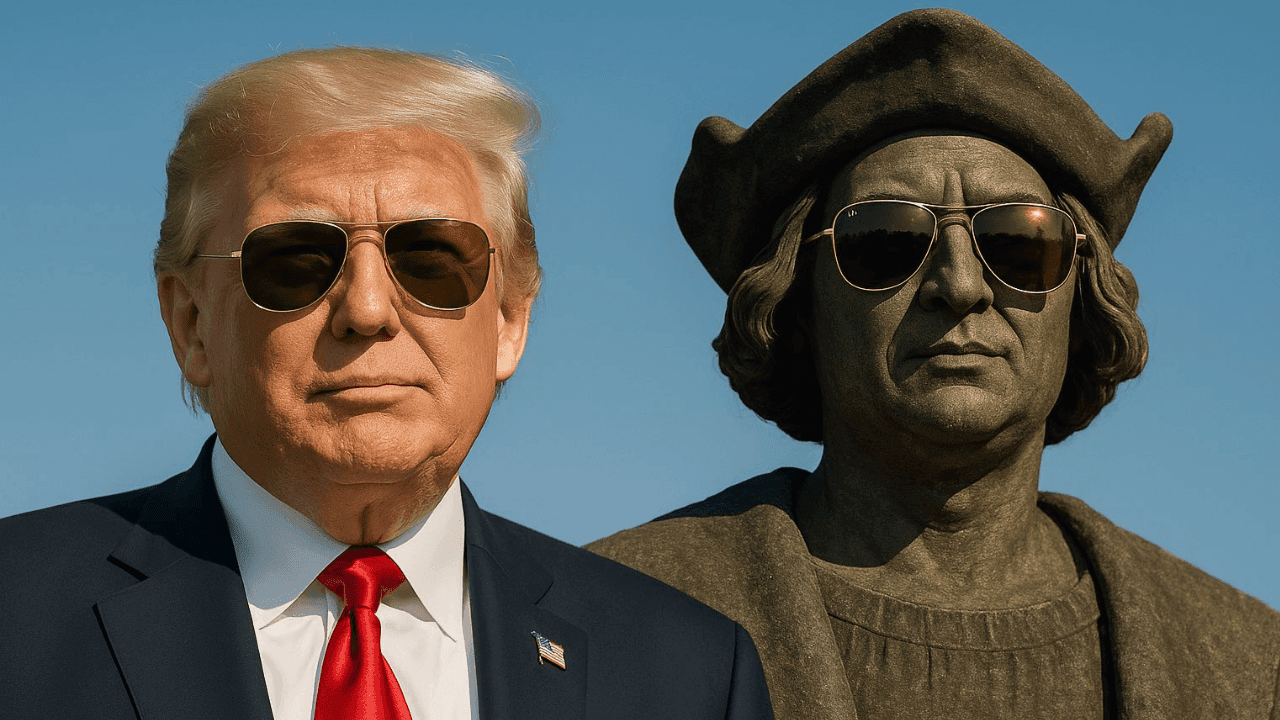
In a recent declaration via Truth Social, President Donald Trump announced his intention to restore Columbus Day to its former prominence. Accusing Democrats of waging a war to tarnish Christopher Columbus’ reputation and erase his achievements from history, Trump declared his commitment to reinstate the holiday with all its traditional honors.

The announcement sparked widespread conversations across political and social landscapes, highlighting the deep societal divisions over the historical portrayal of Columbus. While Columbus is often credited with ‘discovering’ the New World, his legacy is marred by controversial interactions with Indigenous populations. These interactions have led many to reconsider the recognition he receives, resulting in a broader societal shift towards acknowledging Indigenous Peoples’ Day.
Trump criticized the actions taken by perceived ‘woke’ movements that have led to the removal of Columbus statues across America. He argues these efforts to dismantle Columbus’ historical significance were destructive to the cultural heritage cherished by many Italian-Americans and others who celebrate Columbus as a hero.
The proposed revival of Columbus Day aligns with Trump’s broader cultural agenda that emphasizes traditional American values. His stance is that the removal of Columbus Day equates to a broader attack on Western cultural foundations.
This initiative is reminiscent of previous cultural debates during Trump’s presidency, where historical monuments and their connotations were frequently subjects of public discourse. Bringing these discussions back to the forefront, Trump’s declaration raises multiple questions, notably about the balance between honoring historical figures and acknowledging the darker aspects of their legacies.
Supporters of Trump hail this move as a positive step towards preserving history, albeit with selective memory. Critics argue it ignites divisiveness under the guise of cultural preservation. At its core, this issue taps into larger global dialogues about historical legacy, influence, and remembrance.
Both sides of the debate fully understand that nothing short of unity will resolve these deeply entrenched cultural issues. As with many debates of its nature, the future of Columbus Day will likely depend on broader social movements, political influence, and the continued evolution of public sentiment on America’s complex history.
Overall, Trump’s vow to resurrect Columbus Day from the ashes has fueled another chapter of cultural contention, with implications and reactions that resonate across multiple facets of society.