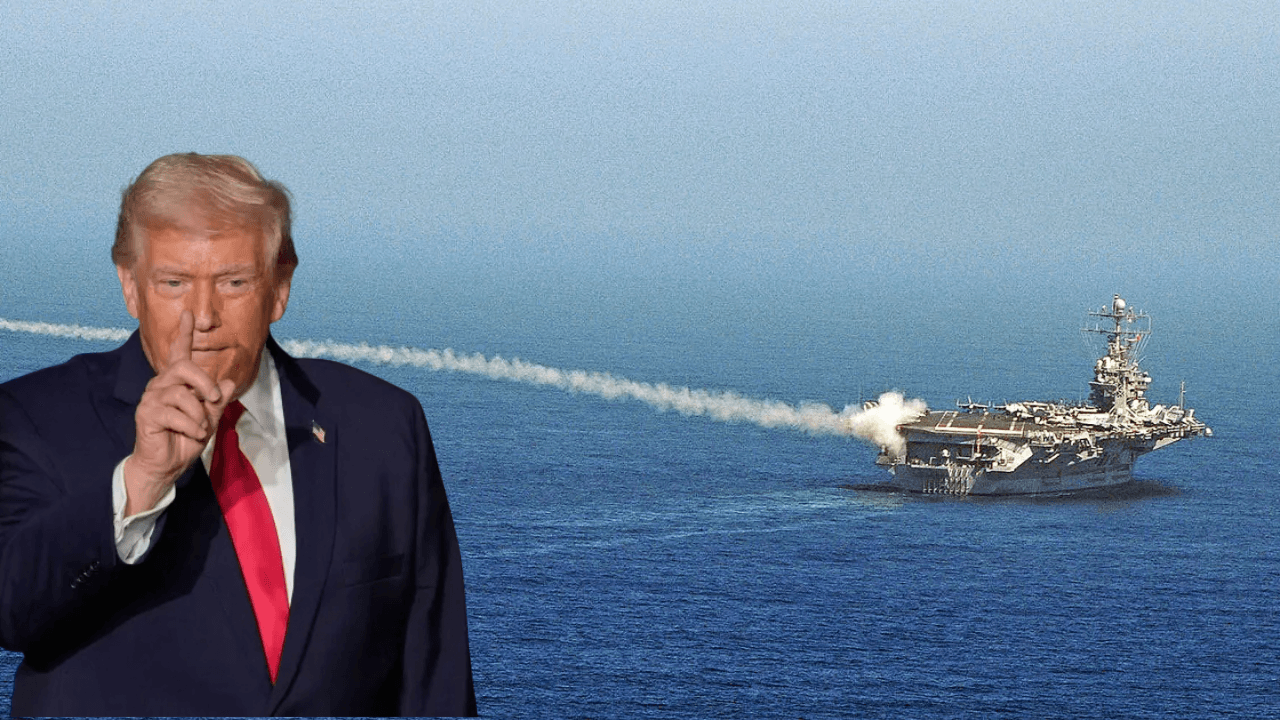
President Donald Trump has intensified pressure on Iran to negotiate a deal with the United States as a powerful naval force led by the USS Abraham Lincoln aircraft carrier makes its way toward the Middle East. Trump framed the deployment as both a show of force and a bargaining tool to bring Tehran “to the table.”
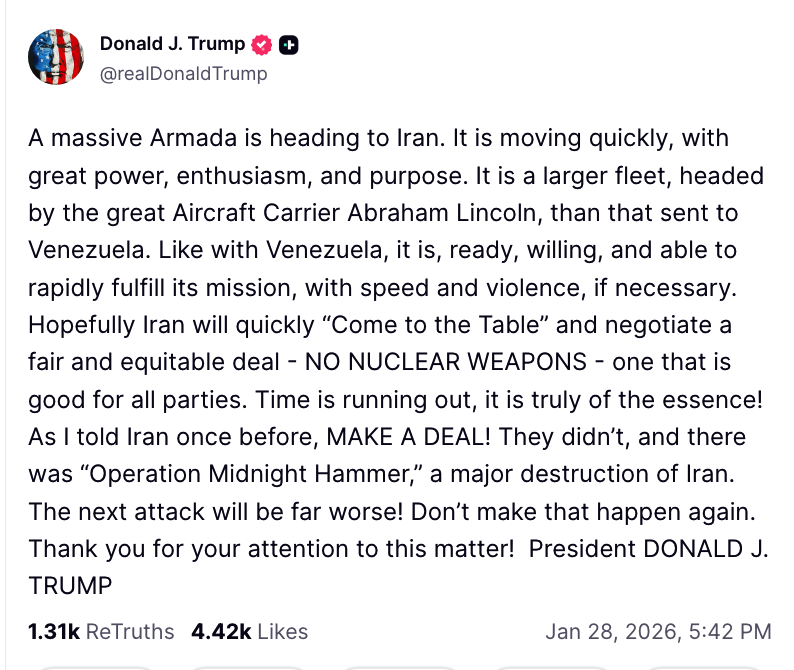
Trump said in a recent statement that the “massive armada” heading toward Iran represents an effort to secure a negotiated agreement, particularly on preventing nuclear weapons development. He warned that without progress on diplomacy, the United States could resort to stronger actions.
In an interview, Trump told Axios that he believes Iran has expressed interest in talks and made contact on multiple occasions. However, Tehran has not publicly agreed to formal negotiations.
U.S. Military Posture and Regional Tensions
The USS Abraham Lincoln and its strike group entered waters near the CENTCOM area on January 27, with accompanying guided-missile destroyers and combat aircraft. Its presence strengthens the U.S. military posture amid ongoing tensions with Iran and its regional allies.
Iran’s government has not confirmed new negotiations and has warned that military threats could lead to broader conflict. Iranian officials reaffirmed that any attack on its nation would be met with a strong response.
Domestic Turmoil in Iran Adds Pressure
Tensions between Washington and Tehran have grown alongside massive unrest inside Iran. Since protests began in late December 2025 over economic hardship and political grievances, rights groups report thousands of deaths from the government crackdown. Reuters and rights organizations say estimates of confirmed deaths from protests exceed 6,000, though exact figures vary due to restrictions on information.
The unrest has drawn international concern, with the United Nations and other global actors calling for restraint and humanitarian considerations. Diplomatic efforts involving other countries in the region aim to prevent escalation.
U.S. Goals and Iranian Response
U.S. officials, including Trump, have said any agreement would require Iran to halt uranium enrichment, remove existing stockpiles of enriched uranium, and curb support for regional proxy forces. Tehran has not publicly accepted these terms.
While Trump expressed hope for a deal, his warnings reflect growing frustration with Iran’s nuclear ambitions and reluctance to make concessions. The Pentagon has maintained that the military buildup is defensive, but analysts say the armada’s arrival significantly raises the stakes in U.S.-Iran relations.
Diplomatic channels remain open, but concrete progress on a negotiated settlement has yet to appear. As the armada approaches and rhetoric intensifies, world leaders continue watching closely for signs of either diplomatic breakthrough or further escalation.