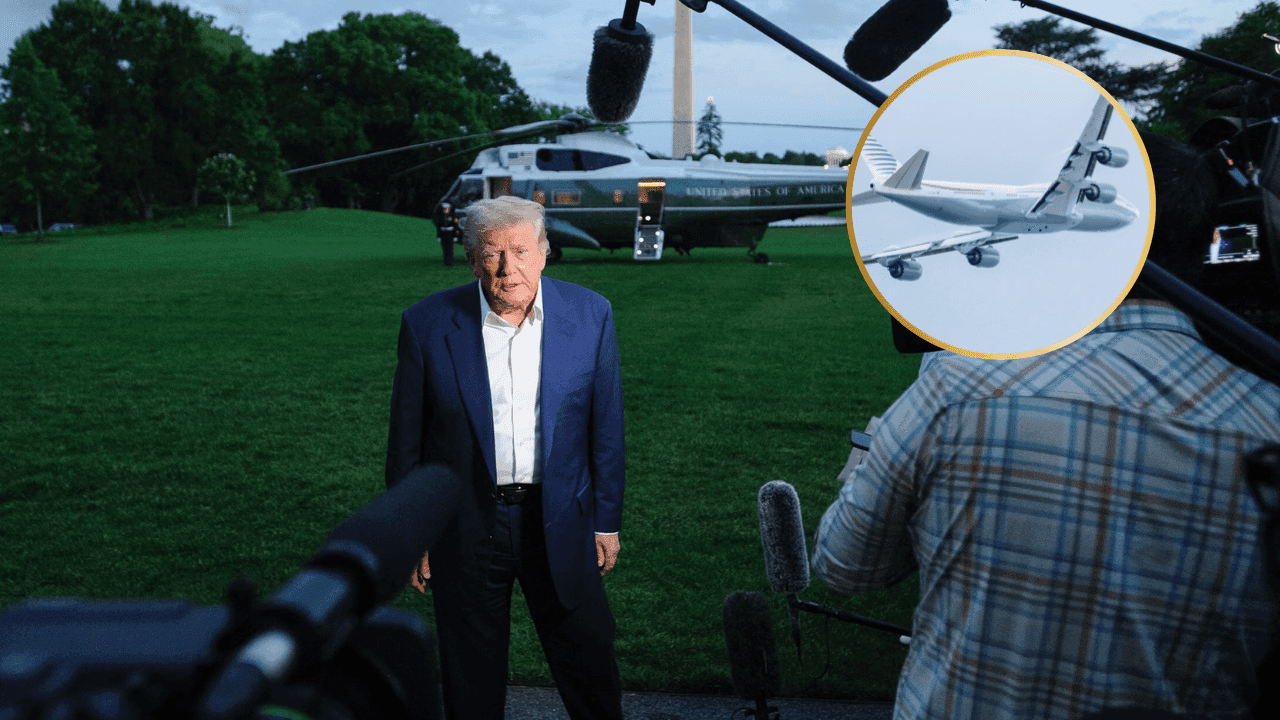
In an unusual and potentially historic move, the Trump administration is reportedly preparing to accept a luxurious Boeing 747-8 jumbo jet, dubbed a ‘flying palace’, from the royal family of Qatar. This decision marks what could be one of the most valuable gifts ever extended to the United States from a foreign government.
Sources indicate that this opulent aircraft will serve as Air Force One for President Donald Trump until the end of his tenure, after which it is expected to be transferred to the Trump presidential library foundation. This transaction has sparked curiosity and debate over its legality and implications.
The gift was initially anticipated to be announced during Trump’s visit to Qatar, his first foreign trip of his second term. However, official sources have clarified that the presentation will not occur during this trip, emphasizing transparency through a planned Defense Department procedure.
President Trump has publicly acknowledged the impending acceptance of the aircraft in a social media post, citing the transaction as ‘very public and transparent’. Trump himself toured the aircraft in February at West Palm Beach International Airport, showcasing fascination with its advanced features and technology.
Legal assessments are already underway to ensure compliance with U.S. laws, addressing concerns regarding the emoluments clause which prohibits U.S. officials from accepting gifts from foreign states. Legal experts, including White House lawyers, have preliminarily concluded that the arrangement is permissible under U.S. law due to its intended final ownership by Trump’s presidential library foundation.
This potential acceptance of such an extravagant gift leaves heavy questions about the precedents it sets for foreign relations and presidential gifts. Analysts argue that it underscores Qatar’s continued attempts to foster diplomatic ties with the U.S. during a complex geopolitical climate.
The scenario bears comparison to historical instances of presidential gifts, but with unprecedented opulence raising questions about the overarching influence of wealth in international diplomacy today.
As the narrative unfolds, the world watches to see how this transaction might ripple across diplomatic norms and presidential legacies.