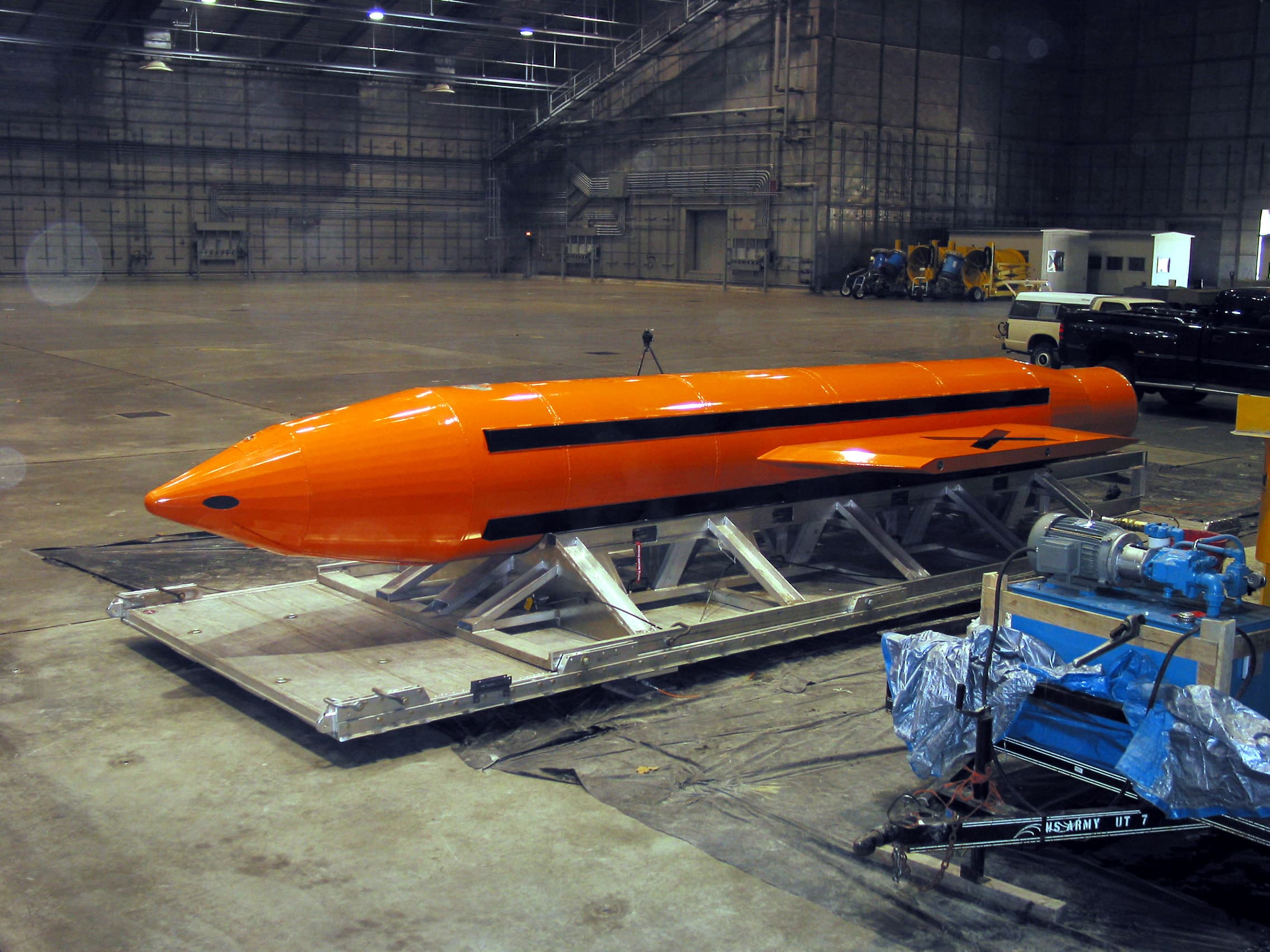
The United States is considering a weapon powerful enough to destroy large areas above ground as part of new plans for possible strikes on Iran.
The weapon is called the GBU-43/B Massive Ordnance Air Blast bomb, or MOAB. It is often nicknamed the “mother of all bombs.”
But one critical fact remains: President Donald Trump has not publicly ordered its use against Iran. For now, it is one of several military options reportedly prepared for him.
The planning comes as diplomacy falters, shipping faces renewed threats in the Strait of Hormuz, and fighting spreads across the region.
Why Is the White House Considering the Bomb?
According to CBS News and ABC News, U.S. defense officials have prepared military options that could include the MOAB if Trump orders a new round of major attacks.
CNN reported that possible targets include Iranian energy infrastructure and nuclear facilities.
The White House did not confirm those specific plans. A spokesperson told CBS News that the administration would not comment on sensitive operational planning and said the president was keeping options available.
Military officials routinely prepare different scenarios. The existence of a plan is not proof that a weapon will be used.
That distinction matters, particularly when a decision could affect millions of people.
What Is the 'Mother of All Bombs'?
The MOAB is among the most powerful conventional bombs in the U.S. arsenal. It weighs about 21,600 pounds and creates an enormous blast over a wide surface area.
Unlike a nuclear weapon, it relies on conventional explosives. But its destructive force can be devastating near the point of impact.
The United States used a MOAB in combat in Afghanistan in 2017 against an Islamic State tunnel complex.
The bomb is designed mainly to produce a large blast rather than penetrate deep into rock or reinforced underground structures.
Military analysts have raised doubts about whether it would be effective against Iran's heavily buried nuclear facilities. Another weapon, the Massive Ordnance Penetrator, is designed specifically for deeply fortified targets.
As Al Jazeera reported, the MOAB's ability to cause extensive surface damage does not automatically make it useful against every underground site.
How Did the War Reach This Point?
Trump announced major U.S. combat operations against Iran on February 28, 2026. American and Israeli attacks struck military and government targets, according to reporting carried by ABC News.
The fighting later gave way to diplomatic efforts. In June, the U.S. and Iran signed a memorandum of understanding intended to help end the conflict.
Those negotiations broke down. Strikes resumed, although reports in October indicate that direct U.S.–Iran attacks have slowed in recent weeks.
Iran has criticized Washington's latest response to a peace proposal as insufficient, according to the Associated Press.
The administration faces two possible paths: continue pursuing an agreement or escalate military pressure. Neither path guarantees a quick resolution.
Why Does the Strait of Hormuz Matter?
The Strait of Hormuz is a narrow waterway between Iran and Oman. Oil and other goods pass through it on their way to markets around the world.
Attacks, threats and shipping restrictions in the strait can raise transportation costs and increase uncertainty in global energy markets.
The United States has maintained pressure on Iranian ports while seeking to keep oil shipments moving. Iranian threats and attacks on vessels have complicated those efforts, CBS News reported.
For families far from the fighting, the consequences can appear in higher fuel costs and uncertainty about prices.
For sailors, coastal residents and people in nearby countries, the danger can be much more immediate.
Fighting Is Also Spreading in Yemen and Saudi Arabia
The conflict is not confined to Iran.
Yemen's Iran-aligned Houthi movement has increased attacks on Saudi targets while fighting Saudi-backed Yemeni forces.
Reuters reported on October 15 that a Houthi attack on a presidential palace complex in Aden killed five people and injured 16, according to Yemeni authorities.
Saudi officials have also accused the Houthis of repeated attacks on airports and other infrastructure. The group has claimed responsibility for strikes on Saudi targets.
The escalation has disrupted travel and raised fresh concerns for civilians throughout the region.
Claims about the responsibility for individual attacks and their military targets should be assessed separately from independently confirmed casualties.
What Could Happen If Trump Orders a Strike?
A strike using the MOAB would be a major new development in the war. It could damage exposed military infrastructure, but analysts disagree over how much it would change Iran's capabilities or alter the course of the conflict.
It also could prompt retaliation.
The risks would depend on the location selected, nearby populations, Iranian responses and whether new negotiations follow.
Those unknowns are precisely why news of a military option should not be confused with news of an attack.
As of October 16, 2026, the administration has not announced an order to use the MOAB against Iran.
The Decision Is Still Ahead
For leaders, the current debate concerns military capabilities, diplomatic pressure and the possibility of ending the war.
For people living near potential targets, it concerns homes, family members and whether the next night will be peaceful.
The U.S. military has reportedly prepared powerful new options. Whether the president uses them remains undecided.
And the consequences of that choice would reach far beyond any single military target.
Reporting current as of October 16, 2026. Military options described by unnamed sources are not confirmed strike orders.
Sources: CBS News; ABC News; CNN reporting; Associated Press; Reuters.