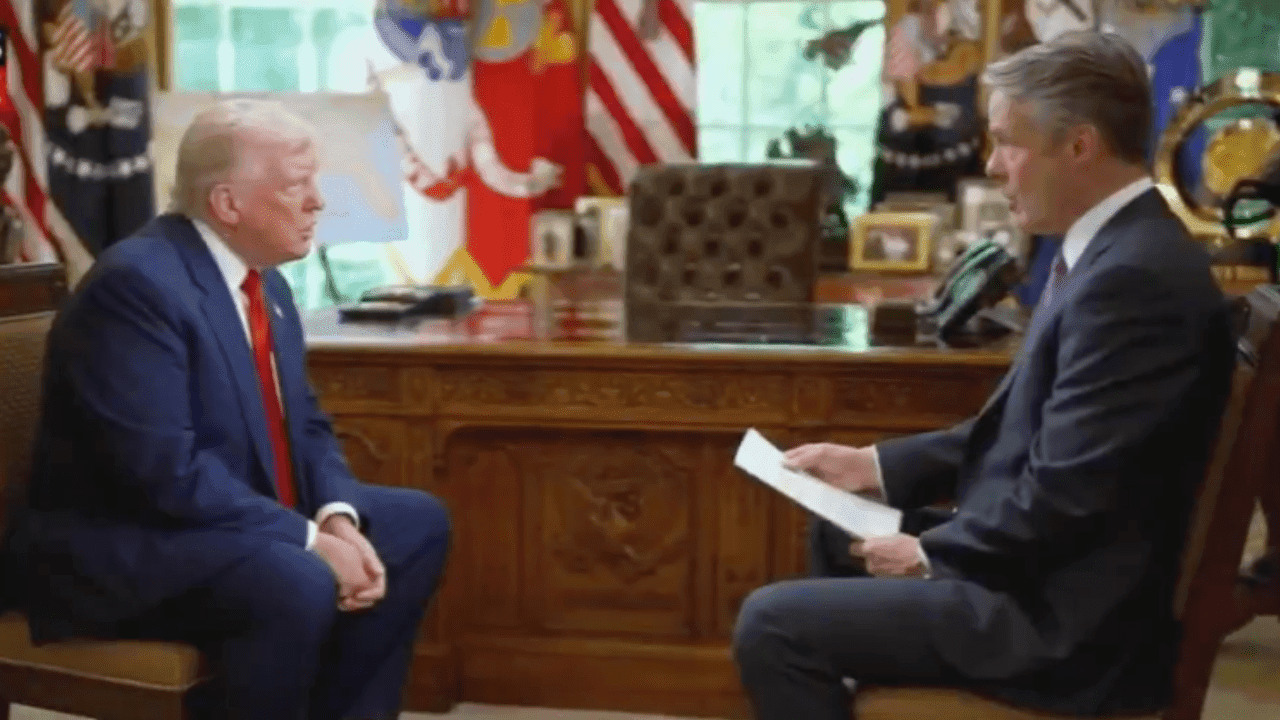
In a startling exchange that left onlookers bewildered, President Donald Trump and reporter Terry Moran found themselves embroiled in a heated debate regarding the authenticity of a tattoo allegedly associated with the notorious MS-13 gang. This clash unfolded online, echoing the pervasive tensions surrounding gang violence and the portrayal of criminal identities in the media.
The drama began when Trump made a bold claim, stating unequivocally, “He had MS-13 on his knuckles, tattooed.” The allegation seemed to suggest incontrovertible evidence of gang affiliation, threatening to stoke fears about the reach and influence of MS-13.
Terry Moran, known for his incisive journalism, was quick to counter Trump’s assertion. He vehemently declared, “That was photoshopped, ” dismissing the authenticity of the tattoo image. The heated exchange soon went viral, capturing the attention of both supporters and critics across the nation.
The crux of the argument centers around a photograph allegedly depicting an individual bearing the infamous MS-13 tattoo on his knuckles. However, investigations and expert analyses confirmed that the image had been digitally manipulated, rendering Trump’s claim inaccurate. This revelation added fuel to the already roaring debate, raising questions about the responsibility of public figures in disseminating potentially flawed information.
The stakes in this argument extend beyond mere public perception. MS-13, a gang with roots in Los Angeles, has been associated with numerous violent crimes, and allegations of membership can have severe legal repercussions for individuals. Trump’s comments, though lacking in factual accuracy, hold implications for broader discourse on gang violence and criminal justice, emphasizing the importance of verifiable evidence in such assertions.
In considering the broader societal impact of such claims, it becomes evident that unchecked allegations can contribute to a climate of fear and misinformation. This clash serves as a microcosm of the broader issues plaguing modern political discourse, where rapid information dissemination often outpaces fact-checking.
Overall, this episode underscores the critical need for careful scrutiny and responsible communication, especially by those in influential positions. The debate between Trump and Moran encapsulates the challenges of the digital age, where fact, fiction, and interpretation frequently blur, complicating the public’s understanding of complex issues.