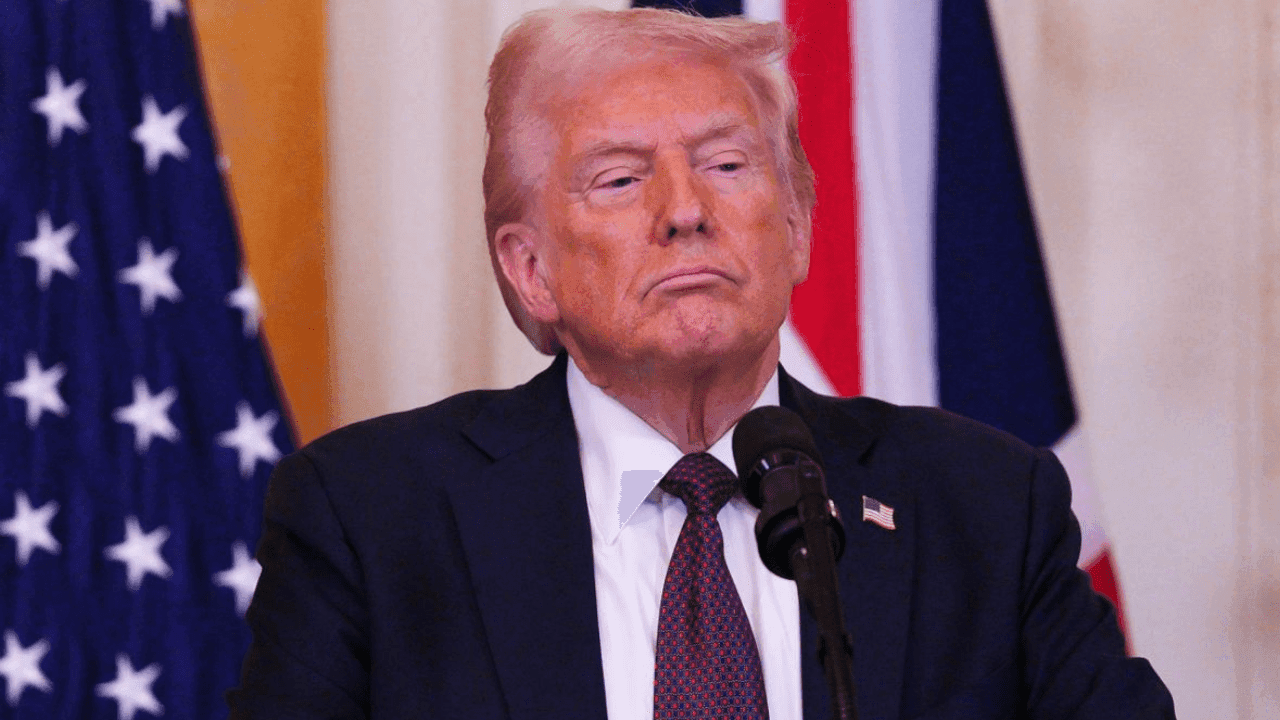
In a time when public sentiment and political executions are closely monitored, recent developments around President Donald Trump offer a significant insight into the current political climate. A recent poll conducted by ABC News/Washington Post/Ipsos has revealed that Donald Trump holds the lowest 100-day job approval rating of any president in the past 80 years. This marks a contentious period as many of his policies face public pushback alongside profound economic discontent. There is a growing fear of an impending recession, reflecting a broader context of disapproval towards Trump’s economic strategies..
Despite this grim approval rating, Trump appears to retain a degree of trust among the public when compared to congressional Democrats in handling national concerns. Nevertheless, approval rates have dwindled, dropping 6 percentage points since February, now standing at a meager 39% with a 55% disapproval rate.
Historically, the previous significant low in approval ratings for a president approaching their 100-day mark was also Trump’s record of 42% back in 2017. This decline suggests a simple yet profound perspective on Trump’s evolving political journey during his tenure.
This emerging narrative draws interest not only for the low approval numbers but for the multiple dimensions it unravels about the United States’ political interfaces. The polls amplify the underlying economic anxieties citizens face, with Trump’s leadership being under scrutiny over efficacy regarding pressing national issues.
In reviewing this data from a wider angle, it’s important to note the multidimensional effects it has on the global stage. International communities often look to American governance as a powerful benchmark. Consequently, reduced internal confidence poses questions on international confidence, potentially affecting geopolitical standings.
The contrasting sentiment between the public’s trust in Trump over Congress signals a nuanced political reality. The Republican party, often seen as a bastion of stability in financial governance, may need to reanalyze its strategies to solidify leadership in both public policy and electoral confidence.
In understanding how Trump arrived at this unprecedented low, various support bases cite discontent over specific policy decisions and execution. Areas such as healthcare reform, international trade dynamics, and climate change have been pivot points, which may have eroded initial support bases.
When paralleled against historical contexts, comparisons reveal that other presidents faced fluctuating approvals but not scaled to the present context of divisiveness within the nation. While it is not unusual for presidents to grapple with low approval ratings at various times, the persistent low approval across multiple fronts indicates a pressing need for remedial measures within his administration.
As Trump’s first 100 days unfold under the scrutiny of history, the coming months will prove pivotal. Will his approval rating serve as a wake-up call energizing a shift towards more inclusive and economically sound policies, or will it further entrench divisive strategies that disconnect significant population sections? This remains the question as the Trump administration navigates the challenging road ahead.