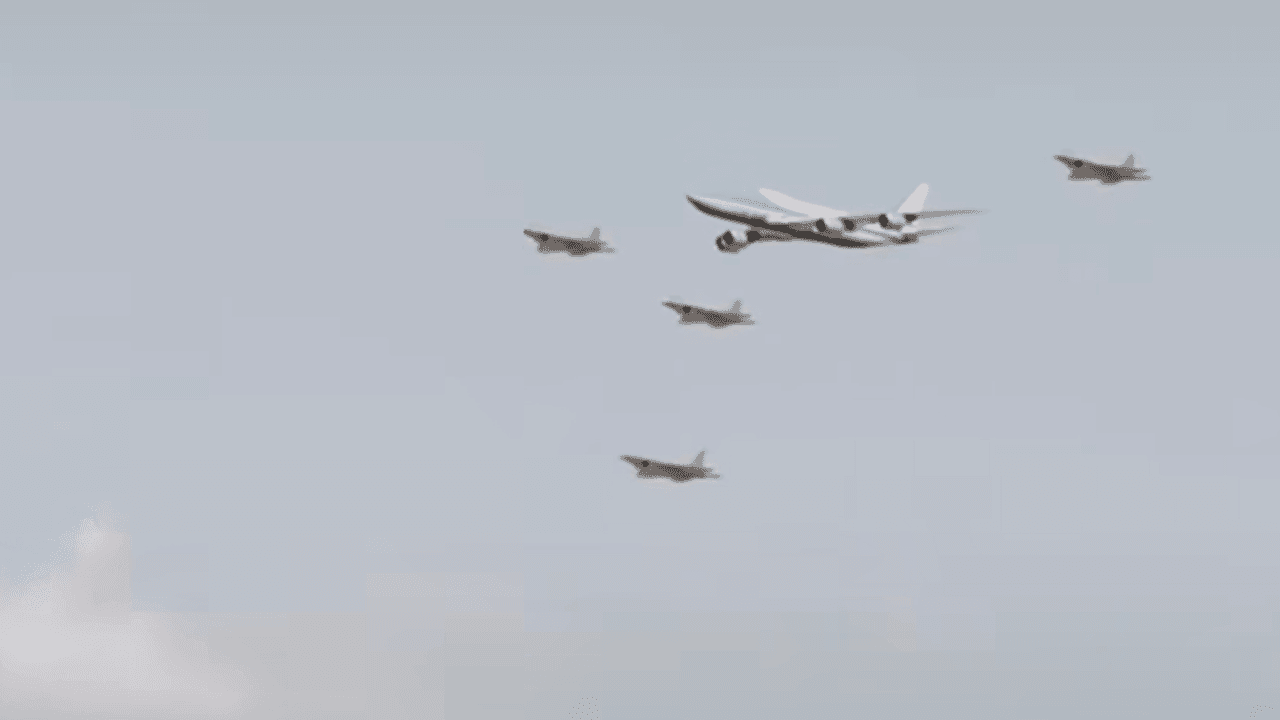
During a recent state visit, President Donald Trump was treated to a rare spectacle as fighter jets escorted his plane upon entry into a foreign country. This marked the second occasion where he received such a tribute on consecutive visits, signaling the level of respect he commands on the international stage. This high honor was visible right outside the windows of Air Force One, adding an air of majesty and intrigue to the event.
The tradition of escorting a visiting dignitary’s aircraft with fighter jets is both symbolic and strategic. It reflects a gesture of respect and solidarity while ensuring the safety of the visiting leader. In this instance, Qatar was the country hosting Trump, and the sight of Qatari fighter jets accompanying his plane was a stunning visual representation of the diplomatic ties between the United States and Qatar.
Historically, military escorts have been used to bolster relationships between nations. They serve as a powerful display of alliance and military prowess. While some might view these escorts as strictly ceremonial, they stand as poignant testaments to ongoing diplomatic discussions and agreements.
From an analytical perspective, this event had implications not just for American-Qatari relations but for Trump’s diplomatic legacy. While the fighter jet escort may seem to emphasize respect, it also raised questions about the geopolitical motivations behind such gestures. Are they a strategic move to curry favor, or do they highlight underlying agreements and international collaborations?
Previous presidential visits of a similar nature provide a breadth of comparative insights. In recent years, Trump’s foreign visits have often been surrounded by both spectacle and scrutiny. The fighter jets are emblematic of how international states perceive diplomatic ties with the United States, especially under Trump’s administration, which sought to recalibrate many such relationships.
The display created a visual narrative that resonates beyond just military symbolism. It weaves into the broader story of global politics and personal diplomacy, where leaders blur the lines between formal statecraft and personal diplomacy on the international stage.
This intriguing story elevates ongoing discussions about how state visits are orchestrated, the diplomacy involved, and what these rituals mean for international relations moving forward. Given the current geopolitical climate, such gestures could signify more than just respect—they might signal shifts in policies or realignments of alliances.
As history unfolds, the vivid image of fighter jets soaring alongside Air Force One will remain a part of the narrative surrounding Trump’s public life and the broader discussion of diplomatic protocol.