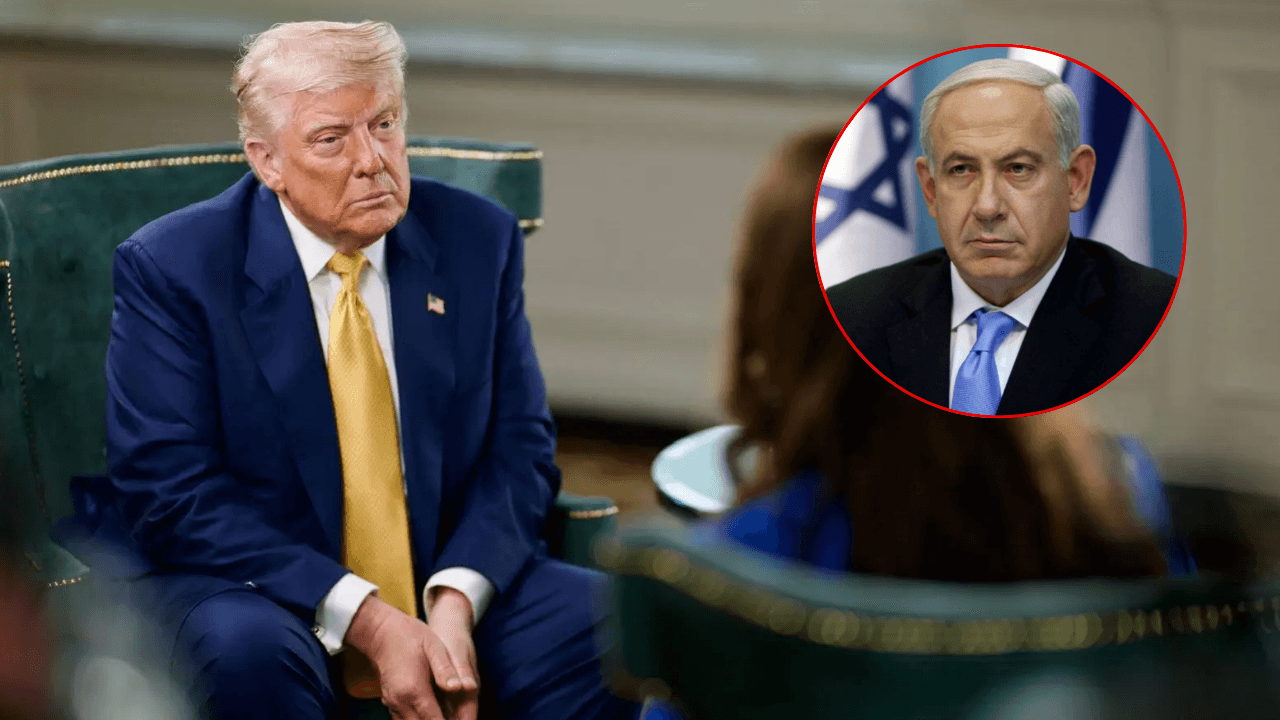
The Trump Netanyahu call exposed new tension between two wartime allies as Iran talks hang in the balance.
President Donald Trump confirmed that he used harsh language toward Israeli Prime Minister Benjamin Netanyahu during a phone call over Israel’s military actions in Lebanon, while insisting the two leaders still work well together.
Trump made the comments in an interview with Miranda Devine on the New York Post’s “Pod Force One.” The exchange followed earlier reporting that Trump had warned Netanyahu against escalating strikes in Lebanon while Washington tries to keep U.S. Iran peace talks alive. New York Post
“I was a little bit perturbed at his constantly fighting with Lebanon,” Trump said in the interview, according to the Post.
Despite the friction, Trump said he likes Netanyahu and works well with him. He described himself as a “wartime president” and Netanyahu as a “wartime prime minister.”
Trump Tried to Stop a Wider Lebanon Escalation
The call came as Israel’s attacks on Hezbollah targets in Lebanon threatened to complicate U.S. talks with Iran. Tehran has tied progress in negotiations to a halt in Israeli strikes against Hezbollah.
Axios reported that Trump pushed Netanyahu to avoid a major strike on Beirut after Iran warned it could pull out of talks with Washington. The report said Trump believed Israeli escalation could derail a possible agreement involving the Strait of Hormuz and Iran’s nuclear program. Axios
Trump has publicly framed the pressure campaign as part of a larger effort to bring down regional tensions. But the call showed the limits of that effort when Israel says it must respond to Hezbollah attacks.
Netanyahu has maintained that Israel will keep striking Hezbollah if the group continues attacks. That position has put him at odds with Trump’s push for a wider diplomatic opening.
Iran Talks Remain Fragile
Trump said talks with Iran are “rapidly evolving” and suggested a deal could come fairly quickly. But he also said he was not in a rush.
The reported framework could reopen the Strait of Hormuz and lead to talks over Iran’s nuclear program, sanctions relief, and shipping security. Reuters has reported that U.S. and Iranian negotiators have discussed a possible 60 day ceasefire extension and steps to ease restrictions in the Strait of Hormuz. Reuters
The Strait of Hormuz is central to the talks because it is one of the world’s most important oil transit chokepoints. The U.S. Energy Information Administration says large amounts of global oil and natural gas move through the waterway each day. U.S. Energy Information Administration
Trump said the waterway could remain under pressure longer than expected, but he predicted the dispute would resolve itself “fairly quickly.”
Oil Prices Add Political Pressure
The conflict has also raised concerns about fuel prices. Trump said oil prices had not risen as badly as critics predicted.
He said some people warned oil could reach hundreds of dollars per barrel. Instead, he pointed to prices near 98 dollars per barrel and argued that cost was not too high if the alternative was Iran obtaining a nuclear weapon.
The Guardian reported in May that markets rallied and oil prices eased when Trump said the Strait of Hormuz could reopen if Iran accepted a U.S. deal. But renewed clashes and diplomatic delays have kept energy markets nervous. The Guardian
That makes the timing politically sensitive. Higher summer fuel prices could hurt Republicans before the November midterm elections.
Supporters React to the Leaked Call
The blunt language reported from the Trump Netanyahu call sparked anger among some Israel supporters. Conservative commentator Mark Levin criticized the leak and suggested it harmed Israel by giving Iran insight into private U.S. Israel talks.
Axios first reported the tense exchange, while Israeli sources disputed parts of the account. Trump later confirmed the general language but framed the relationship as strong and productive.
The episode shows a rare public strain between two leaders who have often presented themselves as close allies. It also shows how the U.S. and Israel may share broad goals while clashing over timing and tactics.
Trump wants to stop Iran from getting a nuclear weapon and reopen a vital shipping lane. Netanyahu wants to keep pressure on Hezbollah and Iran backed forces near Israel’s borders.
A Wartime Alliance Under Stress
Trump’s confirmation of the heated call does not mean the U.S. Israel relationship is breaking. But it does show the pressure inside an alliance shaped by war, diplomacy, energy markets, and domestic politics.
For Trump, a U.S. Iran agreement could become a major foreign policy win. For Netanyahu, any pause in fighting must still protect Israel from Hezbollah attacks.
Those goals may overlap, but they are not identical.
That is why the phone call matters. It revealed how one Israeli strike, one Hezbollah attack, or one Iranian threat could upset a much larger diplomatic plan.
For now, Trump says he and Netanyahu work well together. But the next stage of the Iran talks may test whether two wartime leaders can keep the same war from spreading.