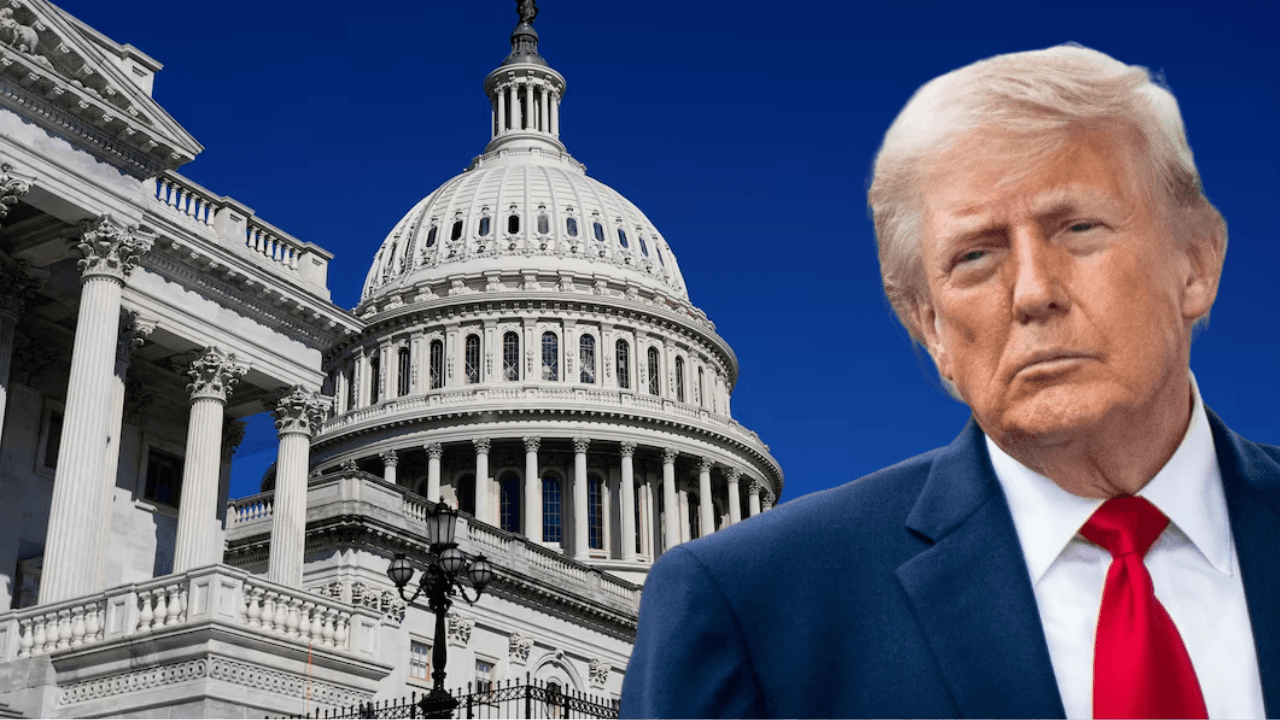
The Trump Iran war faced a rare House rebuke as lawmakers voted to limit further military action.
The U.S. House of Representatives voted Wednesday to approve a war powers resolution aimed at stopping President Donald Trump from taking further military action against Iran without approval from Congress.
The measure passed 215 to 208, with four Republicans joining Democrats in support. It marked the first time the House successfully passed an Iran war powers measure after several failed attempts earlier this year.
The resolution now moves to the Republican controlled Senate, where its future remains uncertain. Even if it passes there, Trump could still veto it, making the measure politically powerful but legally difficult to enforce without more support. Reuters
Four Republicans Break With Trump
The Republican lawmakers who voted with Democrats were Thomas Massie of Kentucky, Brian Fitzpatrick of Pennsylvania, Tom Barrett of Michigan, and Warren Davidson of Ohio.
Barrett said Congress must protect its constitutional role in decisions about war.
“Congress alone declares war, that’s something certainly we need to be protective of,” Barrett said, according to Reuters.
Asked if he feared political punishment from Trump, Barrett said he voted his conscience and was willing to accept the consequences.
Democrats Call Vote a Turning Point
Rep. Gregory Meeks of New York, the top Democrat on the House Foreign Affairs Committee, co-sponsored the resolution and called the vote a major rebuke of Trump’s Iran policy.
Meeks said the measure was “a significant bipartisan rebuke” of what he called Trump’s “illegal and costly war in Iran.”
He argued that the war has failed to meet its stated goals, pushed up fuel prices, and made diplomacy over Iran’s nuclear program harder.
Meeks also said the vote showed that more Republicans are hearing from voters who do not want another open ended war in the Middle East. His earlier remarks on the Iran war powers fight are available through the House Foreign Affairs Committee Democrats.
What the Resolution Would Do
The measure seeks to require Trump to remove U.S. forces from hostilities involving Iran unless Congress authorizes further military action.
Supporters say the Constitution gives Congress, not the president alone, the power to declare war.
The War Powers Resolution of 1973 was created to limit a president’s ability to keep U.S. forces in hostilities without congressional approval. The law requires presidents to consult Congress and sets timelines for withdrawing forces if Congress does not authorize action. Congress.gov
Critics of Trump’s Iran campaign say the administration has not received a clear authorization from Congress for the current conflict.
Senate Has Advanced a Similar Measure
The Senate advanced a similar war powers resolution in May after several earlier attempts failed.
Reuters reported that the Senate procedural vote was 50 to 47, with four Republicans joining most Democrats to move the measure forward. But the Senate has not yet held a final vote on the resolution. Reuters
The House vote now raises pressure on Senate leaders to act. But Republican leadership may still try to delay, amend, or block the measure before it reaches Trump’s desk.
The White House has argued that military action against Iran is needed to defend U.S. forces, protect shipping, and prevent Iran from developing a nuclear weapon.
Iran War Has Split Trump’s Party
The vote showed growing tension inside the Republican Party over foreign policy, war powers, and Trump’s use of military force.
Some Republicans back Trump’s strikes and say Iran must face strong consequences for attacks on U.S. interests and allies.
Others warn that the conflict risks becoming another long Middle East war without a clear vote from Congress or a clear exit plan.
The political split comes just days after conservatives also pushed back against the administration’s proposed 1.8 billion dollar Anti Weaponization Fund, adding to signs of strain between Trump and some Republicans in Congress.
Conflict Began With U.S. and Israeli Strikes
The war began in February after U.S. and Israeli forces launched strikes against Iran. Iran responded with attacks on Israel and U.S. allied states in the Gulf.
The conflict has also centered on the Strait of Hormuz, a vital waterway for global oil and gas shipments. Iran’s actions around the strait have raised fears about energy prices and commercial shipping.
The U.S. Energy Information Administration has called the Strait of Hormuz the world’s most important oil transit chokepoint because so much global energy supply passes through it. U.S. Energy Information Administration
Trump has said talks with Iran are going well and could lead to a deal soon. But recent U.S. strikes and Iranian responses have kept the ceasefire fragile.
Trump Says Talks Are Still Moving Forward
Ahead of the House vote, Trump told reporters that negotiations with Iran were going “very well.”
He also acknowledged recent U.S. strikes in Iran, saying the administration had taken strong action and that Iran had responded.
The remarks showed the contradiction at the center of the crisis. Diplomats are still trying to reach a deal, while U.S. and Iranian forces continue to trade attacks.
That tension helped fuel the House vote. Lawmakers from both parties said Congress must reassert its role before the conflict grows wider.
A Symbolic Vote With Real Political Weight
The House vote may not immediately stop U.S. military action in Iran. The resolution still faces a difficult path in the Senate, and Trump is unlikely to accept limits on his authority without a fight.
But the vote carries major political weight. It shows that some Republicans are willing to break with Trump on war powers, even during a national security crisis.
It also gives Democrats a clear message as the 2026 midterm elections approach. They can argue that Trump’s Iran war has become costly, risky, and unauthorized.
For now, the House has sent a sharp warning to the White House. Congress is no longer just debating the Iran war from the sidelines. A narrow bipartisan majority has now voted to rein it in.