President Donald Trump and Russian President Vladimir Putin are set to meet in Anchorage, Alaska, on Friday to discuss a possible ceasefire in Ukraine. The meeting comes more than three years into the war and follows a virtual conference Trump held with European leaders, including Ukrainian President Volodymyr Zelenskyy.
The talks will take place at Joint Base Elmendorf-Richardson, Alaska’s largest military installation. Located on the northern edge of Anchorage, the base spans 64,000 acres and serves as a key site for Arctic military readiness. Trump previously visited the base in 2019, calling it “America’s first line of defence” in the nation’s last frontier.
From Russian colony to US state
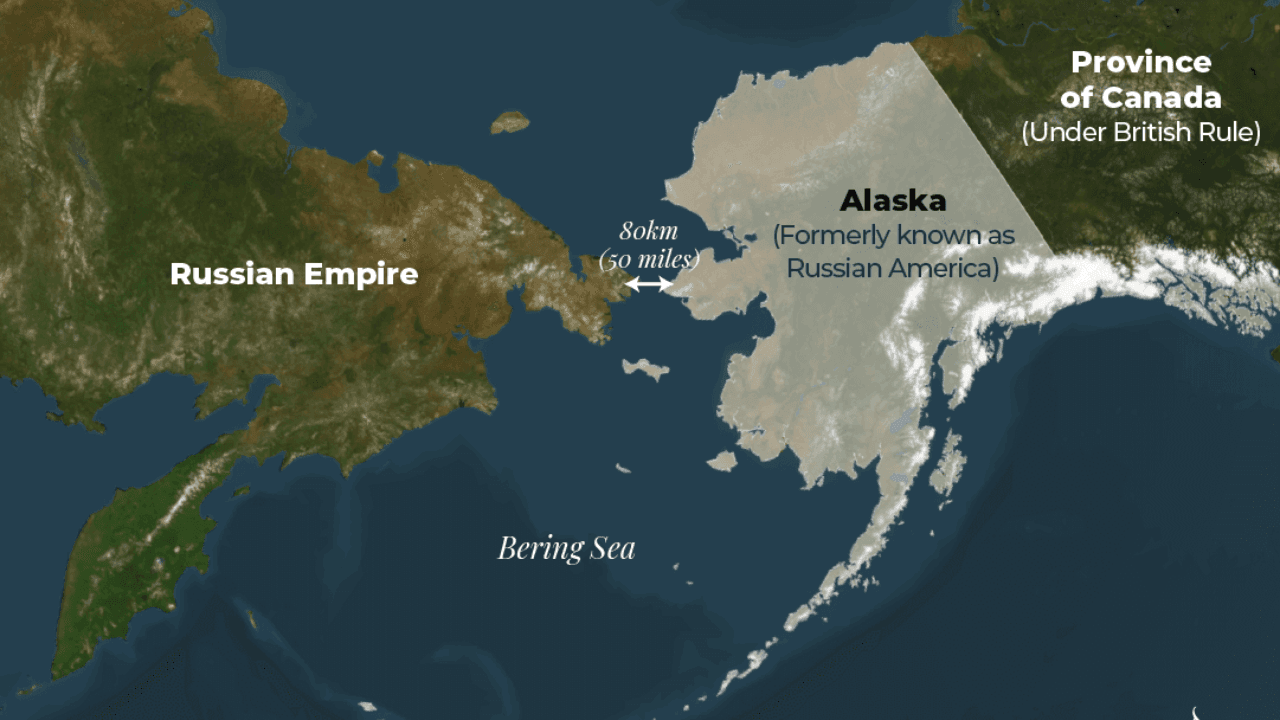
Alaska was not always American territory. Russia claimed the region in the 18th century after Tsar Peter the Great sent Danish navigator Vitus Bering to explore its coastline. In 1799, Emperor Paul I granted the Russian-American Company exclusive rights to govern and trade in Alaska. Settlements like Sitka became key outposts after Russia defeated the native Tlingit tribe in 1804.
However, Alaska’s vast distance from St. Petersburg, harsh winters, and limited resources made it difficult for Russia to maintain control. By the mid-1800s, competition from American traders and declining profits from fur pelts weakened its value to the Russian Empire.
Why Russia sold Alaska
The turning point came after Russia’s defeat in the Crimean War of 1853–1856. The costly conflict with Britain, France, and the Ottoman Empire forced Russia to reassess its overseas holdings. Alaska, bordering British-controlled Canada, was seen as a liability in any future war with Britain.
Tsar Alexander II decided to sell the territory to raise funds and prevent its capture. In 1867, US Secretary of State William Seward negotiated the purchase for $7.2 million, roughly two cents an acre. The deal added nearly 600,000 square miles to US territory. Critics at the time called it “Seward’s Folly” or “Seward’s Icebox,” doubting its value.
From ‘Folly’ to strategic prize
The discovery of gold in the Klondike in 1896 changed public opinion. Alaska’s resources — including fish, minerals, and later oil — proved its worth. In 1959, Alaska became the 49th US state. The discovery of oil at Prudhoe Bay in 1968 transformed its economy, creating the Alaska Permanent Fund, which continues to pay residents annual dividends from investment returns.
Today, Alaska’s economy blends natural resource extraction, fishing, and tourism. It also holds strategic importance for US military operations in the Arctic region.
A symbolic setting for US-Russia talks
Friday’s meeting between Trump and Putin in Alaska carries symbolic weight, highlighting a territory that once connected both nations directly. Russian presidential aide Yuri Ushakov said Alaska was a “logical” choice for the summit, as the two countries remain neighbors across the Bering Strait.
For Zelenskyy, the hope is that this historic venue leads to progress in peace talks — without compromising Ukraine’s territorial integrity. Whether Alaska’s past as a land transfer will influence the meeting’s tone remains to be seen.
More on the history of the Alaska Purchase is available from the US National Archives and History.com.
Disclosure: We may earn a commission when you make a purchase through the ads.