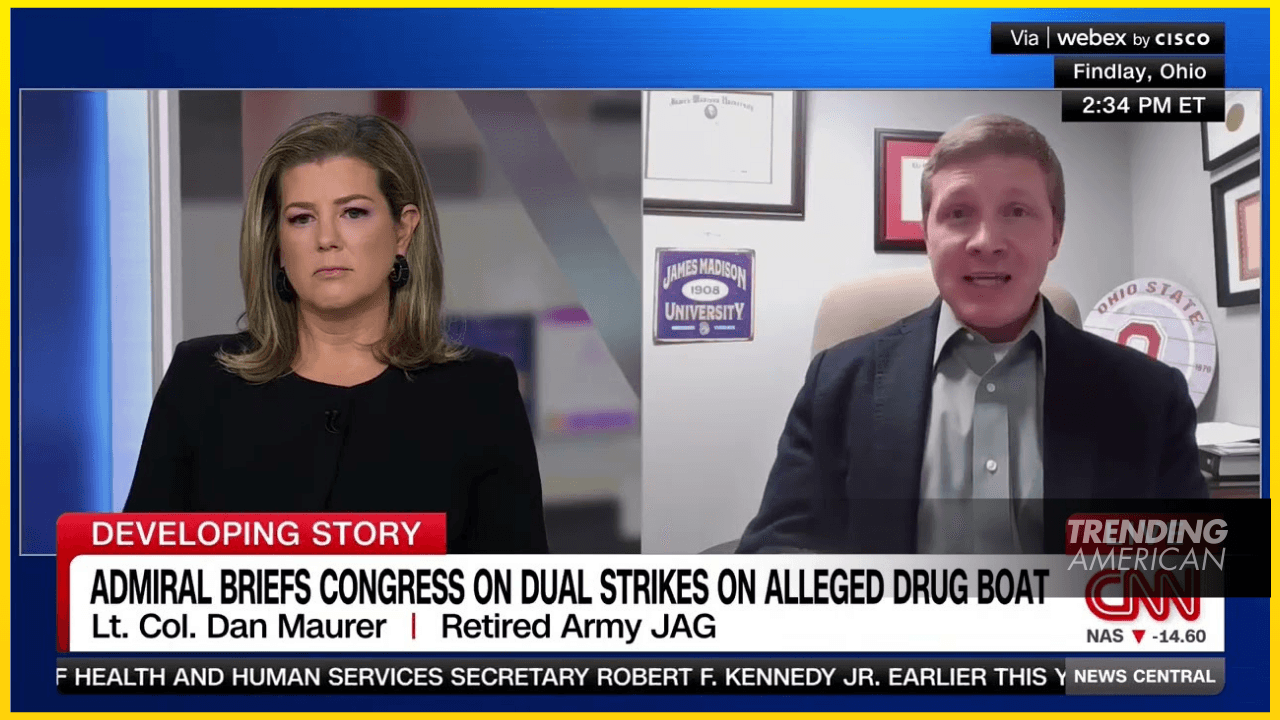
A retired U.S. Army Judge Advocate General (JAG) officer, Dan Maurer, is making a forceful claim about the legality of a Trump-era Pentagon operation. Maurer argues that officials crossed a constitutional and international legal threshold when they authorized a September 2, 2025 strike in international waters near the Caribbean that killed survivors of a shipwreck in a subsequent attack. He asserts that the act violated the laws of armed conflict and amounted to extrajudicial killing, potentially rising to a war crime in the eyes of international humanitarian law (IHL). The claim places Maurer among a growing chorus of critics who question the legal justification offered by administration officials.
The incident at the center of the dispute occurred on September 2, 2025, when a strike was conducted in international waters near the Caribbean, reportedly targeting individuals linked to drug trafficking. Maurer and others frame the outcome as more than a battlefield tactic: they describe a second phase of violence that hit shipwreck survivors, who Maurer says were hors de combat and not valid military targets. Critics contend that targeting shipwreck survivors—already in peril and unable to pose an immediate threat—constitutes extrajudicial killing or murder under international law. The administration, by contrast, has argued that the operation was part of a broader effort to counterdrug networks and reduce trafficking, invoking a theory of armed conflict that some officials say permits a broader latitude for lethal force in pursuit of that objective.

The controversy has drawn attention from multiple outlets. Maurer discussed the issue in a CNN interview, where he reiterated his position that the attack violated the rules governing the conduct of war and the protection owed to noncombatants under IHL. Coverage from Raw Story and AlterNet has framed the event as a potential turning point in debates over accountability for senior Pentagon officials and the legal thresholds that govern targeted strikes in international waters. Critics emphasize that even in armed conflict, the laws of war protect individuals who are hors de combat and prohibit unlawful killings, and they call for independent investigations to determine legality and responsibility.
What happens next remains the subject of debate. AlterNet has suggested that Congress should open an investigation into the attack, with potential implications for high-level leadership within the Pentagon. Proponents of this view say accountability mechanisms are essential when claims of unlawful killings arise, particularly when operations occur outside traditional battlefield boundaries. Defenders of the administration’s position argue that the legal framework around anti-drug operations and armed conflict allows for a measured use of force, provided it adheres to applicable rules of engagement and international law. The disagreement over legality underscores broader tensions about how to balance national security objectives with the protections afforded by the laws of war.
Disclosure: We may earn a commission when you make a purchase through the ads.