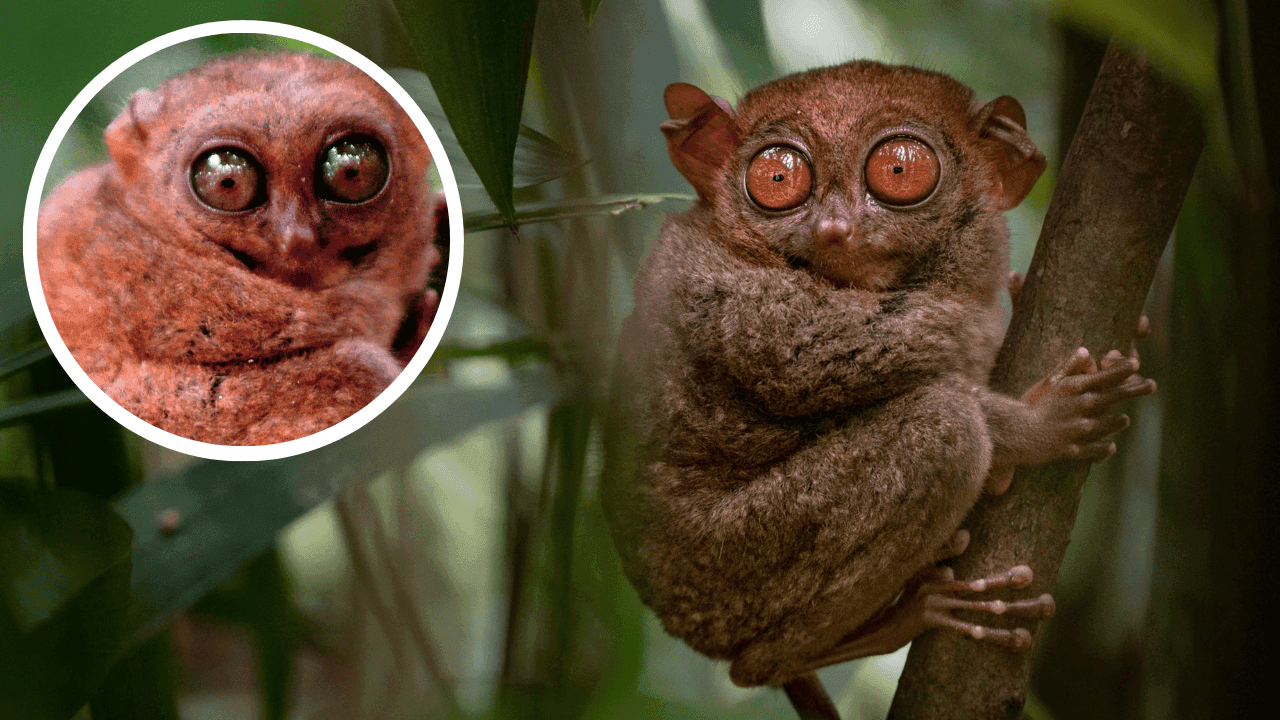
In the lush, green canopies of the Philippine rainforests, lives a creature no larger than a baseball — the Philippine tarsier. Measuring just 5 inches (about 13 cm) long and weighing approximately 5 ounces (142 grams), it’s one of the world’s smallest primates. These tiny marvels are not only cute but also uniquely adapted for nocturnal life. With eyes each the size of their brain, the tarsiers use their googly eyes to absorb as much light as possible during their twilight hunts.
The Philippine tarsier (Carlito syrichta) can be found on several islands across the archipelago, particularly Bohol, Samar, and Leyte. Despite their small stature, these primates are surprisingly agile, leaping from branch to branch in their jungle homes. The tarsiers thrive in areas thick with tall grasses, bushes, bamboo, and trees, mastering the art of silent travel through the night sky.
But here’s the twist: despite their fascinating adaptations, Philippine tarsiers are facing severe threats. These small primates are classified as endangered, with their populations declining due to habitat loss and illegal trapping. Hunters often shake the frightened animals out of their trees or destroy the branches where they reside. This relentless threat puts enormous pressure on their survival.
What makes tarsiers particularly intriguing — and a bit heartbreaking — is their stress sensitivity. Captive environments can lead to extreme distress for these creatures. In fact, they are known to commit suicide when under extreme duress, making their captivity tragic. One source notes, ‘They can’t handle the stress of captivity and become traumatized by loud noises or human interaction.’

In their wild habitat, tarsiers are not just adorable; they’re also unique as the only fully carnivorous primates. Their diet primarily consists of insects, though they will also prey on small vertebrates like frogs, lizards, and even small birds. Imagine a critter that actively hunts prey larger than itself, using its keen senses and remarkable agility.
Efforts to conserve the tarsier are underway, but results have been limited. Captive breeding attempts have largely been unsuccessful, struggling against the natural instincts that drive these creatures to leap freely in their native environments. The existence of tarsiers hangs in the balance, a reminder of the delicate intersection between wildlife and human activities.
The plight of the Philippine tarsier serves as both a scientific curiosity and an emotional wake-up call. Are we willing to lose such extraordinary creatures due to human negligence? As we reflect on our roles in preserving such wonders of nature, we must ask ourselves: can we find a sustainable way to coexist with the unique wildlife that share our planet?
Disclosure: We may earn a commission when you make a purchase through the ads.