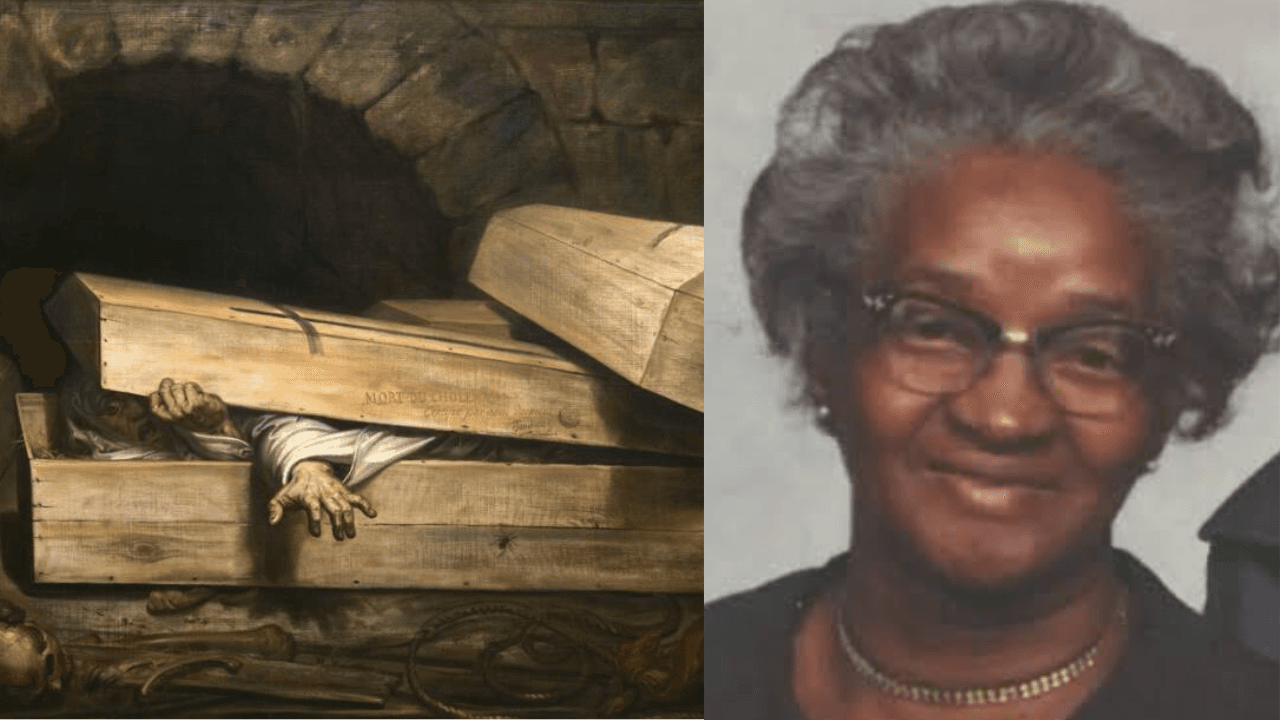
In the summer of 1915, Essie Dunbar was reportedly declared dead after suffering an epileptic seizure in South Carolina. She was about 30 years old at the time.
According to later accounts, a doctor found no signs of life and her family arranged a funeral for the next day. Dunbar was placed in a wooden coffin as mourners gathered to say goodbye.
But the story took a strange turn when Dunbar’s sister arrived late and asked to see her one last time. The coffin had already been lowered into the ground, so mourners reportedly dug it back up.

When the coffin was opened, Dunbar allegedly sat up and smiled at her sister. The crowd, believing they had just seen the dead return, reportedly fled in fear.
Later retellings say several ministers fell into the grave during the panic. One version claims one of them suffered broken ribs as others rushed to escape.
Dunbar was not dead, according to the legend. She had been mistakenly buried alive and was rescued only because her sister arrived moments after the burial.

The story says Dunbar returned to a quiet life after the incident. She reportedly lived for nearly five more decades after her supposed burial.
By the 1950s, local newspaper accounts described her as still living in South Carolina. She was said to have outlived the doctor who had first pronounced her dead.
Dunbar reportedly died for good on May 22, 1962, at Barnwell County Hospital. Local papers later described that service as her final funeral.
The Essie Dunbar story remains famous because it sounds almost impossible. But researchers have warned that the details are difficult to prove.
The biggest problem is that no known 1915 newspaper account has been widely cited to confirm the original event. Much of the modern story comes from later reports and from Jan Bondeson’s book on premature burial.
Premature burial was a real fear in earlier centuries, especially before modern medical checks became common. Historical discussions of premature burial include both verified cases and stories that are hard to confirm.
Whether every detail is true or not, Dunbar’s story survives because it touches one of humanity’s oldest fears. The idea of waking underground, unheard and trapped, is deeply unsettling.
Her alleged rescue also gives the story a rare ending. Unlike darker tales of people found too late, Dunbar’s legend ends with a woman climbing out of her own grave and living for decades afterward.
That mix of terror, mystery and survival is why the strange story of Essie Dunbar continues to spread more than 100 years later.