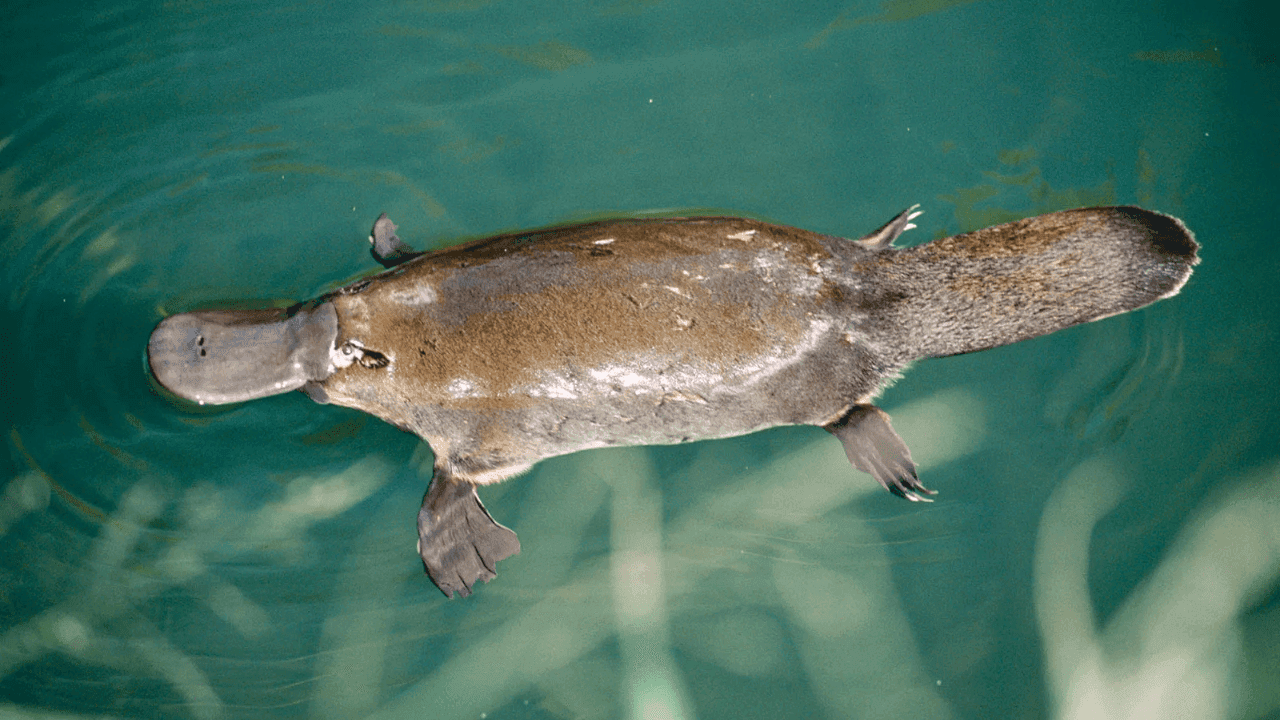
In a world of vibrant colors and sounds, one curious creature has found a way to navigate its murky surroundings without them. Meet the platypus, an animal so unique that it defies convention. Hailing from the streams and rivers of Australia, this egg-laying mammal is equipped with a remarkable ability that leaves scientists in awe.
When a platypus dives, it shuts its eyes, ears, and nostrils, blocking out every sensory input except for one — its bill. This unusual appendage is not just for show; it houses thousands of electroreceptors that can detect electric fields emitted by living prey. As it glides effortlessly through dark waters, the platypus relies entirely on this remarkable sense, making it a master of underwater hunting.
This skill is especially crucial in the murky world where sight fails. Imagine the thrill of sensing a crayfish twitch or a bug larva wriggling in the mud without the need for eyes or ears. The platypus picks up the faint electric pulses made by contracting muscles in its prey, following this invisible trail with precision.
‘In murky waters, where other animals might flounder, the platypus thrives,’ says Dr. Jane Smith, a leading researcher on mammalian senses. ‘It’s as if they have a superpower that allows them to perceive a world we can’t even imagine.’
The hunting process is mesmerizing. Each dive is short and focused, maximizing efficiency. With its bill sensing electrical signals, the platypus sweeps its head from side to side, picking up varying inputs as it studies its surroundings. Once it locates its meal, it scoops it up with the speed and agility of a pro. Food is stored in cheek pouches until it resurfaces — chewing in a world that’s alive with flavors yet remains unseen.
Scientists have studied the platypus extensively, mapping its bill and recording brain responses to weak electric fields. These studies reveal a creature that truly embodies the phrase ‘swimming with senses off and a sixth sense switched on.’ As researchers delve deeper, they’re uncovering not just a fascinating adaptation, but a window into how different life forms interact with their environment.
The platypus’s electroreception is a testament to evolution’s creativity. While other mammals rely on sight and hearing, the platypus has adapted to thrive in its unique ecosystem with its own specialized mechanisms. This bizarre animal has succeeded in carving out its niche by using electric signals, a tool many of its peers lack.
Despite its oddities, the platypus faces challenges. Habitat destruction, climate change, and water pollution threaten its existence. As we learn more about these incredible creatures, the hope is that awareness will foster conservation efforts to protect them and their ecosystems.
In the end, the story of the platypus is one of adaptation, beauty, and survival. With its eyes, ears, and nostrils closed, it ventures into the unknown, guided by electrical whispers of life beneath the surface. What does this teach us about the sensory world around us? Are we too reliant on our primary senses to navigate our lives?