Long Beach once had a waterfront where racing coasters and glowing signs competed with the Pacific for attention.
The Pike was a seaside amusement district in Long Beach, California, officially opened in 1902 and largely closed by 1979. Its rides and old midway are gone, but its name remains part of the modern waterfront.
Visitors today will find shopping and dining rather than an abandoned amusement park. To understand the original Pike, look beyond the familiar name to archival photographs, rescued objects and the changing shoreline around it.
The Pike begins beside the water
The Long Beach Heritage Museum dates the official opening to July 4, 1902. The district became known as the “Walk of a Thousand Lights,” a name that still suggests its appeal after sunset. Following World War II, it expanded and took the name Nu-Pike. Long Beach Heritage Museum
The waterfront setting was central to its character. The California State Archives describes an entertainment area with a grand bathhouse, food stands, gift shops, arcades and rides. Early developer Charles Rivers Drake helped establish this seaside destination. California State Archives
A visitor did not need to spend the whole day chasing thrills. The beach, refreshments and shops offered their own reasons to linger. That mix made the Pike a district with many small attractions, rather than a single experience built around one story.
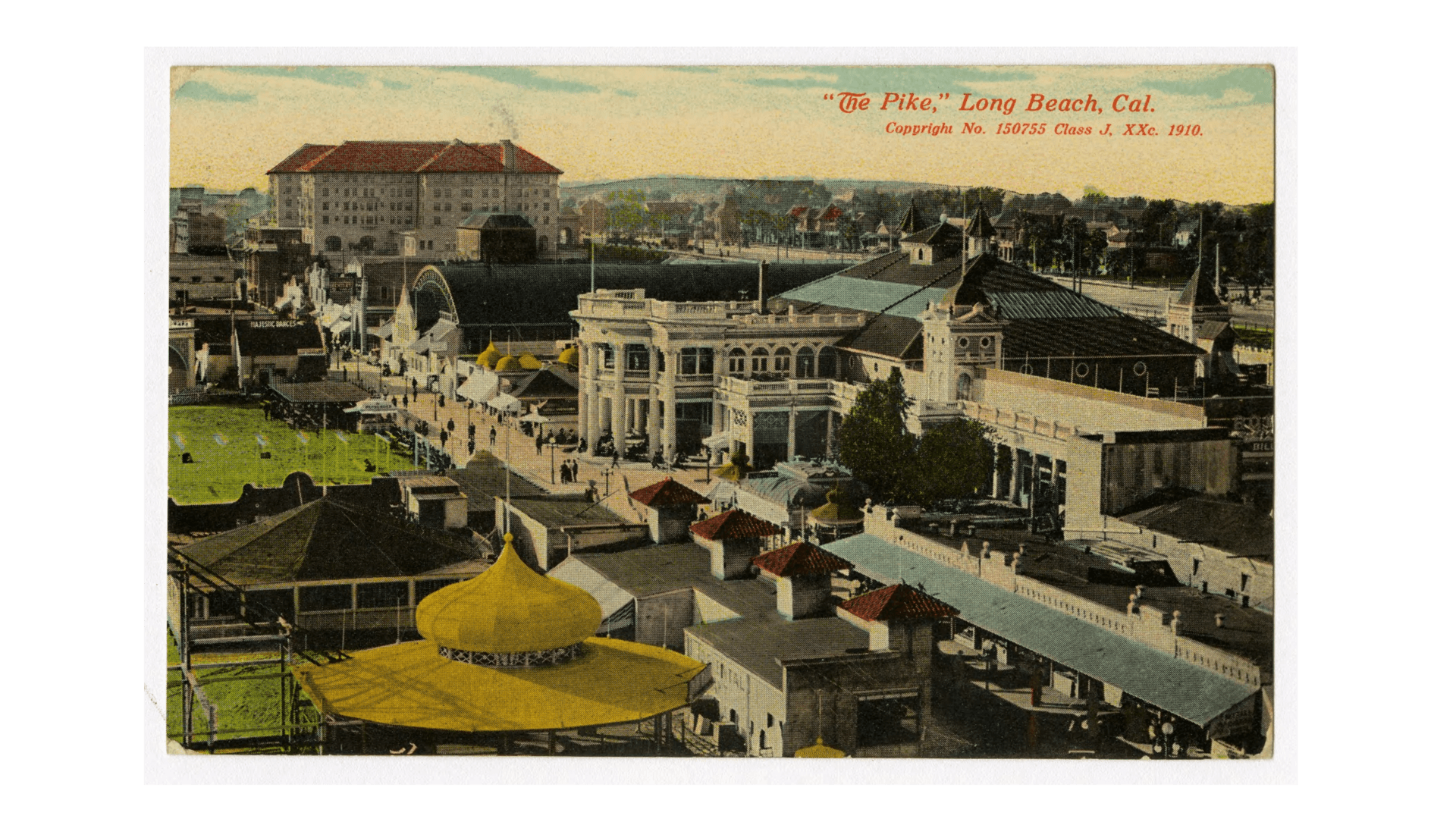
The featured postcard shows the early waterfront in colorized form. Like many souvenir cards, it presents a polished view of a place people wanted to remember and share.
The coaster that made two trains part of the thrill
The Cyclone Racer opened in 1930, replacing the Jack Rabbit Racer. Its two tracks allowed trains to run alongside one another, adding a race to the familiar climbs and drops.
The Los Angeles Public Library credits designer Frederick Church and builder Harry Traver, and records that the ride operated until 1968. The coaster’s profile helped make the waterfront recognizable far beyond Long Beach. Los Angeles Public Library history
A racing coaster invites a different kind of anticipation. Riders can watch another train as well as the track ahead. In old images, the timber structure forms a busy pattern against the open coast: engineering turned into seaside spectacle.
Museum photographs also preserve smaller attractions, including bumper cars, a carousel and a double Ferris wheel. Together, those images show how much variety surrounded the best-known ride. Pike photograph collection
Why the crowds and rides disappeared
By the 1950s, the Pike faced competition from newer Southern California attractions, including Disneyland and Knott’s Berry Farm. The library’s history also describes a rough reputation that discouraged some families.
Operators tried to respond with children’s attractions, upgrades, discounts and a new identity. Those efforts show that the later decline was not simply accepted without a fight. Los Angeles Public Library history
The Historical Society of Long Beach places the decline in popularity in the 1960s. Rides and concessions gradually disappeared, with most closed by 1979. Its account is useful because it describes a process, rather than implying that every business stopped on the same date. Historical Society of Long Beach
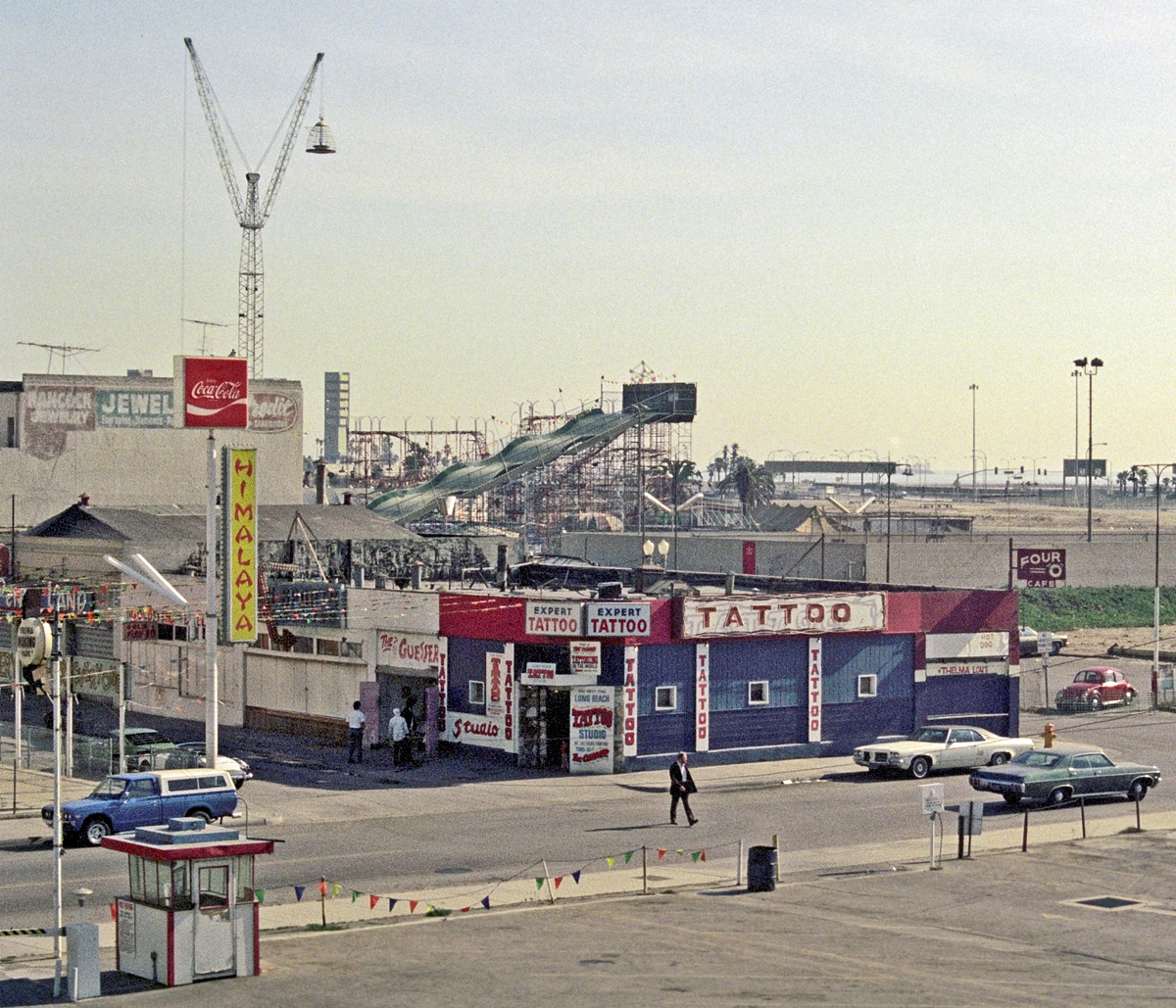
The body photograph, taken in 1976, records that later era. Storefronts and amusement signs remained part of the streetscape shortly before the district’s final years. It is an archival view, not an image of a surviving midway.
A game and a neon sign outlasted the park
Looff’s Lite-A-Line gave part of the Pike an unusually long afterlife. The attraction combined elements of pinball and bingo. After leaving its original setting, it operated at a new Long Beach Boulevard location.
That later business closed permanently in November 2022. In 2023, the Long Beach Business Journal reported that its neon sign had been donated to the Museum of Neon Art in Glendale. Other Pike and Looff artifacts went to the Historical Society of Long Beach. Reporting on the preserved sign
The distinction matters for travelers using older guides. A relocated attraction can itself become history. An address in a retrospective article does not guarantee that the business still welcomes visitors.
It also reveals another form of preservation. Saving an entire amusement district may no longer be possible, while saving a sign can still protect its craftsmanship and the memories attached to it.
What can you visit today?
As of November 2026, the official tourism directory lists the Pike Outlets as a shopping and dining destination near the Convention Center and Aquarium of the Pacific. The modern center uses a historic name, but it is not the original amusement park preserved in place. Visit Long Beach
For a history-focused visit, begin with the local museums’ online collections. Compare early postcards with later photographs before walking the present-day waterfront. Check museum schedules and exhibition details directly if you want to see particular artifacts; donated objects are not always on public display.
Frequently asked questions
When did the original Pike open?
Its official opening was July 4, 1902, according to the Long Beach Heritage Museum.
When did the Pike close?
Most rides and concessions had closed by 1979. Some related businesses survived longer or moved elsewhere.
Can you still ride the Cyclone Racer?
No. The original racing coaster stopped operating in 1968 and no longer stands.
Is the Pike abandoned today?
No. The waterfront has changed, and the Pike Outlets is an active commercial destination. The historic amusement district survives through records, photographs and preserved artifacts.
The old Pike rewards a slower kind of looking: reading a postcard, studying a saved sign and imagining how many ordinary evenings became lasting memories.
Image credits
Featured image: Beach & Talbert (Public domain), via Wikimedia Commons. An archival colorized postcard of the Pike in Long Beach, circa 1911.

Body image: Tequask (CC BY-SA 4.0), via Wikimedia Commons.
