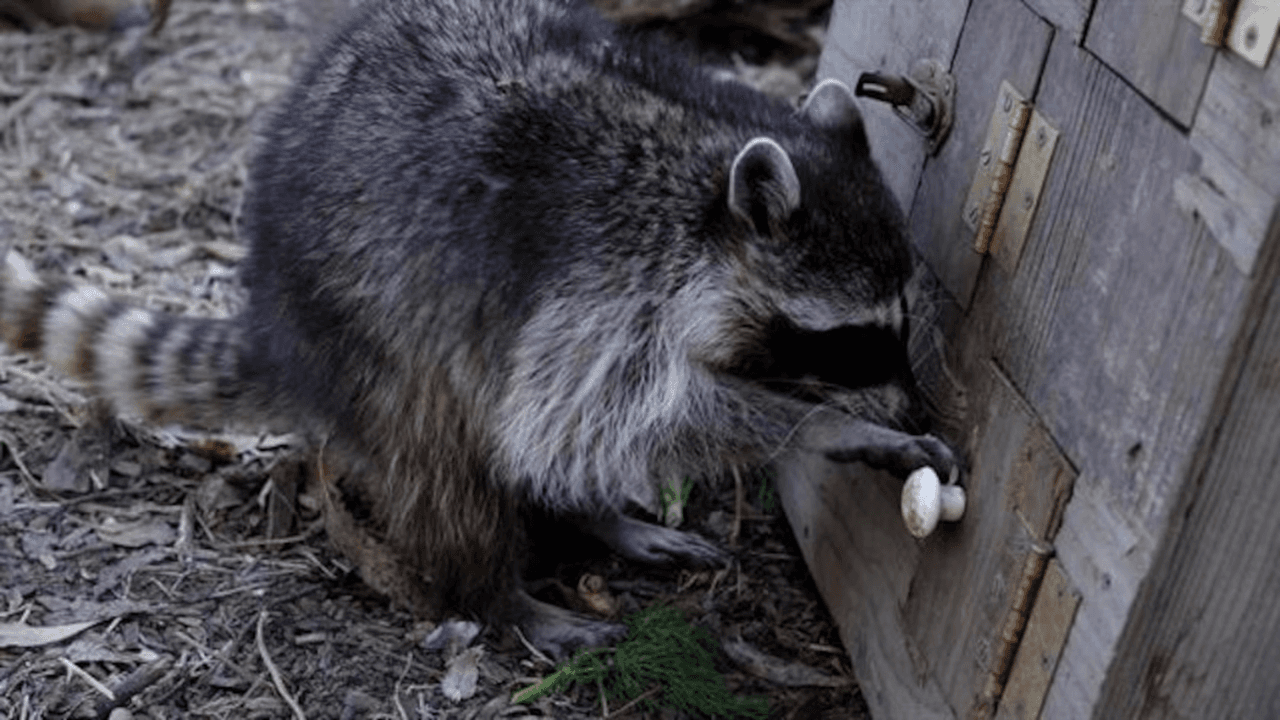
In the quiet of the night, a raccoon might be rummaging through your garbage, but don’t be fooled by its playful antics; there’s a genius at work. With hands so strikingly similar to our own, these masked bandits navigate their environment using unmatched dexterity and creativity. Equipped with five nimble fingers that can twist, pry, and unscrew practically anything, raccoons embody a cleverness that’s as entertaining as it is astonishing.
It’s a warm evening in an urban neighborhood as a raccoon approaches a backyard. Its bright eyes scan the scene while its sensitive paws eagerly explore. These creatures have a unique adaptation: over two-thirds of the sensory processing area in their brains is dedicated to tactile perception. For a raccoon, the world is not just seen; it’s profoundly felt. They have an excellent sense of touch—so acute that blindfolding them would still leave them capable of opening a jar faster than most humans.
But what makes these creatures truly mind-blowing is not just their nimble hands, but what they can do with them. Raccoons often display problem-solving skills that leave humans amazed. These feisty animals can open doors, unlatch cages, and even unscrew jar lids. Just last summer, a viral video showed a raccoon deftly manipulating a trash can lid, deftly showcasing its amazing skill. It’s no wonder we call them “masked bandits.”
As they scavenge for food, they also explore their surroundings. Raccoons use their dexterity to feel their way around, learning and adapting to their environments like little scientists engaged in research. Whether they’re searching for tasty treats in a park or figuring out how to bypass “raccoon-proof” containers, their adaptability is breathtaking.
Interestingly, raccoons don’t just act on instinct. They possess a level of curiosity and cleverness that surprises even seasoned wildlife observers. In studies, raccoons have been shown to demonstrate innovative problem-solving skills. When faced with a puzzle, about one-quarter of them can tackle more complex challenges in urban settings, revealing their flexibility and intelligence. One local wildlife expert said, ‘Touch is very important to raccoons; it’s stronger than some of their other senses.’ This highlights just how critical their dexterous hands are to their survival.
And it doesn’t end with exploration and problem-solving. Raccoons have an incredible ability to learn through touch. Their paws are packed with thousands of sensitive nerve endings that contribute to their impressive capabilities. This adaptation allows them to manipulate objects with extraordinary skill and find food or navigate their environment effectively.
It’s almost poetic how these nocturnal critters embody a blend of curiosity and cunning. Underneath that scruffy fur and playful demeanor lies an animal with the heart of an inventor, engaging with the world in an endlessly inventive manner. Raccoons flourish in cities and the wild, skillfully edging into areas that other animals would shy away from.
As insightful creatures, they remind us to be curious and flexible, using our own “hands” to negotiate the world around us. Raccoons teach us that with enough ingenuity and adaptability, we can navigate the complexities of life. Yet, while we marvel at their cleverness, we must also remember to secure our trash and keep our homes safe from their mischievous hands.
In the end, one has to wonder: what might these little geniuses invent next? Are we prepared for the unmatched ingenuity and determination of the raccoon?
Disclosure: We may earn a commission when you make a purchase through the ads.