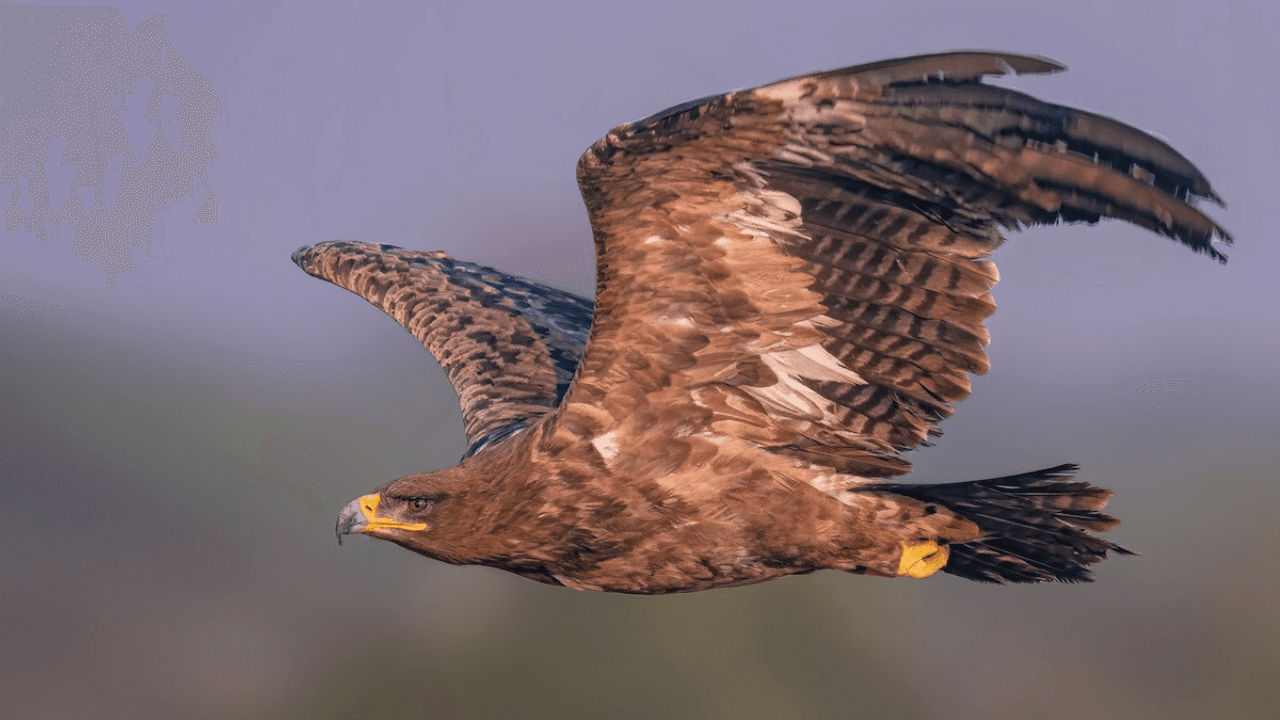
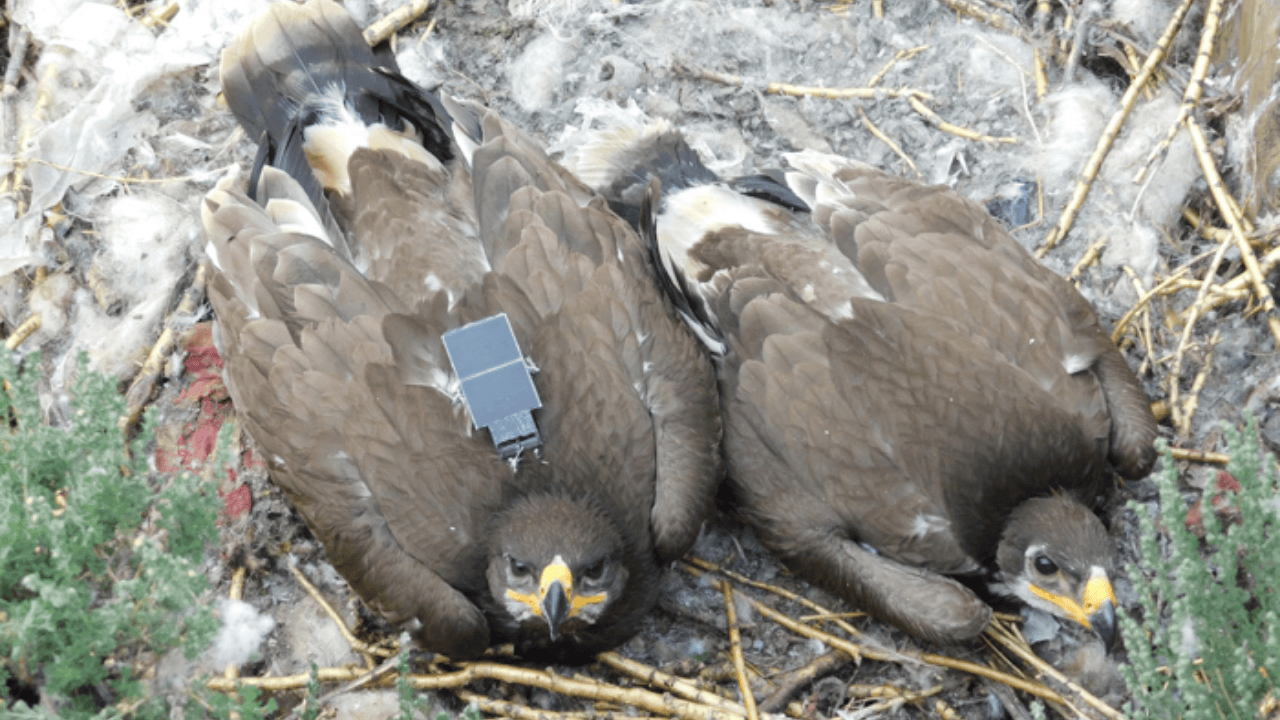
In the vast, sprawling landscapes of Eurasia, one eagle stood out among the many. For 20 years, scientists closely tracked this steppe eagle, fitted with a tiny GPS from Russia. This eagle’s journey traversed deserts, grasslands, and mountains, astonishing researchers with its epic travels. Yet, intriguingly, it never once flew over the ocean.
From its home in Russia, the eagle soared across diverse terrains, effectively avoiding water bodies, no matter how close they came. Observing this behavior, scientists were left fascinated and baffled. Each summer and winter, she would trace her path in a series of vast circles, always sticking to dry land—an anomaly in the bird world, where many species embrace the open water.
The twist? The eagle’s choice to avoid the sea wasn’t random. It was a sophisticated instinct developed over time, honed through evolution and shaped by the very physics of flight. Eagles, like many soaring birds, rely on thermal currents—rising pockets of warm air that help them conserve energy during flight. These currents are plentiful over land, where the sun heats the earth and sends warm air spiraling upwards. In contrast, over the ocean, they become scarce. The eagle’s instinct told it that crossing the water was simply too risky.
As researchers studied the eagle’s movements, they gathered valuable insights into its extraordinary decision-making process. The data revealed that the eagle perfectly understood the geography of its environment. It mapped routes that offered the deepest, most robust thermals instead of flirting with perilous water spans.

Humans often overlook these primal instincts in wildlife, treating them as mere quirks. However, this eagle’s flight path is a testimony to its intelligent navigation and adaptation. It highlighted a wider ecological truth: the importance of understanding our existence in relation to the Earth’s mechanisms.
The steppe eagle learned, over its lifetime, which routes provided safety and efficiency. Its life became a series of brilliant flight patterns not just driven by the hunt for food or the chase of seasonal migration, but instead illuminated by the need to strategically manage energy expenditure. This knowledge had potentially been transformed into wisdom, teaching the eagle to respect the ocean’s vastness.
The aftermath of the tracking study showed just how unique this eagle was. While many birds of prey routinely tackle water crossings, this steppe eagle instinctively knew better, an embodiment of a survival strategy that indicates the deep connection between species and their environments. Scientists heralded it as one of nature’s incredible adaptations, a narrative of instinct written across thousands of kilometers, forged in the wings of resilience.
The question remains: Can humans learn from the eagle’s journey? In a world racing towards waste and disregard for natural instincts, perhaps it is time to reflect on the paths we choose to cross. Are we, too, ignoring the thermal currents guiding our life decisions?