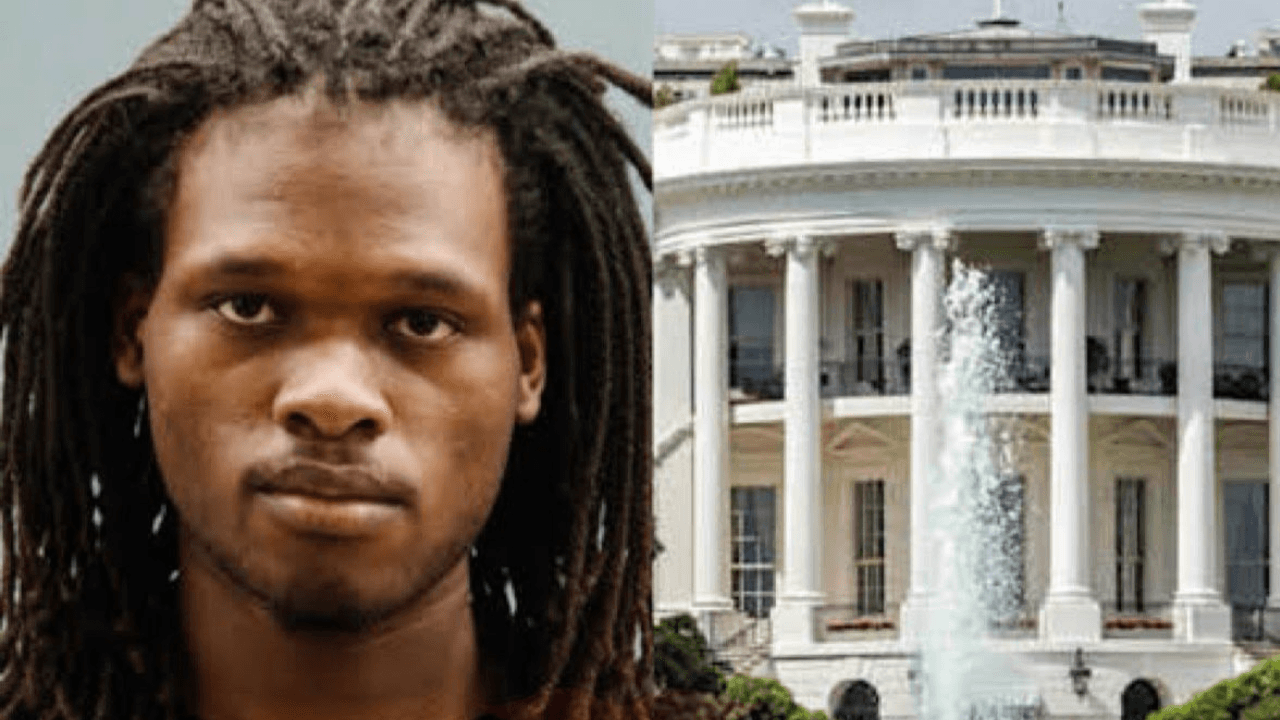
A 21 year old man was fatally shot by U.S. Secret Service officers after opening fire near a White House security checkpoint on Saturday evening, according to law enforcement officials and Associated Press reporting. President Donald Trump was inside the White House at the time, but officials said he was not harmed.
The suspect was identified as Nasire Best of Dundalk, Maryland. The shooting happened near 17th Street and Pennsylvania Avenue around 6 p.m. EDT, after Best pulled a gun from a bag and began firing toward the checkpoint, AP reported. Secret Service officers returned fire, and Best later died at a hospital.
What authorities have confirmed
Officials have released only limited confirmed details about the incident so far. AP reported that no Secret Service officers were injured, but a bystander was struck by gunfire and remained in serious but stable condition Sunday, with injuries described as not life threatening. Authorities have not yet said whose bullet hit the bystander.
The FBI is investigating the shooting, and journalists inside the White House complex were told to shelter in place after the gunfire erupted. Evidence from the scene remained visible afterward as investigators began processing the area.
Previous White House incidents now under scrutiny
AP reported that Best had previously been arrested in 2025 after trying to enter White House grounds while claiming to be Jesus Christ. In that earlier case, he was later sent for psychiatric evaluation. The latest shooting has renewed attention on how people with prior contacts near the White House are monitored once they leave custody or treatment.
Some of the claims circulating online about Best’s social media posts and self descriptions have appeared in secondary reports, but those details were not confirmed in the AP reports I reviewed. At this stage, the most solid public record is the shooting itself, his prior White House related encounter, and the ongoing federal investigation.
Why this incident matters beyond one night
This was the third shooting near the president in about a month, according to AP. That pattern is likely to intensify pressure on federal agencies to review both perimeter security and threat assessment around the White House complex. This is an inference based on AP’s reporting about the recent sequence of armed incidents near the president.
The case also highlights the difficult line between mental health intervention and public safety. AP reported that Best’s mother said he had no known history of violence, even though he had prior contact with authorities at the White House. That gap between warning signs and actual violence is likely to become part of the public discussion as the investigation moves forward. This is an inference based on the confirmed prior encounter and the family comments reported by AP.
What happens next
Investigators still have key questions to answer, including how Best approached the checkpoint, whether there were missed warning signs after his earlier White House encounter, and how the bystander was shot. For now, the clearest facts are these: a man opened fire near a White House checkpoint, Secret Service officers killed him, a bystander was wounded, and federal authorities are now reviewing what led up to the attack.
Readers can follow the current public reporting from The Associated Press initial report and its follow up on the wounded bystander.