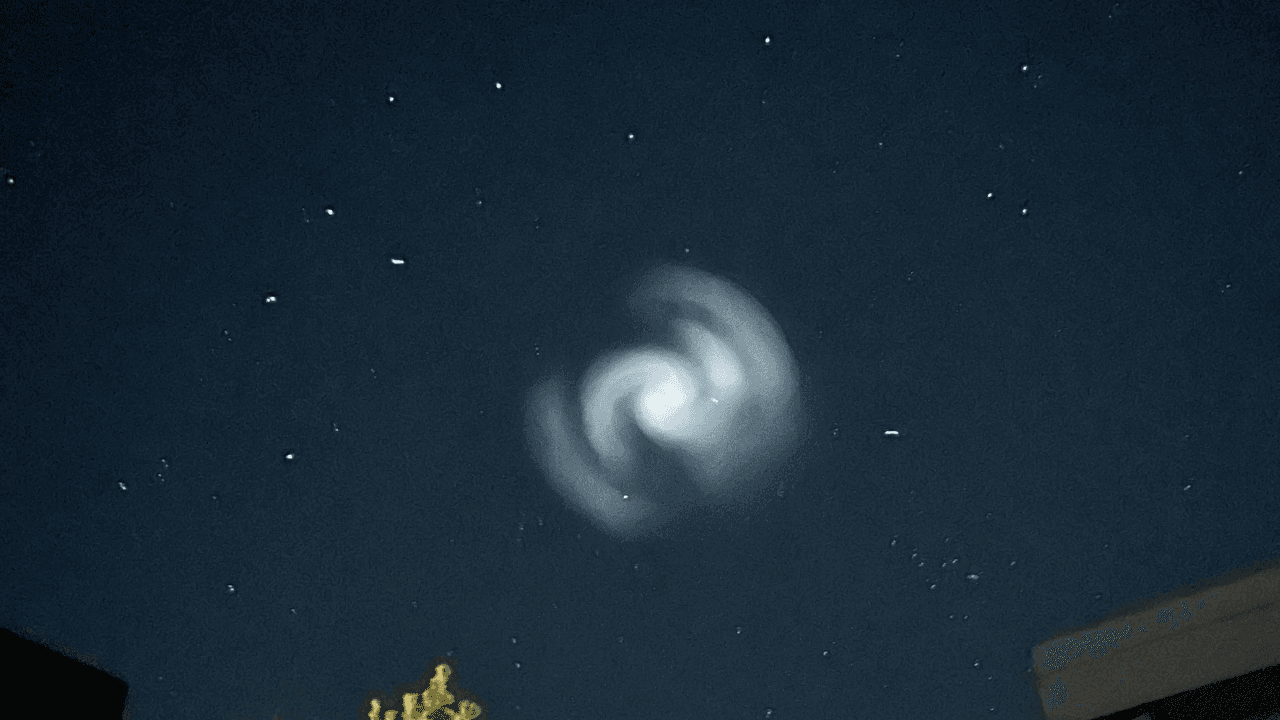
One clear evening in Alaska, residents were treated to an unexpected spectacle—a luminous spiral swirling ethereally against the twilight. This wasn’t some celestial phenomenon but rather a dazzling consequence of the SpaceX Falcon 9 rocket’s launch. The recent flight not only charted a course toward its mission objectives but also painted the sky with a transient masterpiece that captivated all who were lucky enough to witness it.
As part of its delivery of a payload into orbit, the Falcon 9 had just completed its mission and was commencing its descent when, through a remarkable confluence of angles and conditions, it generated a giant blue spiral. The phenomenon persisted for a few brief but mesmerizing minutes, leaving behind a trail of intrigue and wonder.
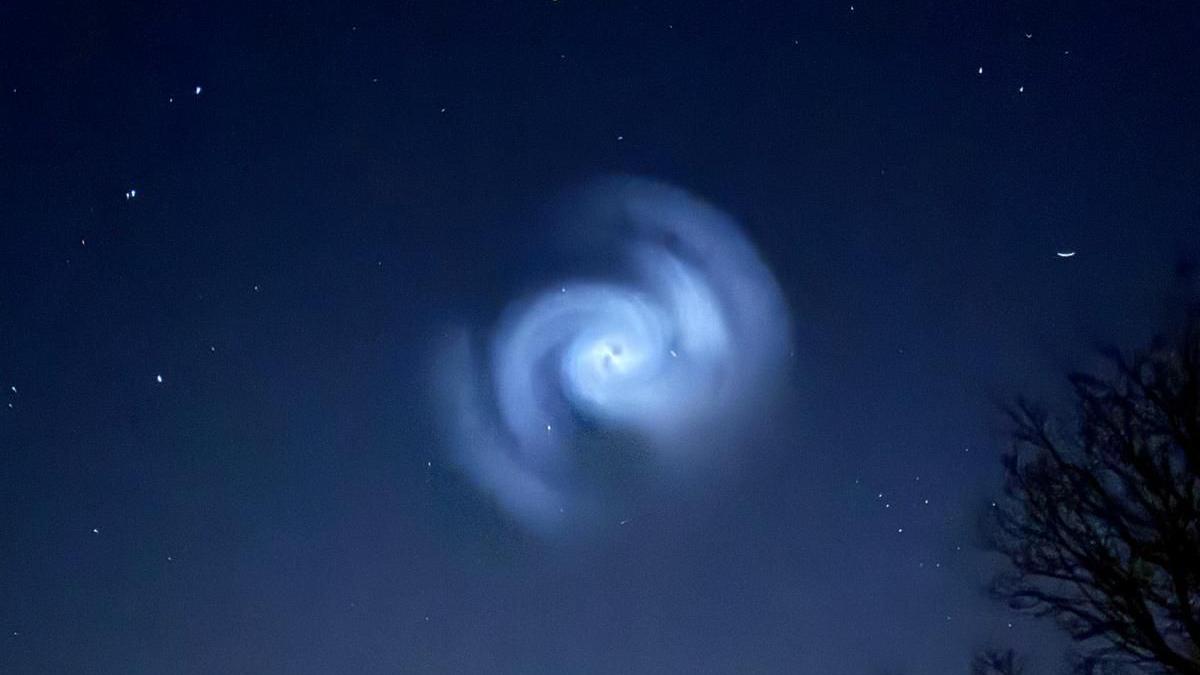
This occurrence happened during a period of higher than usual SpaceX activity. The company, well-known for its ambitious endeavors to enhance human life on and beyond Earth, has routinely stirred public interest with its visual splendors and technical marvels. However, such a visually captivating event also raises questions and fuels discussions about the nature of modern space endeavors—a testament to the advancing frontiers of human ingenuity.
Though not unprecedented, sky spirals like these offer not just stunning views but also insights into flight paths, reflective sunlight conditions, and upper atmospheric winds. Experts in the field note that although this phenomenon might look like the backdrop of a science fiction movie, it is a natural interplay of science, technology, and nature.
Alaskan skies have long been stages for the Northern Lights, but the addition of human-made spectacles like this highlights a unique intersection of natural and technological realms. Such intersections often herald new opportunities for scientific observation and public engagement, grounding advanced technological developments in a palpable and often personal tableau of awe.
As discussions continue about the implications of increasing space launches—and the impressive aerial visuals that occasionally accompany them—one thing remains clear: the skies shall continue to excite, inspire, and provoke dialogues about humanity’s place within the cosmos.