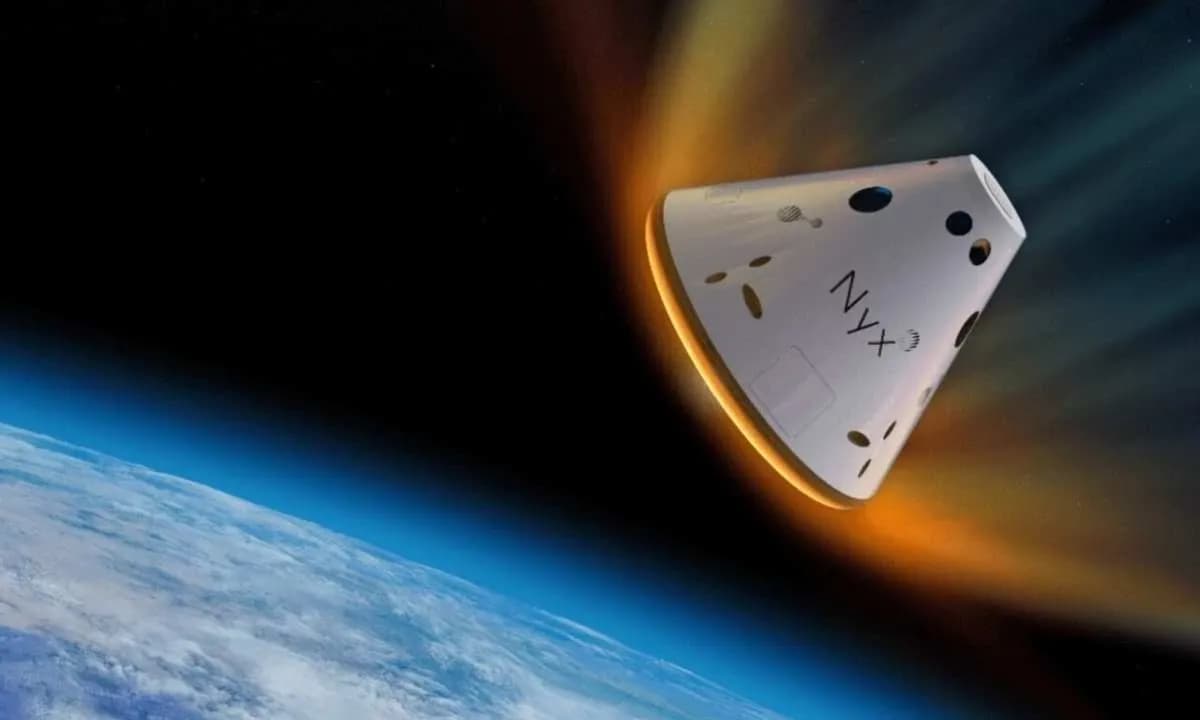
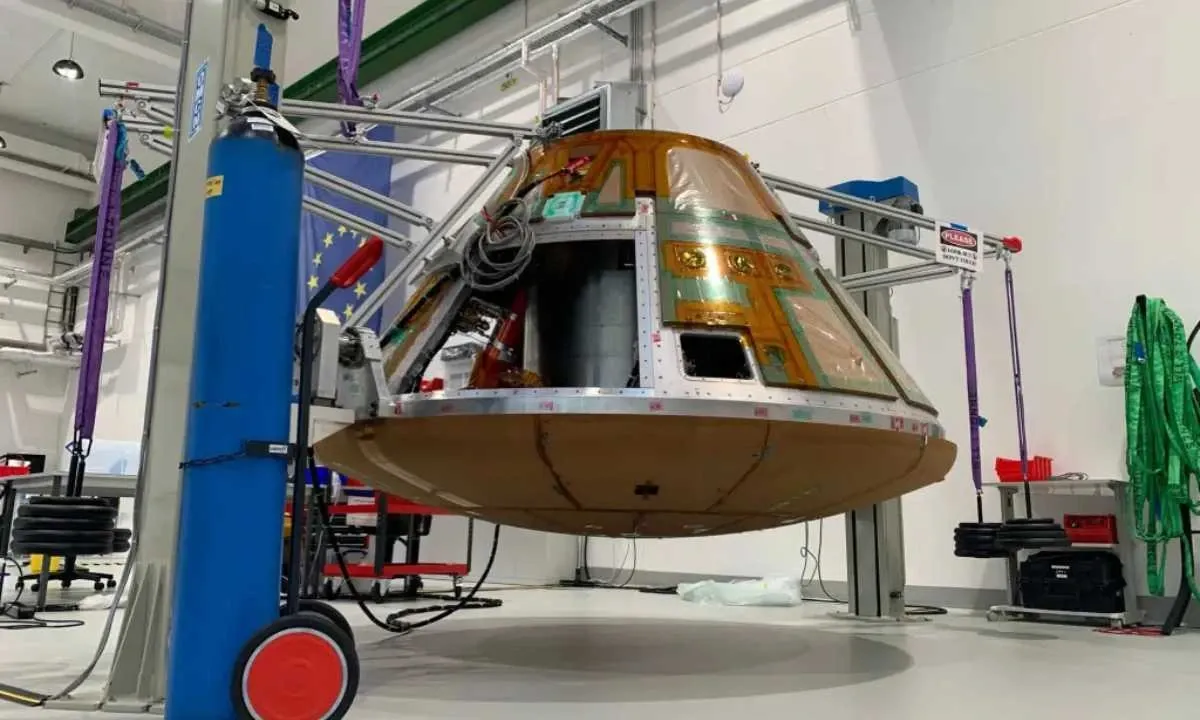
In a tragic twist of fate, a space capsule launched on June 23, 2025, met a watery grave during its mission to provide cosmic memorials for 166 deceased individuals. The Nyx capsule, crafted by the German startup The Exploration Company, was designed to fulfill the heartfelt wishes of many seeking a final resting place amongst the stars.
The capsule’s journey began optimistically, successfully completing two orbits around Earth. Inside were not just ashes but also a stash of cannabis seeds, a surprising twist to a mission focused on memorializing loved ones. The mission had been organized by Celestis, a Texas-based company specializing in space burials, who promised an unforgettable send-off for those daring enough to reach beyond Earth’s boundaries.
However, on July 1, 2025, tragedy struck. As the Nyx capsule initiated its return to Earth, an unexpected re-entry anomaly caused it to crash into the Pacific Ocean. The dreams of a peaceful cosmic farewell vanished in an instant, scattering the ashes and cargo into the vast and unforgiving sea.
Families who had entrusted their loved ones’ remains to this pioneering venture were left without answers. ‘We thought we were making a statement about love and remembrance,’ shared one grieving family member. ‘Now, we’re left with nothing but uncertainty.’
While the initial news of the successful launch brought a wave of excitement, the abrupt end raised countless questions about the ethics and feasibility of space burial missions. What should one consider when embarking on such journeys? The inclusion of cannabis seeds—intended for future cultivation experiments often touted as a part of the broader science behind death and reincarnation—added to the controversy.
Celestis quickly released a statement acknowledging the crisis. They described it as an anomaly occurring during re-entry, admitting that investigations into the cause were underway. Such failures highlighted not just technical limitations but also emotional ramifications for the families involved.
This mission was not just about ashes drifting into space; it was a deeply personal journey for those who wished to memorialize their loved ones in a unique way. Each of the 166 cremains carried tender stories and emotional legacies, all now unceremoniously splashed into the ocean. The company faced immense backlash, some families even calling for accountability and demanding answers on how such a revered mission could culminate in disaster.
The incident reignited discussions about space burials as a new frontier in memorial services. Each capsule, previously seen as a beacon of hope and closure, now became a symbol of lost dreams and shattered wishes. Companies like Celestis had opened up the possibility of cosmic remembrances. Still, incidents like these raised concerns about the reliability of private space missions and the ethical boundaries of what should be sent into orbit.
As families grapple with the loss of not just their loved ones but also the ability to say goodbye in the grandest way they envisioned, questions loomed large. Would they still trust the allure of space for such personal acts? What regulations need to be established to prevent future tragedies? For many, the love for a celestial farewell still flickers, but the path forward has never seemed so fraught with uncertainty.
In this case, the vastness of space collided with the fragility of life, leaving behind nothing but the echoes of dreams once imagined. How do families reclaim their narratives when their loved ones’ journeys are cut short in the most unfathomable of ways?