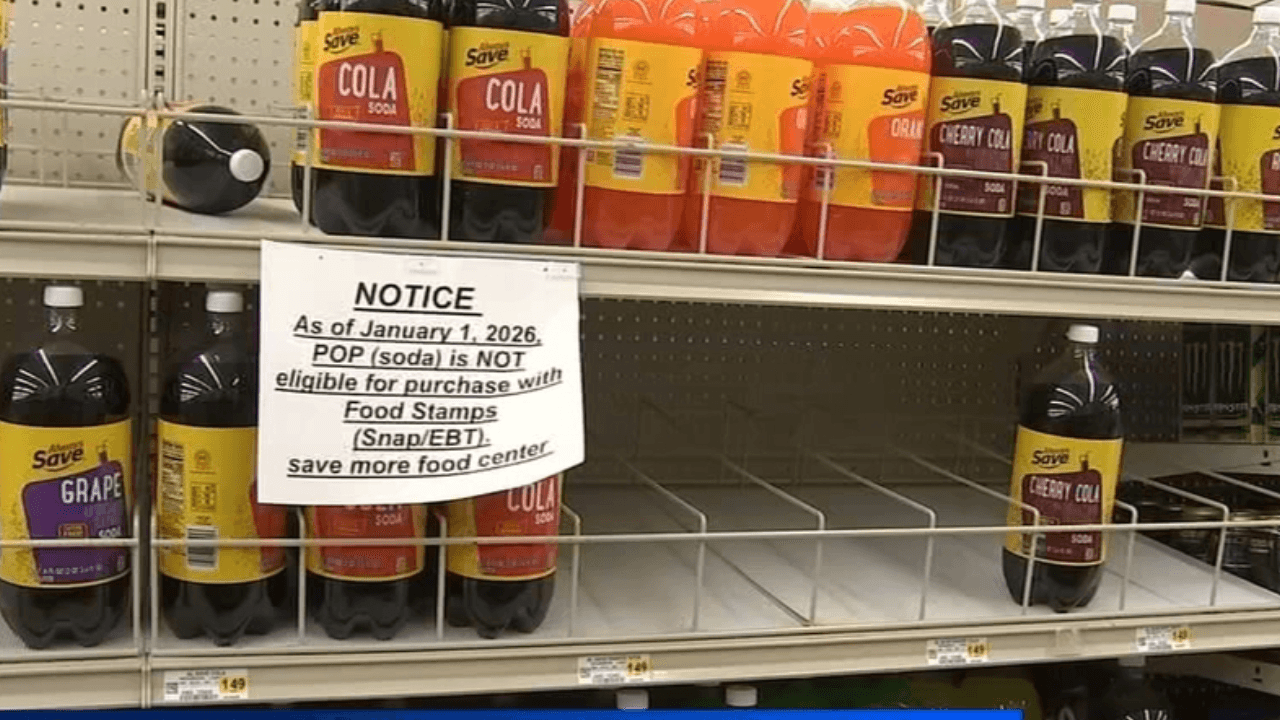
Starting Jan. 1, Americans who rely on SNAP benefits in five states will face new limits on what foods they can buy.
Indiana, Iowa, Nebraska, Utah, and West Virginia will block purchases of soda, candy, and other restricted items using SNAP. These changes affect about 1.4 million people.
The policy marks a major shift for the federal nutrition program that serves more than 42 million Americans.
Why the SNAP Restrictions Are Happening
The new rules stem from state waivers approved under the Trump administration. The effort is backed by Health Secretary Robert F. Kennedy Jr. and Agriculture Secretary Brooke Rollins.
Their goal is to reduce chronic diseases like obesity and diabetes by limiting access to sugary drinks and processed foods.
“We cannot continue a system that funds food that makes people sick and then pays again to treat the illness,” Kennedy said in a December statement.
Reuters reporting on SNAP policy
What Foods Are Now Banned
The restrictions vary by state.
- Utah and West Virginia: Soda and soft drinks
- Nebraska: Soda and energy drinks
- Indiana: Soft drinks and candy
- Iowa: Taxable foods, including soda, candy, and some prepared foods
Advocacy groups warn that food lists are unclear and may confuse shoppers.
Retailers Warn of Checkout Chaos
Retail and grocery industry groups say stores are not ready for the changes.
The National Retail Federation predicts longer checkout lines, customer frustration, and system errors as SNAP recipients learn which items are blocked.
Industry estimates suggest the changes will cost retailers $1.6 billion upfront and another $759 million each year.
“It’s a disaster waiting to happen,” said Kate Bauer, a nutrition expert at the University of Michigan.
Recipients Say Stigma Will Increase
SNAP recipients say the rules will make shopping more stressful.
Marc Craig, 47, of Des Moines, said he worries about embarrassment at the register.
“They treat people who get food stamps like we’re not people,” Craig said. “Now it’s even harder to know what’s allowed.”
A Sharp Break From Decades of Policy
For decades, SNAP allowed purchases of nearly all food items except alcohol, tobacco, and hot prepared foods.
The Food and Nutrition Act of 2008 reinforced that broad access.
Past efforts to restrict foods were rejected by the USDA, which found they were costly and unlikely to improve health outcomes.
That changed under the second Trump administration, which encouraged states to seek waivers.
U.S. Department of Agriculture SNAP guidance
Health Experts Remain Divided
Some health experts say the bans miss deeper problems.
Anand Parekh of the University of Michigan School of Public Health said affordability matters more than restrictions.
“Healthy food is expensive and unhealthy food is cheap and everywhere,” he said.
States must evaluate the impact of the bans, which last two years and can be extended for three more.
What Comes Next
At least 18 states are considering similar SNAP waivers.
If expanded nationwide, the changes could reshape how millions of Americans buy groceries.
For now, SNAP recipients in five states will be the first to navigate the new rules starting Jan. 1.