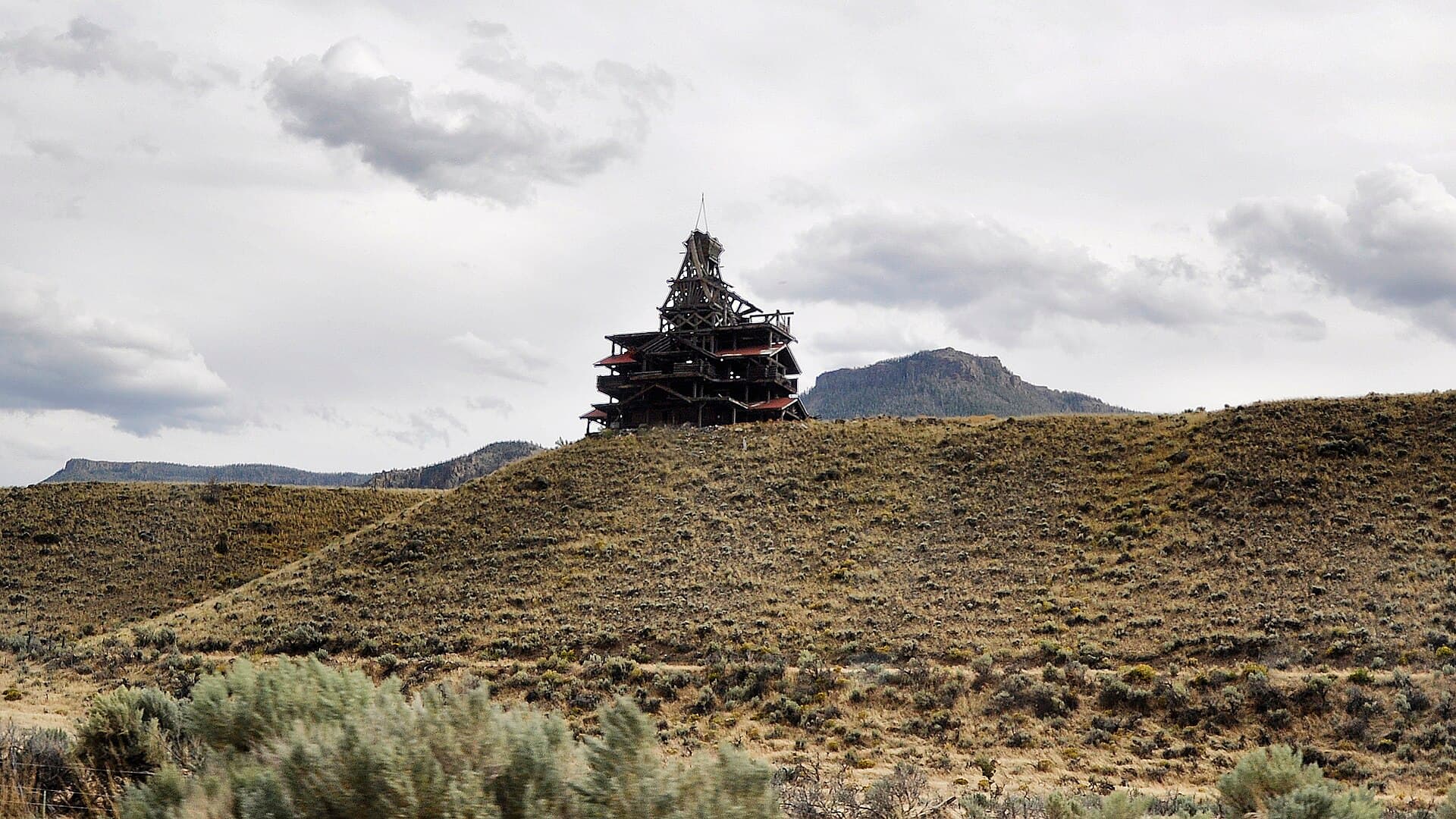
The house rises from a Wyoming hillside like a stack of cabins reaching for the mountains.
Smith Mansion is a privately owned timber landmark near Wapiti, west of Cody, Wyoming. Builder Lee Smith created it as a family home, then continued adding levels, stairs, balconies, and striking wooden forms. He died in a fall while working on the structure in 1992.
It is often described as an abandoned mansion, but that label leaves out the people who lived there and those who later tried to care for it. This is an extraordinary house with a real family history, not a license to invent a tale about its builder.
Smith Mansion began as a home
The Cody Yellowstone visitor bureau identifies the landmark on the Buffalo Bill Cody Scenic Byway. Smith lived there with his wife and two children, and the house grew into a multilevel structure unlike its neighbors.
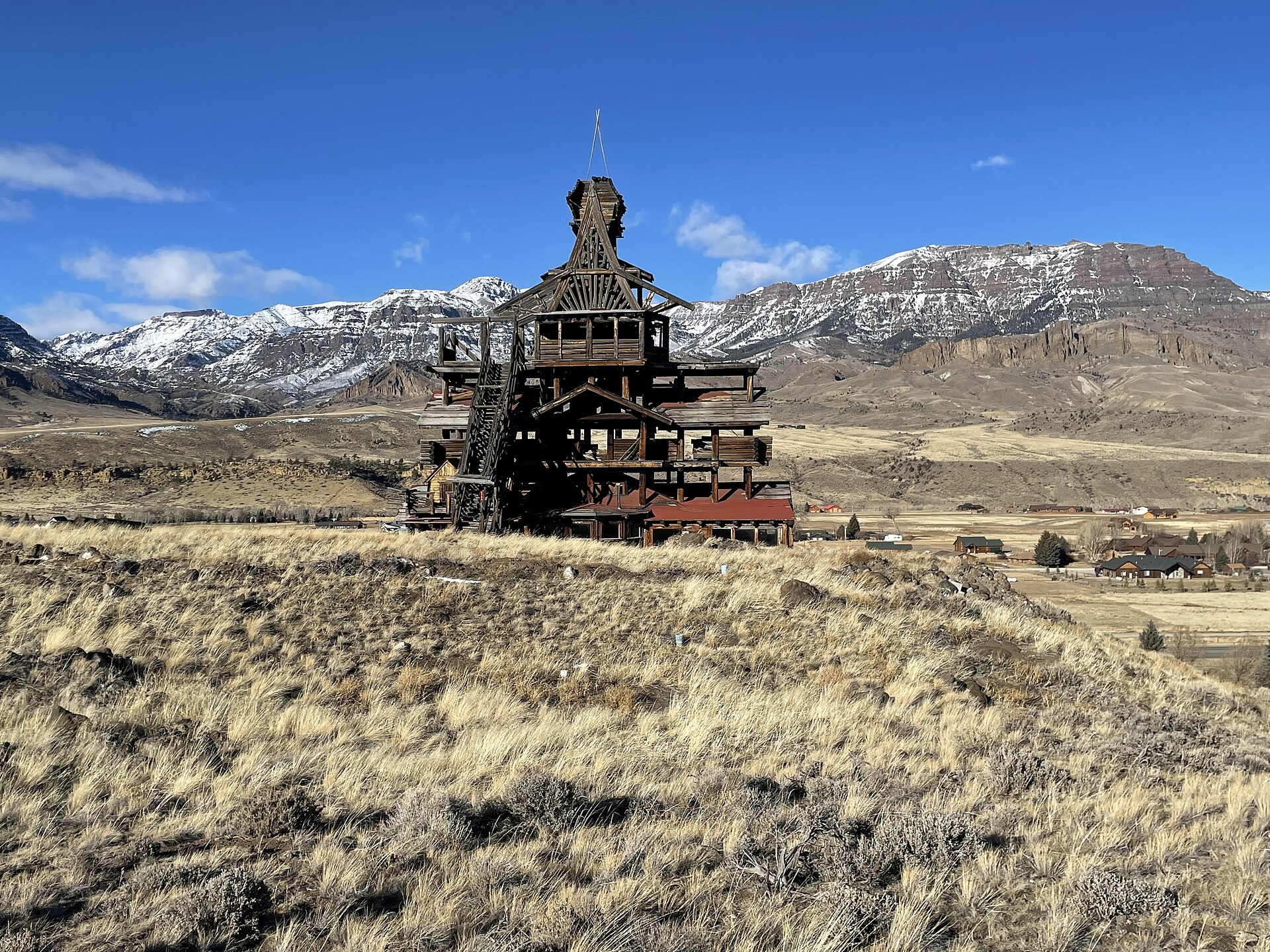
The setting amplifies the effect. Against open slopes and rugged mountains, the timber construction has few visual distractions. Its tall outline seems both connected to the landscape and stubbornly independent of it.
That impression can make the house look as though it was built only to attract attention. The family's use of it suggests something more personal. Before it became a roadside curiosity, it had the ordinary functions of shelter, meals, and childhood.
Keeping those functions in mind changes the experience of looking at it. The building is unusual, but the lives associated with it should not be reduced to its appearance.
Building with what the landscape provided
A Discovery account of Smith Mansion describes Smith's use of timber salvaged after a fire on Rattlesnake Mountain. The material helped give the house its rough, irregular character.
Interior details were equally personal. Accounts describe a table made from a stump and living spaces arranged around the practical demands of warmth and shelter. The building's growth did not follow the tidy outline expected of a standard house.
From outside, projecting beams and balconies create a changing pattern of dark gaps and solid wood. Stairs draw the eye upward, while different roof planes make it difficult to identify a single clear endpoint.
The visible complexity is part of its appeal. A viewer can follow one structural line and quickly lose it among another set of posts, braces, and boards.
The builder's death and the family's memories
Smith died in 1992 after falling while working on the house. The loss ended his continuing construction and left his family with a difficult question about its future.
A 2012 Associated Press report published by Deseret News brought his daughter Sunny's memories into a story too often told through rumors. Her account emphasized a father and a childhood home, rather than the caricature of a mysterious or irrational builder.
That distinction deserves respect. An unconventional building is not evidence of mental illness, and unsupported stories about secret motives do not become history through repetition.
The same reporting described efforts to preserve the structure. For a family, preservation could mean protecting both a physical landmark and memories attached to it. For visitors, those efforts offer a reason to look beyond the silhouette.
The best question is not why someone would build such a strange house. It is how one person's ongoing work became a place that other people now feel compelled to remember.
Ownership changed, but access is not automatic
The mansion was offered for sale in 2018, as KTVQ reported at the time. A later report carried by Buckrail described its sale in October 2019.
Those dates matter when reading travel accounts. Older stories about family-led preservation or possible visits may refer to a different period of ownership. A decade-old suggestion to contact someone is not a current invitation.
A sale also does not by itself mean a building has become a museum, hotel, or public attraction. The reporting reviewed here does not establish a regular present-day interior tour schedule.
Treat current signs and the owner's instructions as authoritative. The fact that a structure appears on a tourism website does not make its grounds public.
Viewing Smith Mansion from the byway
The address listed by Cody Yellowstone is 2902 North Fork Highway, Wapiti. It lies on the scenic route between Cody and Yellowstone's eastern approach, but a trip to see it should account for road and weather conditions.
Roadside America's listing emphasizes its roadside visibility and private-property status. Choose a lawful stopping place, stay clear of traffic, and use a zoom lens if needed. Do not enter a driveway or climb a fence to get a closer angle.
The house's shape is legible from a distance. In fact, seeing it against the mountains helps explain why it became such a memorable local landmark.
Smith Mansion remains compelling because its construction seems to record a process rather than a finished design. Each addition points to work that once continued. The quiet building asks visitors to remember that behind a remarkable silhouette was someone making a home.
Frequently asked questions
Who built Smith Mansion?
Lee Smith built the timber home and continued expanding it over the years.
Is Smith Mansion open for tours?
No regular current interior tour schedule is established here. It is private property; confirm any offered access with the owner.
What happened to Lee Smith?
He died after a fall while working on the house in 1992.
Can you see it without entering the property?
Yes, its distinctive outline is visible from the highway area. Stop only where parking is lawful and safe.
Image credits
Body image: Mooseman7325, CC BY-SA 4.0.

Featured image: Paul Hermans, CC BY-SA 4.0.
