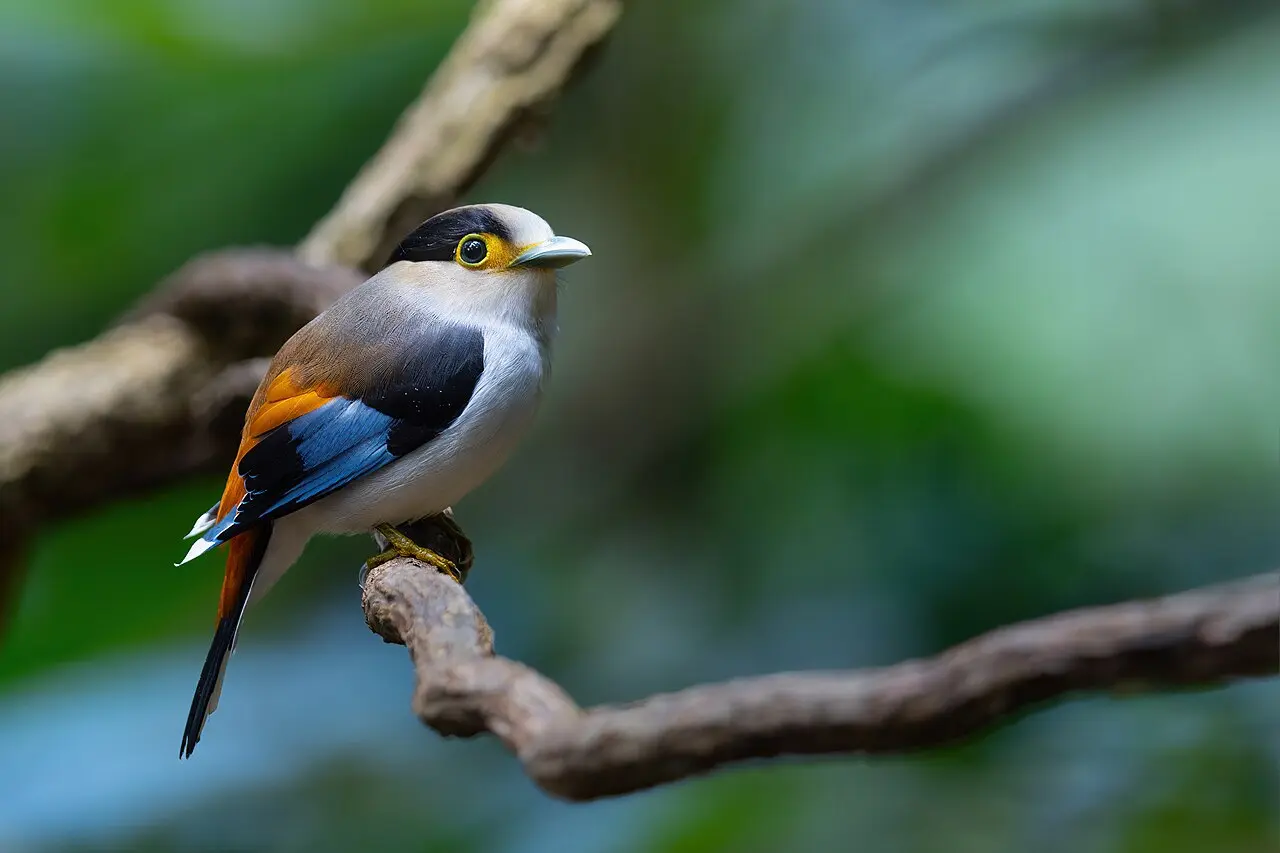
A Silver-breasted Broadbill may look delicate, but its nest is a substantial hanging structure. The softly colored bird builds a nursery that hangs from vegetation rather than resting like an open cup on a branch.
Serilophus lunatus combines a pale breast with warm and dark accents across the head and wings. Its subtle appearance rewards a closer look.
A nursery with a side entrance
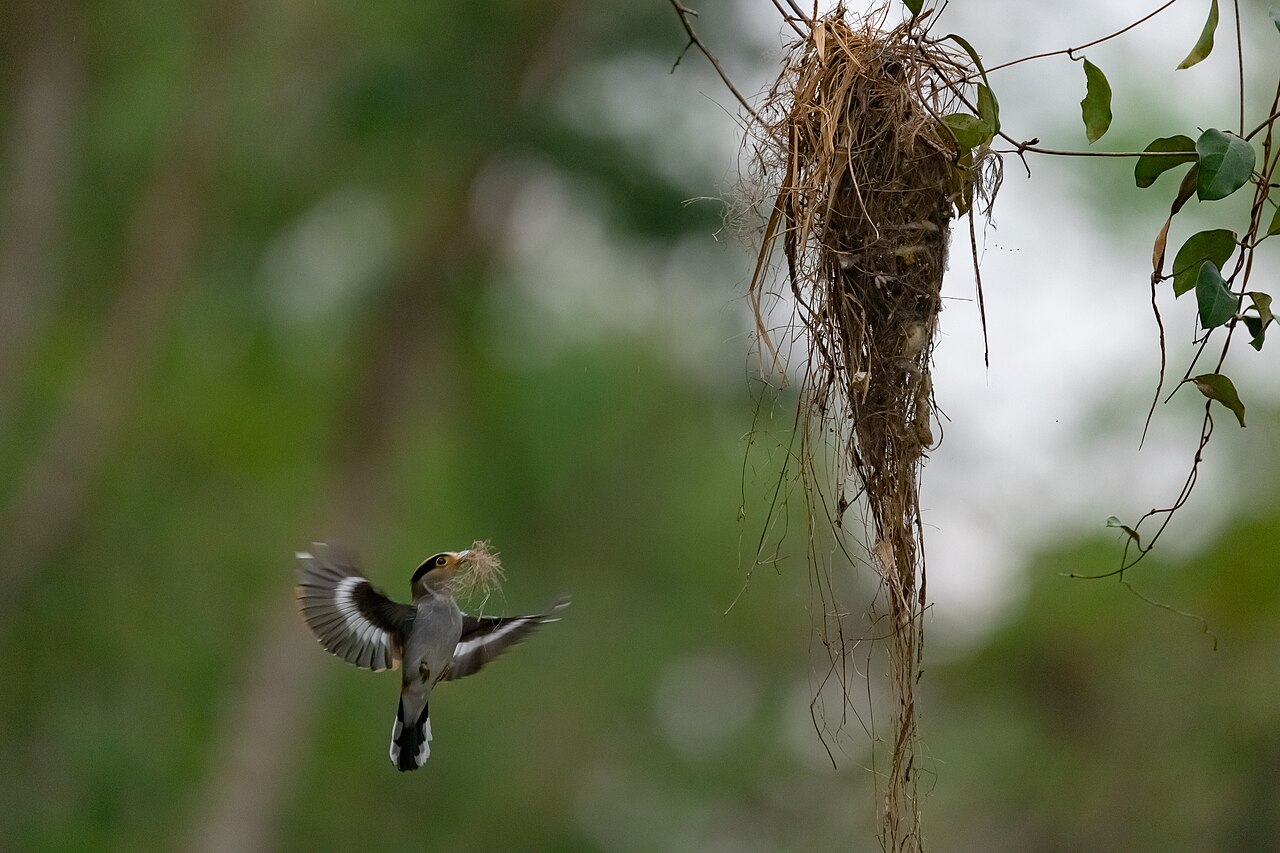
A breeding study from Thailand, indexed by FAO AGRIS, describes a bulky, ball-like nest suspended near the end of a branch.
The nest has a side entrance. From outside, its loose plant material can seem untidy; inside, it provides the place where the young develop.
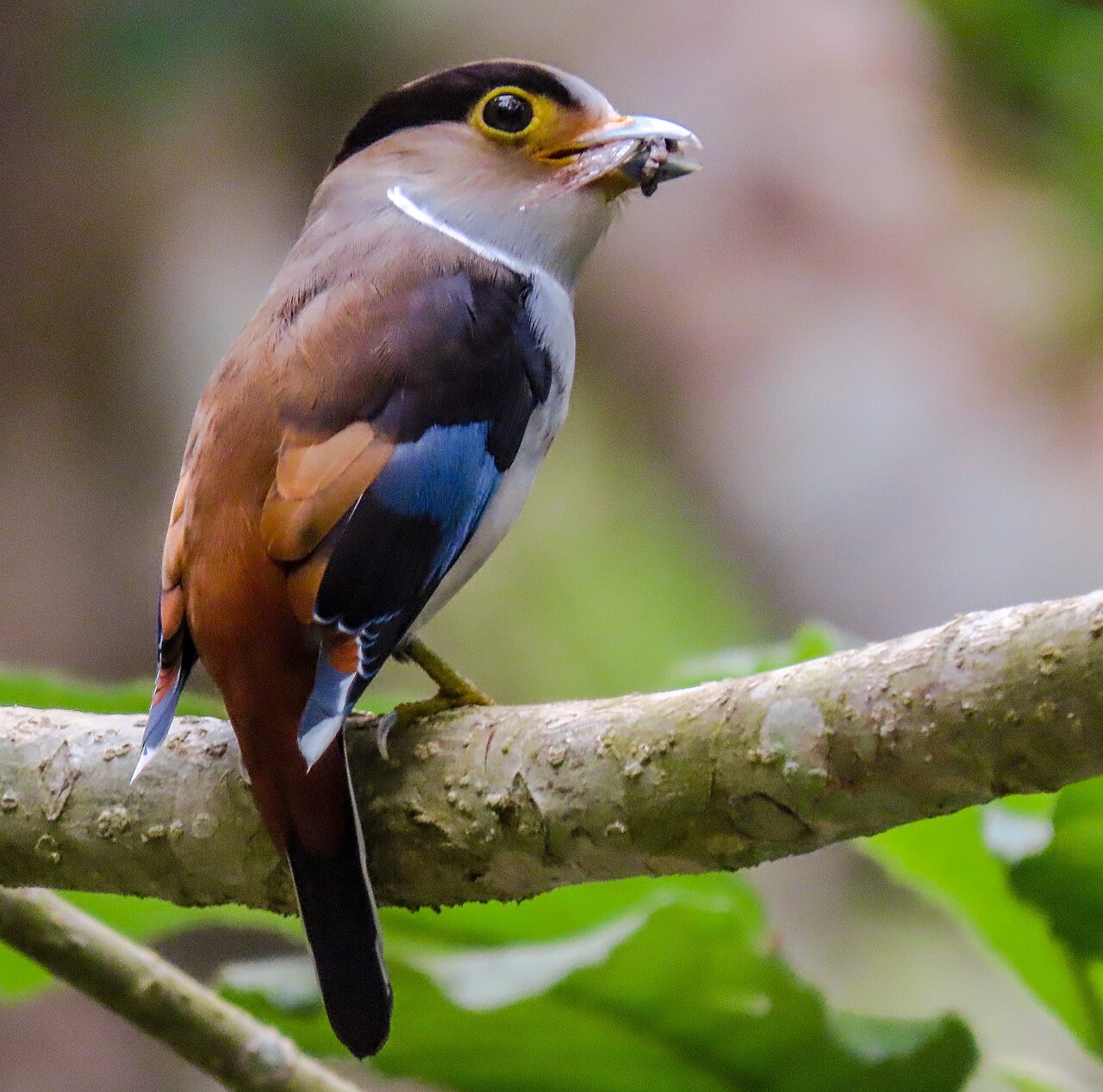
Bringing food to the young
A Malaysian Bird Report documents food delivered to Silver-breasted Broadbill nestlings.
Such observations add practical detail to a portrait. An adult beside a nest may be arriving with food, carrying waste away, or preparing for another feeding trip.
Give the nursery space
Watching from a distance lets adults approach and leave without a crowd around their route. The best view is one that allows the nesting routine to continue.
Preserving forest habitat also preserves the branches, cover, and food supplies needed to raise young.
The Silver-breasted Broadbill offers quiet colors and an impressive piece of construction. Its hanging nursery turns a small corner of the forest into a place full of purpose.
Photo credits
Featured image: Silver-breasted Broadbill 0A2A9641.jpg — JJ Harrison; CC BY-SA 4.0.

Body image 1: Serilophus lunatus feeding.jpg — atheist; CC BY 4.0.

Body image 2: Silver-breasted Broadbill and nest.jpg — Chainfoto; CC BY 4.0.

Photographs resized for web display where available. Existing crops are identified in their source filenames; captive birds and younger birds are identified in captions.