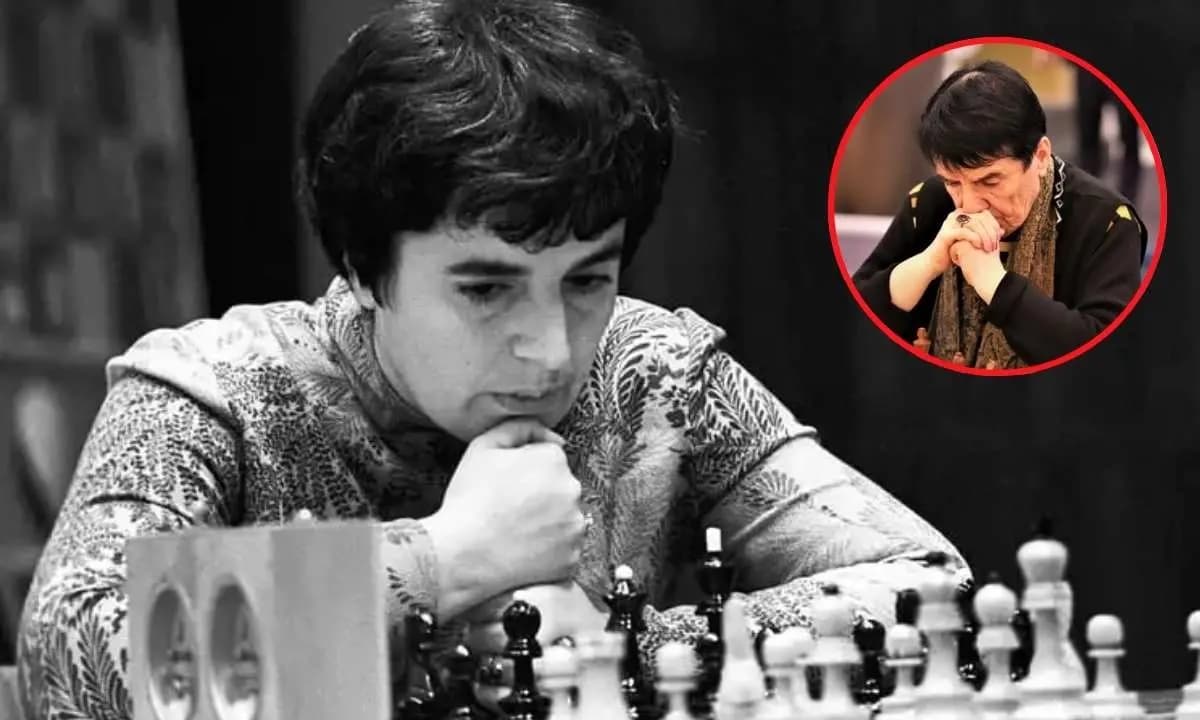
Before The Queen’s Gambit became a global hit and introduced millions to the fictional chess prodigy Beth Harmon, there was Nona Gaprindashvili—the real queen of chess. Her story didn’t just mirror parts of that Netflix series. In many ways, it outshined it. But the world had almost forgotten her. That changed when she took on one of the biggest entertainment companies on the planet—and won.
Nona was born in 1941 in the town of Zugdidi, Georgia, then part of the Soviet Union. She started playing chess at a young age and quickly showed that she was no ordinary player. By 20, she had already won the fourth Women’s Candidates Tournament, earning her the chance to play for the Women’s World Chess Championship.
That match, held in 1962 against the then-champion Elisabeth Bykova, wasn’t even close. Nona won with a dominating score of 9 to 2. That same year, she officially became the sixth Women’s World Chess Champion.
Over the next 16 years, Nona defended her title four more times. She was considered the strongest female chess player of the 1960s and 70s. But Nona didn’t stop at just playing against women. She played in men’s tournaments and held her ground—often better than just that.
In 1977, at a major tournament in Lone Pine, California, she tied for first place against 45 competitors—many of whom were men and grandmasters. That win led to something that had never happened before: in 1978, she became the first woman ever awarded the title of International Grandmaster.
Normally, that title required a set number of games and technical qualifications, and she was just a few games short. But her performance was so impressive that FIDE, the international chess organization, decided it was enough. Even well-known chess grandmasters agreed she had earned it.
During her career, Nona competed in 11 Women’s Chess Olympiads for the Soviet Union and once for Georgia after it became independent. She brought home 25 medals, including 11 team golds and 9 individual golds. At the 1986 Olympiad in Dubai, she won all ten games she played. She also won the Soviet Women’s Championship five times, in 1964, 1973, 1981, 1983, and 1985.
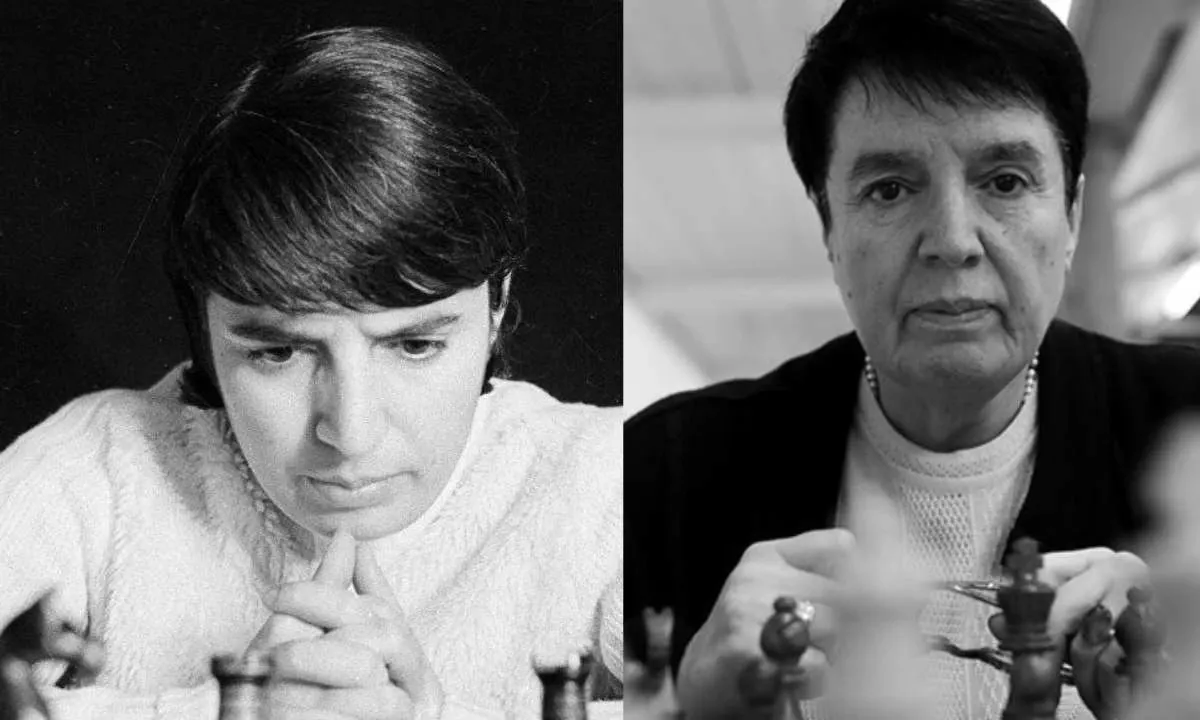
By the time she was in her late 70s, she was still competing—and winning. In 2009, she became the World Senior Champion for women in Italy. Her chess career stretched across decades, and her name became legendary in her home country. She was even the first president of Georgia’s National Olympic Committee.
But in 2020, something happened that made headlines around the world—not because of a chess match, but because of a courtroom.
Netflix released The Queen’s Gambit, a series that followed fictional chess star Beth Harmon rising through the ranks to beat the best players in the world—mostly men.
“The only unusual thing about her, really, is her sex. And even that’s not unique in Russia. There’s Nona Gaprindashvili, but she’s the female world champion and has never faced men.”
In the final episode, a chess commentator says.
That one line sparked a fire.
Gaprindashvili was shocked. The claim was not only wrong—it ignored her very real achievements. By 1968, the year the episode was set, she had already faced at least 59 male players, including 10 grandmasters. For someone who had spent her life proving that women could compete equally in chess, hearing that line was like being erased from her own story.
At 80 years old, she filed a lawsuit against Netflix, accusing them of defamation. Her legal team stated that Netflix made a “deliberate and sexist” decision to change the facts just to make their fictional story more dramatic. They argued that in trying to uplift their fictional heroine, they had disrespected the real-life pioneer.
Netflix tried to get the case dismissed. They argued that The Queen’s Gambit was fiction, and that viewers would not take the comment seriously. But the judge didn’t agree. U.S. District Judge Virginia Phillips said that since the series used real historical figures and events—and mentioned Gaprindashvili by name—viewers might very well think that statement was factual. She added that Netflix may have acted with a “reckless disregard” for the truth.
After Netflix’s appeal was rejected and the legal pressure grew, the company settled the case. The exact terms were not made public, but Netflix officially apologized and agreed to a resolution. Gaprindashvili’s name was back in headlines, and this time, for the right reason.
In the end, this wasn’t just about a TV show. It was about correcting a long-standing pattern of minimizing women’s accomplishments—especially when they broke into male-dominated fields. Nona Gaprindashvili had spent her life proving herself, not just on the board but against a system that often underestimated her.
She made history when she beat dozens of top male players. And decades later, she made history again by standing up to a global streaming giant to protect that legacy. Not many people can say they’ve done that.
So the next time you hear about Beth Harmon, remember the woman who didn’t need fiction to be legendary. Nona Gaprindashvili did it for real—and she checkmated the whole system.