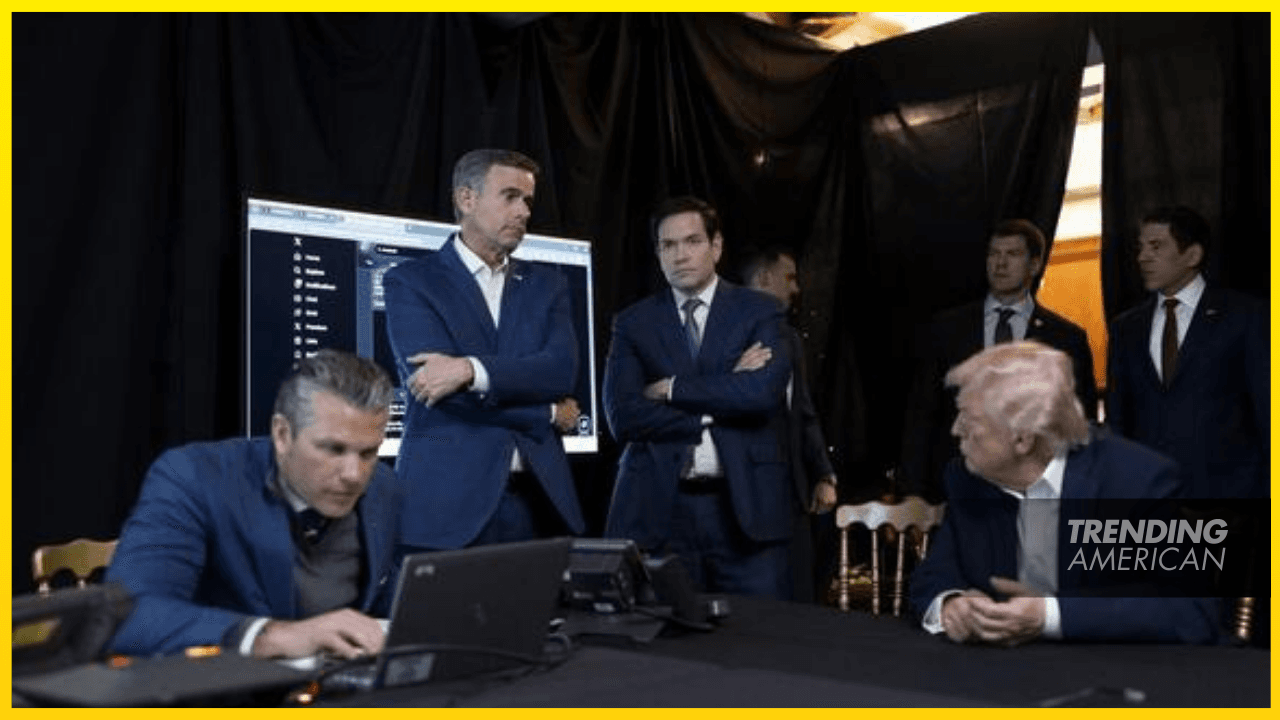
Inside the West Wing, an understated but consequential power struggle over Venezuela policy has unfolded, quietly redirecting the administration’s approach and who speaks for President Donald Trump. The clash centers on two high‑profile figures: Marco Rubio, the Florida senator who has emerged as the public face of Maduro’s removal, and Ric Grenell, Trump’s longtime loyalist and former ambassador whose influence appears to be receding from the center of gravity on foreign policy. The stakes are not merely personal ambition but the direction of a policy space that could define Trump’s legacy on Latin America.
The tension comes into sharper relief as Maduro’s grip on Venezuela is increasingly challenged. Reports from Washington describe Rubio, backed by senior aides including Stephen Miller, pushing for a tougher line and a more aggressive timeline for Maduro’s departure. Grenell, who for months had been a principal interlocutor for the administration and a symbol of a more engagement‑oriented approach, finds himself repositioned—first in the West Wing’s discussions and then publicly aligned with a different perch at a Kennedy Center platform. It is a relocation that signals a broader realignment: who speaks for Trump on Venezuela, and which strategy—the hard, the handshake, or something in between—wins the White House argument.
The back‑channel wrangling occurred against the backdrop of a broader political theater. Maduro’s seizure of power and the administration’s response have become a litmus test for how far the United States should go in supporting removal, or whether a more cautious, engagement‑driven approach could yield a swifter or more stable transition. Rubio’s rise as the public face of policy has coincided with a quiet retreat for Grenell from the inner circle, even as the Kennedy Center scene—where Grenell has enjoyed a visible perch—serves as a symbolic counterweight to his previously central role.
This realignment is framed by insiders as a “Secret MAGA Battle,” a term that captures not just the personalities involved but a broader reckoning within the administration over strategy toward Nicolás Maduro. The clash has reverberated beyond the West Wing, influencing who is listened to by Trump, who is trusted with the briefing books, and who becomes the name the public associates with the Maduro policy. The net effect, according to those close to the conversations, is a significant loss for Grenell: his influence is reduced, and Rubio’s voice is amplified in key policy discussions.
In the short term, the policy maneuvering may be measured by the public steps the administration takes toward Maduro’s removal and the messaging that accompanies those steps. In the longer term, the reshuffling could determine how the United States approaches a volatile region and what it signals to allies and adversaries alike. The Kennedy Center platform—the venue where Grenell has been able to command attention on cultural and public diplomacy matters—sits as a pungent reminder of the administration’s need to balance domestic optics with foreign policy consequences.
The episode, while unfolding in the privilege of the White House West Wing and a public arts venue, is part of a larger pattern: intra‑administration power dynamics that decide who speaks for Trump on the world stage and which lines of policy carry the day. Rubio’s ascent and Grenell’s reassignment do not erase their past contributions; instead, they reflect a recalibration of who the White House trusts to frame Maduro’s future and what path the United States will pursue in Venezuela. The story that emerges is not simply a personnel reshuffle, but a realignment of the administration’s foreign policy voice during a defining moment for Latin America.