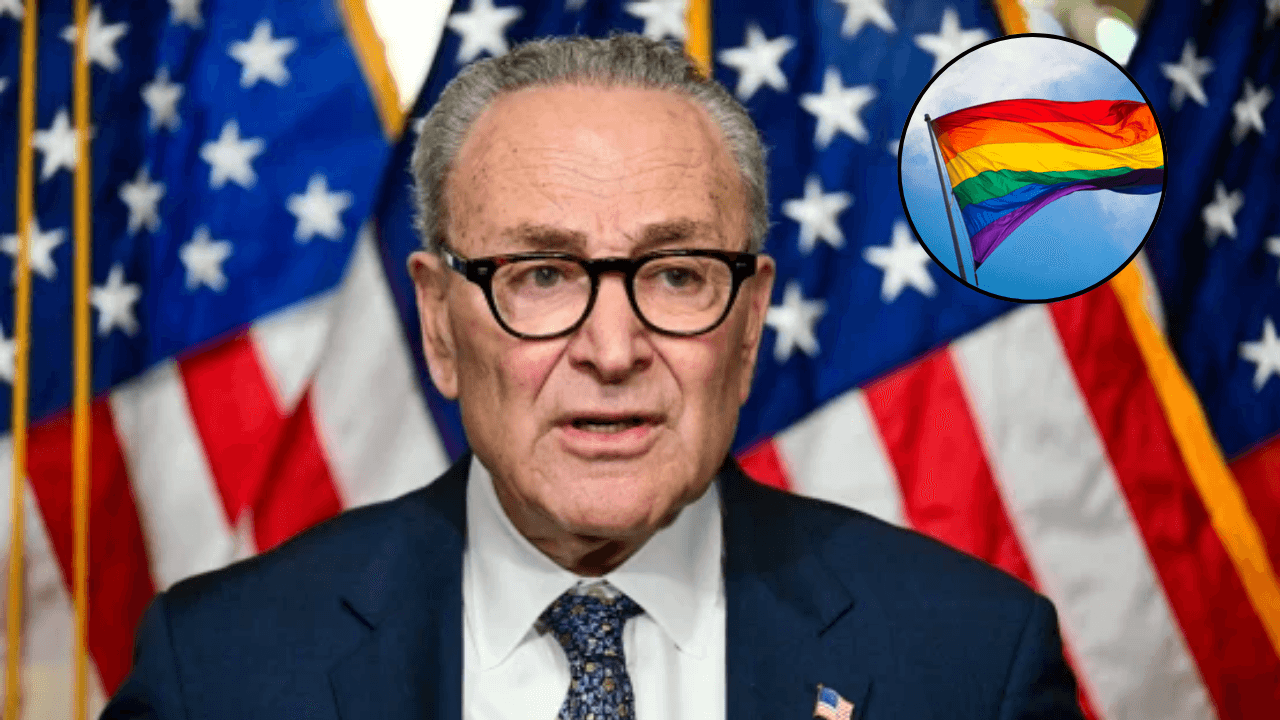
A new Pride flag bill from Senate Minority Leader Chuck Schumer could change how the federal government treats the LGBTQ symbol.
Schumer announced he plans to introduce legislation that would make the Pride flag a congressionally authorized flag. If passed, the move would give it similar recognition and protections as the U.S. flag, military flags, and the POW MIA flag.
Stonewall Dispute Sparks Action
The proposal follows controversy earlier this month when the Trump administration removed a Pride flag from outside the Stonewall National Monument in New York City. The site marks the 1969 Stonewall uprising, widely seen as the beginning of the modern gay rights movement.
Stonewall was designated a national monument in 2016 by President Barack Obama, according to the National Park Service. The monument falls under federal oversight.
The Pride flag was later reinstalled outside the Stonewall Inn. Schumer said Congress must act to ensure it cannot be removed again.
“Stonewall is sacred ground and Congress must act now to permanently protect the Pride flag and what it stands for,” Schumer said.
What the Bill Would Do
The legislation would add the Pride flag to the list of flags formally recognized by Congress. Federal law already outlines protections and display rules for certain flags, including the U.S. flag and military service flags, as described in the U.S. Code.
Schumer argues that official recognition would allow national parks and federal sites to display the Pride flag without fear of executive action removing it.
President Donald Trump previously signed an executive order restricting which flags may be displayed on federal property. The order aimed to ensure that only authorized flags are prominently flown.
Political Divide Over Symbolism
Schumer criticized what he described as efforts to target LGBTQ symbols. He said the bill is about protecting liberty and equal representation.
Supporters say the Pride flag represents equality and inclusion. Critics argue that federal property should prioritize the American flag above all others.
The proposal faces an uncertain path in Congress, where partisan divisions remain sharp. If introduced, the bill would need approval in both the Senate and House before heading to the president’s desk.
For now, the debate over flags has become a larger fight about identity, federal authority, and the meaning of national symbols.