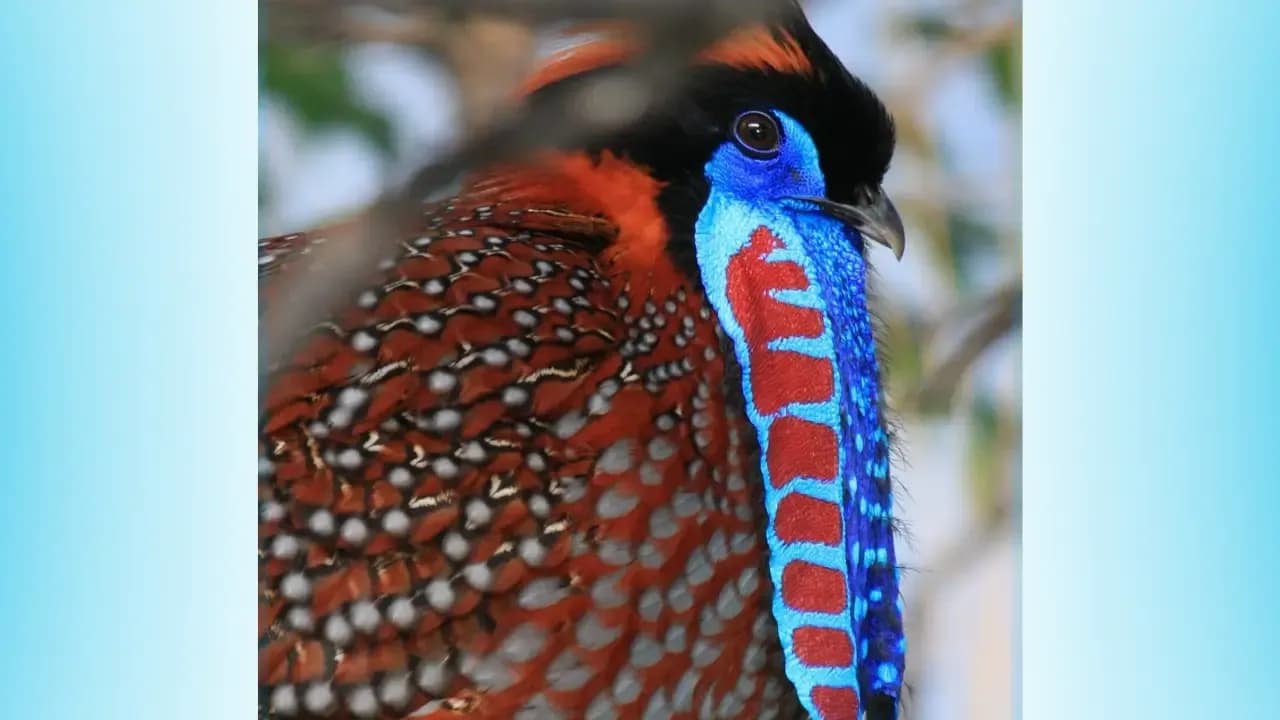
This Rare Himalayan Bird Flaunts Bright Blue Wattles and a Feather Show to Woo Mates
High in the mist-shrouded forests of the central and eastern Himalayas, at elevations reaching 14,107 feet (4,300 meters), lives one of nature’s most remarkable avian wonders, the Satyr Tragopan (Tragopan satyra).
Often dubbed “the world’s most beautiful pheasant,” this elusive species is admired not only for its striking appearance but also for its dramatic courtship rituals.
The male Satyr Tragopan is instantly recognizable, with a black head, crimson neck and breast, and spotted brown and black plumage. But it’s the electric-blue ornaments, a bib-like wattle called a lappet and two fleshy blue “horns” that rise above its eyes, that steal the show during mating season.
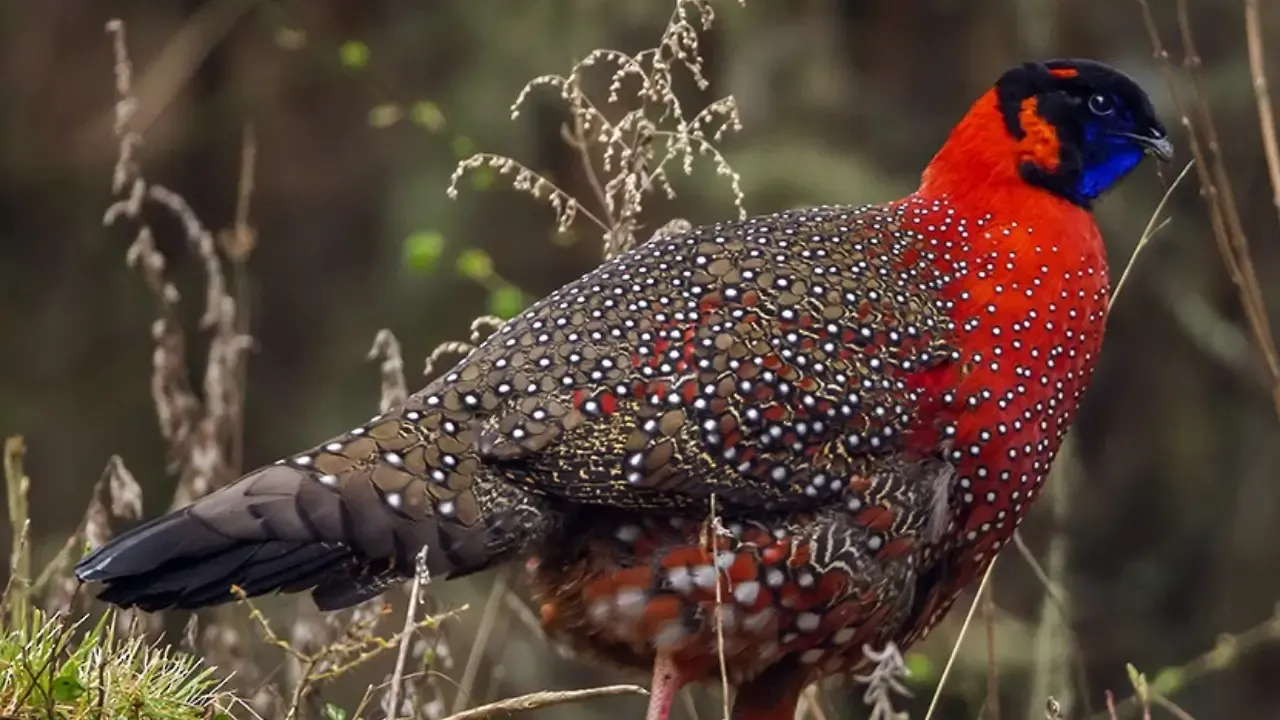
Image credit: Soar Excursions
To attract a mate, the male performs an elaborate display: spreading his wings, nodding his head, rustling his feathers, clacking his beak, and inflating the bright lappet beneath his throat. The ritual, often performed in dense, mixed oak and rhododendron forests, is as theatrical as it is beautiful.
This species is found in high-altitude forests where such performances may go unseen by most, but for birdwatchers and wildlife experts, spotting one in the wild is an unforgettable experience.
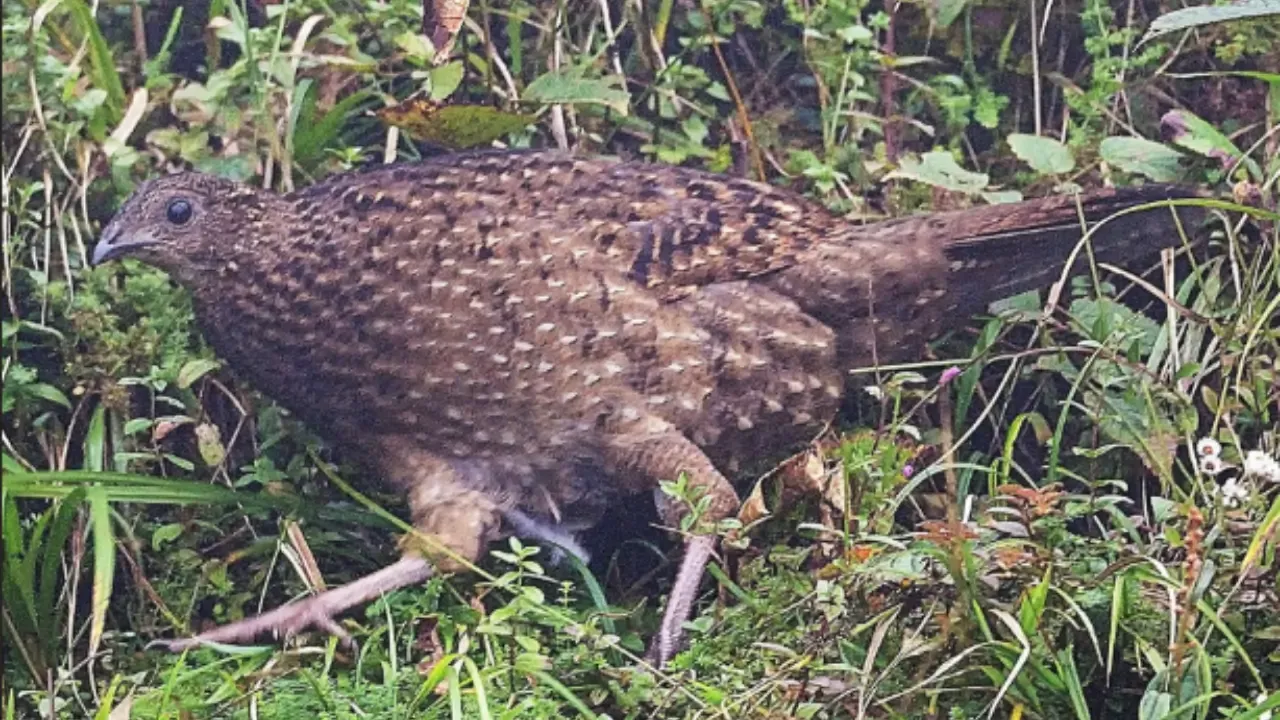
Beyond the theatrics, Satyr Tragopans lead fascinating lives. Females lay 3 to 5 eggs in nests made from twigs and sticks, typically hidden in dense foliage. After an incubation period of 28 days, the chicks hatch and are astonishingly quick to mature able to fly and perch just two or three days after hatching.
They remain under their mother’s care for up to a year, gaining survival skills crucial for the harsh mountain environment. Adult birds weigh between 3 to 5 pounds and grow up to 2 feet from beak to tail. While males are vibrantly colored, females display more muted brown tones, aiding their camouflage.
The Satyr Tragopan’s diet is diverse and resourceful, including seeds, moss, bamboo shoots, berries, buds, leaves, flowers, insects, and even coffee beans. This variety enables them to adapt to the seasonal changes of their alpine habitat, though such resilience may not be enough in the face of growing threats.
Despite their remote home, these birds are increasingly vulnerable due to hunting, habitat loss, and environmental degradation. Currently, the International Union for Conservation of Nature (IUCN) classifies the species as “Near Threatened.”
With climate change and human development placing growing pressure on the fragile Himalayan ecosystem, conservationists stress the urgent need to protect this charismatic species.
The Satyr Tragopan serves as a vivid reminder of the richness that thrives in Earth’s most remote places and the delicate balance needed to ensure it survives for future generations.