Samuel Prinz-Reiterer's family asked mourners to support ME/CFS research instead of sending flowers. Donations collected around his funeral were later directed to the Austrian Society for ME/CFS.
The gesture followed the death of a young Austrian man whose severe illness had brought public attention to the difficulties some patients face in obtaining recognition and care.
His illness severely restricted daily life
Le Monde's February 2026 report described Prinz-Reiterer developing ME/CFS after a COVID-19 infection in 2024. He had spoken publicly about his condition and his frustration with the support available to him.
He died by assisted suicide in January 2026, aged 22. The reporting prompted wider discussion of care for people with severe chronic illness.

Vienna at sunset. Illustrative Austrian location photo, not Samuel Prinz-Reiterer or a treatment facility. Photo: Pierre Blaché from Paris, France, CC0. Resized; JPEG conversion.

His family asked for donations instead of flowers
In Heute's February 26 follow-up, the family directed approximately €5,000 in funeral donations to the Austrian Society for ME/CFS. The report described their wish to support work addressing the illness.
His mother remembered him as a cheerful person before his health deteriorated. The donations kept the family's attention on other patients and the need for better understanding and support.

Vienna photographed from the air in October 2024. Illustrative national context, not a place identified in his care. Photo: Spicypepper999, CC0. Resized; JPEG conversion.

Care remains important even without a cure
The U.S. Centers for Disease Control and Prevention describes ME/CFS as a serious biological illness that can affect thinking, sleep, pain and the ability to tolerate physical or mental activity.
The agency says there is no cure, but some symptoms can be treated or managed. It emphasizes working with patients and families on individualized care, with benefits varying from person to person.
Prinz-Reiterer's experience does not predict the course of every person's illness. The family's public gesture points toward a continuing responsibility: listening to patients, providing practical care and supporting research that may improve their lives.
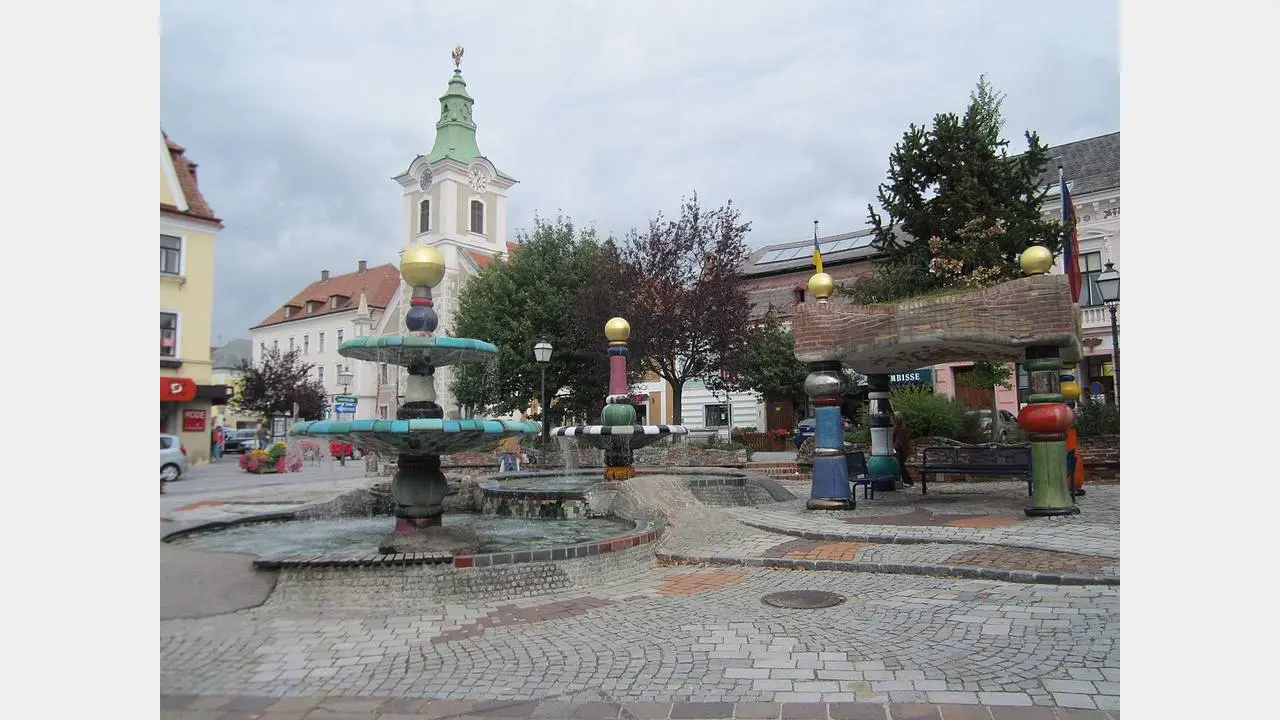
Featured image: The public-square fountain in Zwettl, Austria. Illustrative community photo, not the funeral or Prinz-Reiterer family. Photo: Kwerdenker, CC BY-SA 3.0. Resized and fitted to a 16:9 canvas. Image adaptation shared under the same CC BY-SA 3.0 license.
