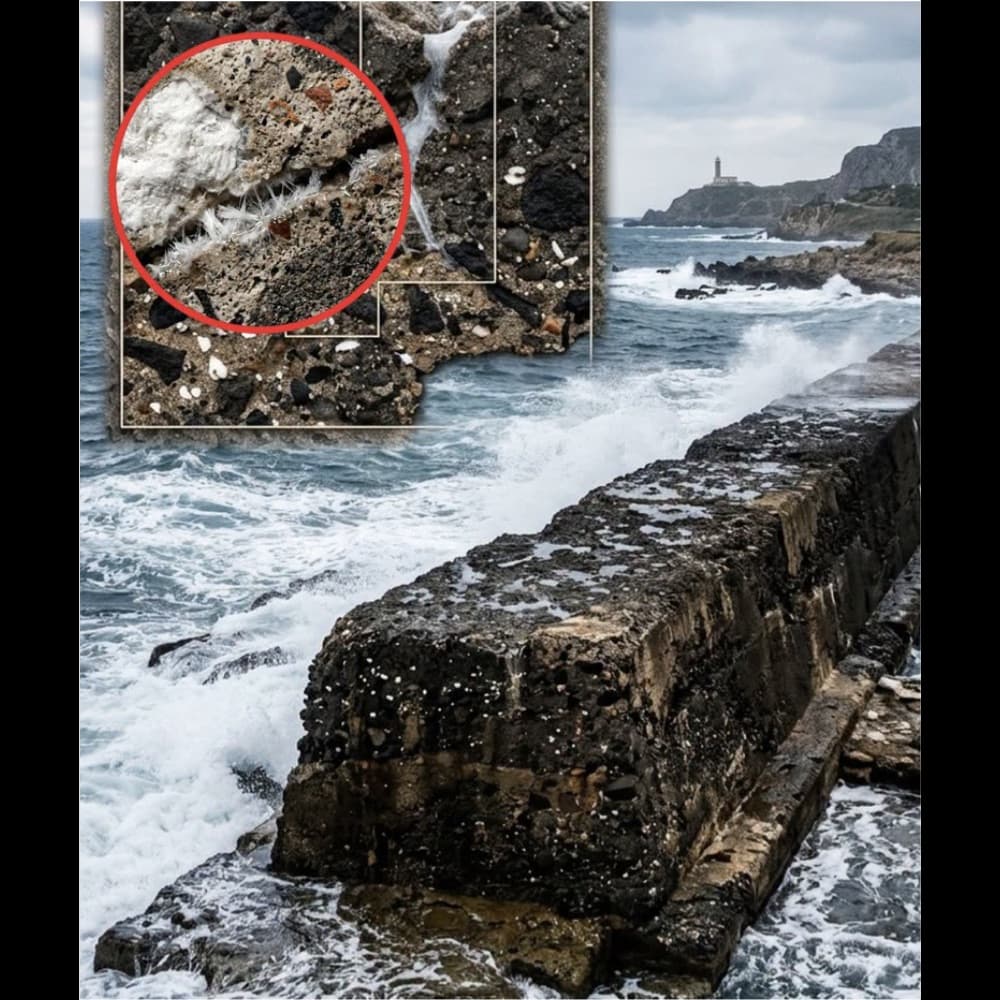
Small white inclusions in Roman concrete may help explain why some ancient structures lasted so long.
A 2023 study in Science Advances examined lime clasts in mortar from Privernum, Italy, and tested modern materials inspired by ancient recipes.
A reactive ingredient inside the material
The researchers found evidence consistent with hot mixing, in which quicklime reacts during preparation. The process can leave calcium-rich inclusions within the hardened mortar.
When cracks allow water inside, those inclusions can provide material that reacts and helps seal the opening.
Laboratory tests demonstrated healing in the team’s Roman-inspired formulation over about two weeks. That result should not be expanded into a promise that every crack in every ancient building automatically repairs itself on that schedule.
One explanation within a wider field
MIT’s later account of an unfinished Pompeii worksite describes further evidence for hot mixing. Other research examines different mineral processes and concrete settings.
Roman harbor structures, terrestrial walls and the Pantheon do not necessarily share one identical recipe or exposure history. Modern reinforced concrete also faces demands that make simplistic lifespan comparisons misleading.
The research offers a useful direction for material design: preserving reactive components can sometimes help a material respond to damage. Turning that insight into modern infrastructure requires controlled testing and engineering for the intended use.