Nearly 400 million years ago—long before the first dinosaurs—an unusual creature began swimming in the rivers and swamps of Africa. It has survived ice ages, shifting continents, and countless climate changes, barely altering in form. Today, it still thrives across West, Middle, and parts of Southern Africa. This is the West African lungfish, also called the Tana lungfish—an animal so adapted to extremes that it can “pause” its life for years when the water disappears.
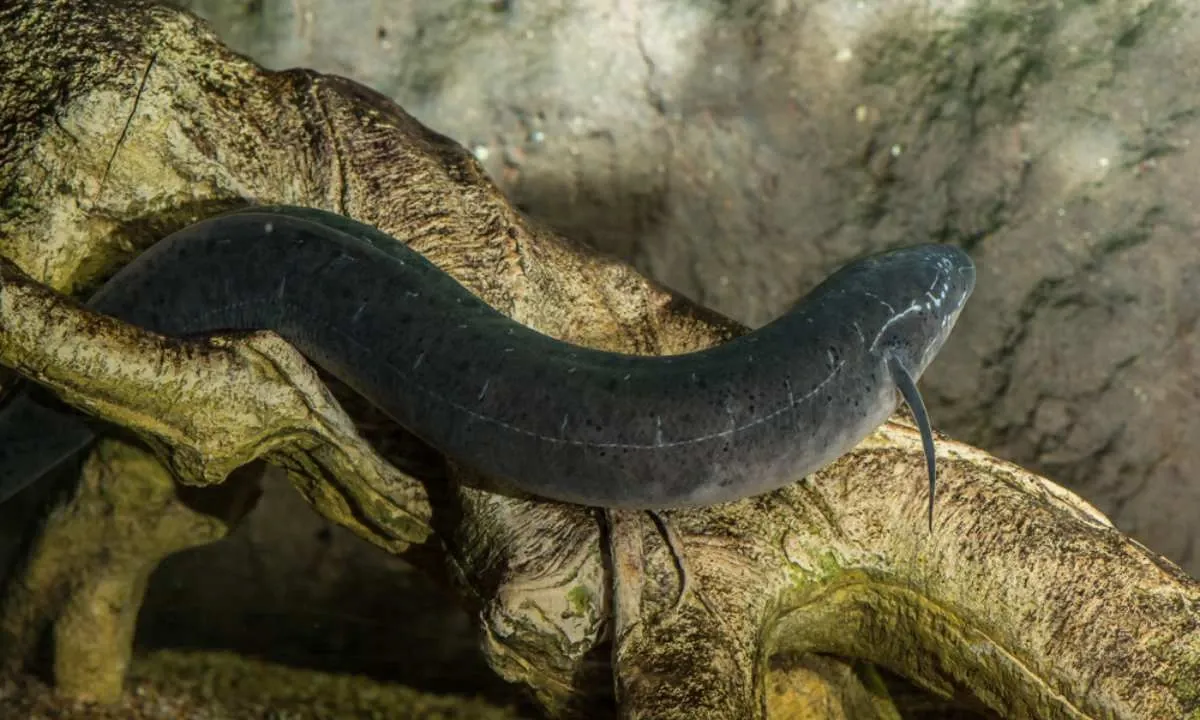
At first glance, the lungfish looks like an eel. Its long, olive-brown body can stretch to a meter in length and weigh up to 4 kilograms. Its eyes are small and not especially sharp, but it has a secret sensory weapon—a system of lateral lines along its body and snout that detect vibrations in the water.
It moves with whip-like pelvic fins and elongated pectoral fins, and like other fish, it has gills. But the gills are only half the story. This fish also has a primitive lung, allowing it to gulp air every 30 minutes. Without that breath, it would drown—even underwater.
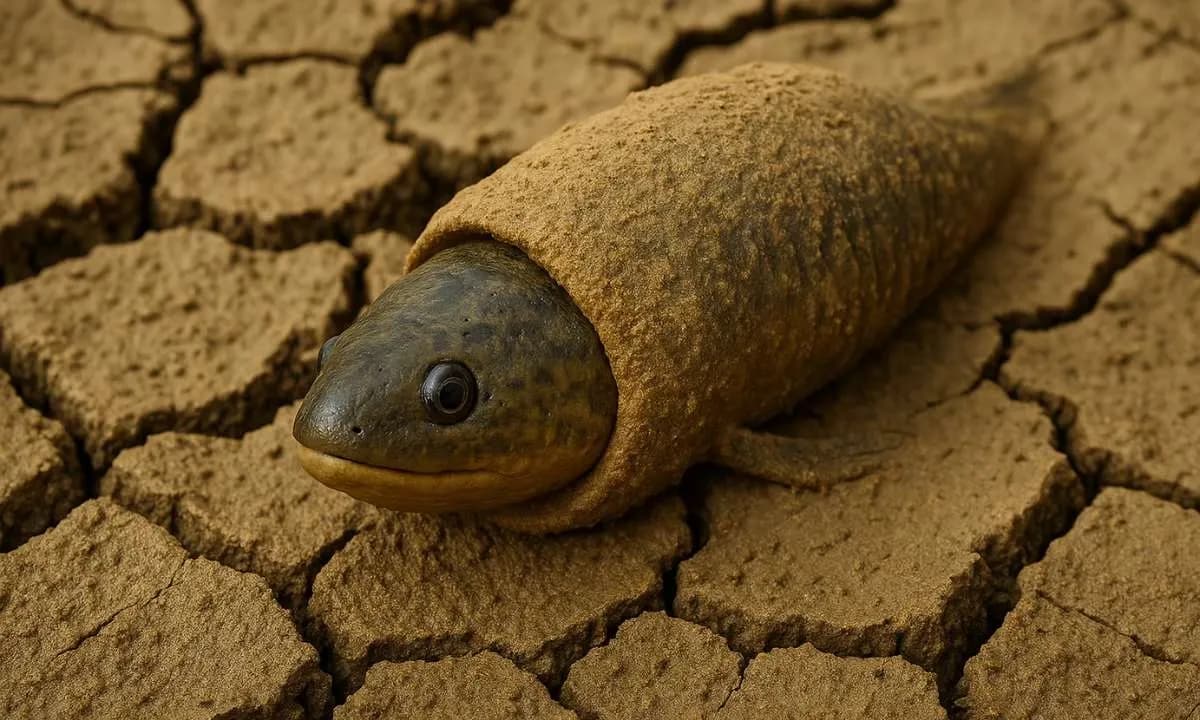
The lungfish’s dual breathing system is not just a quirk of evolution. It’s the foundation for one of nature’s most extreme survival strategies: aestivation. In its African home, rivers and floodplains can vanish in the dry season, leaving fish stranded. While most die or migrate, the lungfish digs 12 to 18 inches into the mud, creating a small chamber.
As the mud hardens, the fish secretes mucus that dries into a tough cocoon. This cocoon traps moisture and shields the fish from the heat. Only a narrow tube near its mouth remains open, letting it breathe air.
Keep Pets Comfortable When It’s Hot & Dry
Heat waves and dry spells can stress your best friend. Explore hydration helpers, cooling gear, and smart care picks to keep them safe and happy.
Shop Smart Pet CareInside this self-made shelter, the lungfish slows its metabolism to a fraction of normal. It doesn’t eat or drink. Instead, it breaks down its own muscle tissue for energy, producing urea that builds up in its body. It won’t release that waste until it’s back in the water. Scientists have recorded lungfish surviving like this for up to a year in the wild—and in some cases, nearly four years without food or water.
When the rains finally return, the cocoon softens, and the lungfish awakens. It wriggles free, pushes toward the surface using its strong, fin-like limbs, and gulps fresh air before resuming its normal life in the water. The transformation is so dramatic that locals have compared it to seeing “fish rise from the dead.”
In the water, the lungfish is an opportunistic feeder. It eats small fish, frogs, earthworms, crustaceans, plant material, seeds, and roots. Its fused tooth plates are perfect for crushing tough prey. It can even sift through mud with suction to catch hidden food.
This species isn’t just a curiosity—it’s also an important part of local life. In many African communities, lungfish are eaten and even sold in markets. In Uganda, tens of thousands of tons were caught annually in the late 20th century, though numbers have since declined. People have also attributed medicinal properties to the fish, from aiding lactation to boosting immunity.
During the wet season, males build nests in weedy areas and guard the eggs—about 4 millimeters in size—until they hatch. For nearly two months, the father protects the larvae, which initially breathe through external gills. As they mature, these gills disappear, and their lungs take over. The young also develop the fused tooth plates that mark them as lungfish.
Despite being harvested for food and living in habitats threatened by environmental change, the West African lungfish is listed by the IUCN as a species of Least Concern. Its vast range and remarkable survival abilities give it an advantage. Scientists are studying it not only as a “living fossil” but also for clues to how life adapts to extreme environments—lessons that could one day help humans survive in harsher climates.
In a world where many species vanish in the face of change, the West African lungfish endures. Its ability to entomb itself in mud, slow its body almost to stillness, and wait years for the rain is more than a survival trick—it’s a glimpse into the resilience of life itself.
Disclosure: We may earn a commission when you make a purchase through the ads.