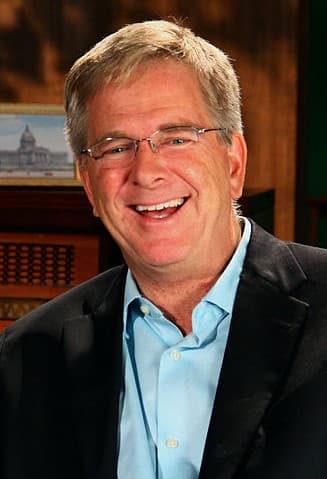
Rick Steves had spent years helping travelers feel at home abroad. In late 2025, a local news story showed him a need much closer to home: a hygiene center serving people experiencing homelessness was facing closure.
He bought the property so its work could continue.
According to NPR’s December 2025 reporting, Steves had not known the Lynnwood Hygiene Center existed, despite living nearby. He said he had not even understood what a hygiene center was until he read about its possible loss.
A place for everyday necessities
The center is operated by the Jean Kim Foundation in South Snohomish County, Washington.
The foundation’s website describes its work as providing warm showers, food, clothing and community. It also offers connections to service providers and opportunities to build job experience.
Those services meet needs that are easy to overlook when a shower, clean clothes or somewhere indoors is always available. For someone without secure housing, access to them can shape an entire day.
A news story leads to a purchase
NPR reported that the center had operated rent-free on the property since 2020. A planned sale put that arrangement at risk.
Local reporting brought the threat to Steves’s attention. He stepped in as a buyer, initially anonymously, before his involvement became public in December 2025.
NPR reported the purchase at $2.25 million, while also recording about $400,000 in community donations intended for renovations and expanded services. These were reported figures from the rescue effort, rather than a current fundraising balance. Source: NPR.
Keeping the center alive takes continuing work
Buying the property addressed the immediate threat. Improving the building was a separate task.
A September 2, 2026, report by local housing journalist Angelica Relente described planned upgrades to showers, plumbing and electrical systems. The project was still in permitting as of August 25.
The same report said an approximately $600,000 renovation budget had been discussed at a February council meeting. That later project budget should not be confused with the roughly $400,000 raised by community donors during the original campaign.
The report also described uncertainty over services during construction. It did not establish that the planned renovations had already been completed.
Seeing the neighbors behind the need
Steves’s decision began with learning about people and a place he had previously overlooked.
The story also shows the value of local reporting: it connected a threatened service with someone able to help. The foundation, volunteers and community donors were part of that response too.
A building purchase made the headline. The deeper purpose was to preserve something ordinary and essential—a place where neighbors could get clean, eat and find community.
Image credits
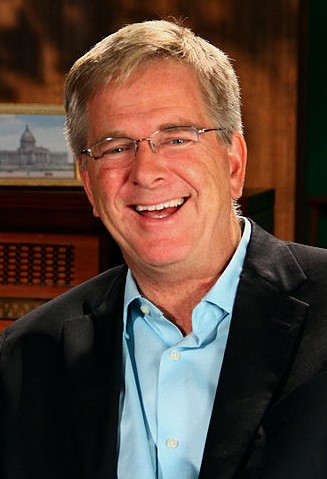
- Rick Steves on the set of On the Record at OETA: CarlosManzanoPHOTOs.
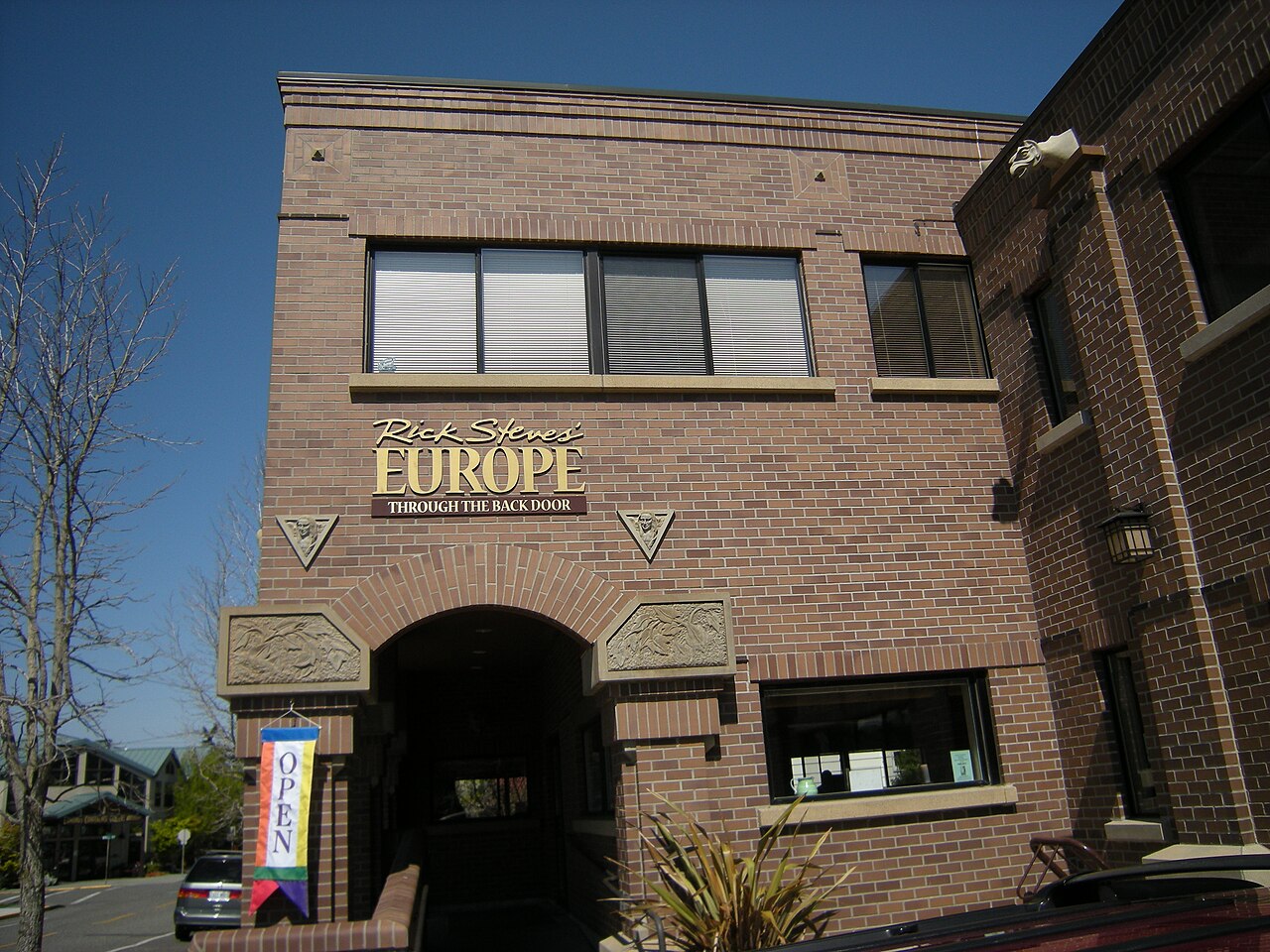
- Rick Steves’ travel store in Edmonds: Joe Mabel. This is a context photograph of his travel business, not the hygiene center.


Both photographs: Wikimedia Commons, CC BY-SA 3.0, resized for web display.