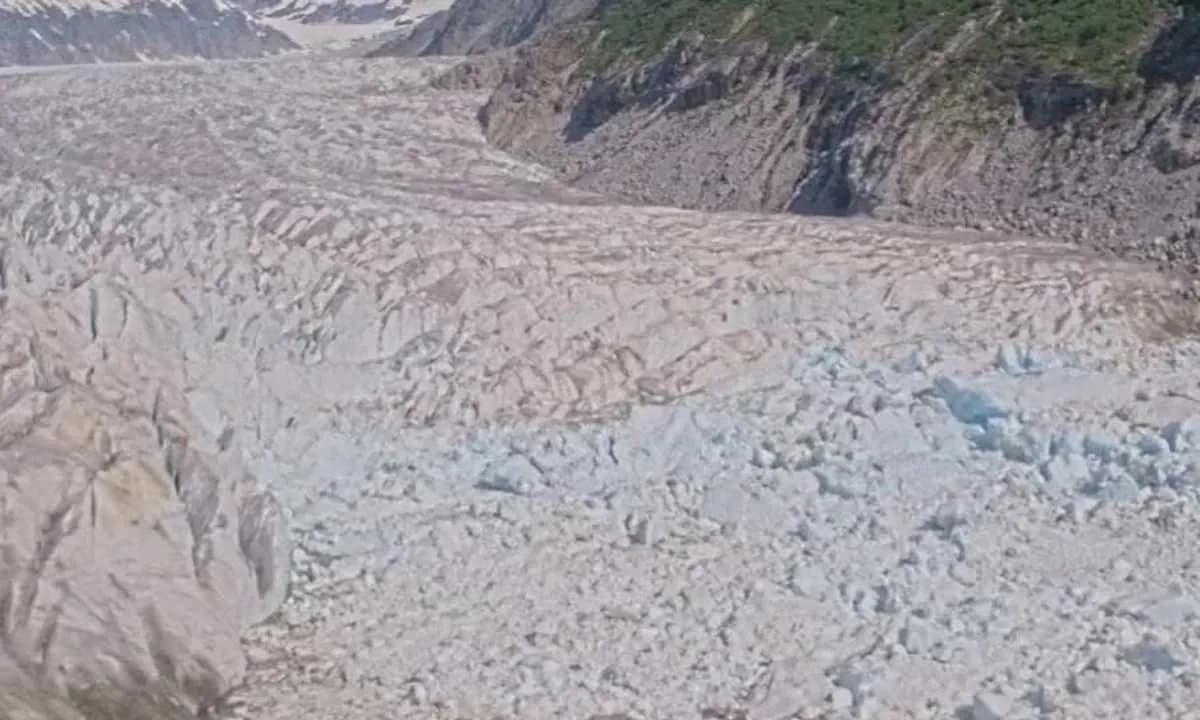
On Tuesday evening in Juneau, Alaska, residents in flood-prone areas were told to evacuate as water began escaping from Suicide Basin, a side basin within the Mendenhall Glacier. The basin, which fills each year with rainwater and snowmelt, had reached a point where pressure forced water under or around the glacier’s ice dam, sending it into Mendenhall Lake and down the Mendenhall River.
The Mendenhall Glacier is located about 12 miles (19 km) from downtown Juneau, a city of around 30,000 people accessible only by boat or plane. Glacial lake outburst floods from Suicide Basin have been occurring annually since 2011, becoming more severe in recent years. In 2023, flooding destroyed several structures and damaged nearly 300 homes.
By early Wednesday morning, the Mendenhall River had reached 16.51 feet, surpassing the previous record crest of 15.99 feet set in 2024. Peak flooding was expected around 8 a.m., according to the National Weather Service. Major flood stage for the river begins at 14 feet.
In preparation for this year’s flood season, city officials, working with state, federal, and tribal partners, installed about 10,000 large reinforced sandbag units, known as “Hesco” barriers, along 2.5 miles (4 km) of riverbank. The barriers were intended to protect more than 460 properties.
Homeowners in the flood zone were required to cover 40% of the cost, approximately $6,300 each over 10 years, with some paying $50,000 toward reinforced sections.
While the barriers prevented large-scale destruction, some water seeped through drains and culverts beneath them, and debris carried by the river damaged parts of the structure. Several streets and yards experienced flooding, and in some cases, water entered the lower levels of homes.
Floodwaters began receding by Wednesday afternoon, and evacuation orders were lifted. Officials reported no widespread damage comparable to the previous two years.
The Alaska Climate Adaptation Science Center estimates that outburst floods from Suicide Basin could continue for another 25 to 60 years as long as the Mendenhall Glacier remains in place as an ice dam. Researchers have documented that glaciers in Alaska are retreating rapidly due to rising temperatures.
Since 1990, the number and size of glacial lakes worldwide have increased significantly. Between 2000 and 2023, glaciers globally lost about 7,211 billion tons of ice, with the annual rate of loss increasing by about 36% over the past two decades.
The U.S. Army Corps of Engineers has begun studying the Mendenhall River area to determine options for a permanent flood protection system, such as a levee, but the process is expected to take years. In the meantime, Juneau will continue to monitor Suicide Basin each summer and maintain temporary barriers to reduce flood risk.
Disclosure: We may earn a commission when you make a purchase through the ads.