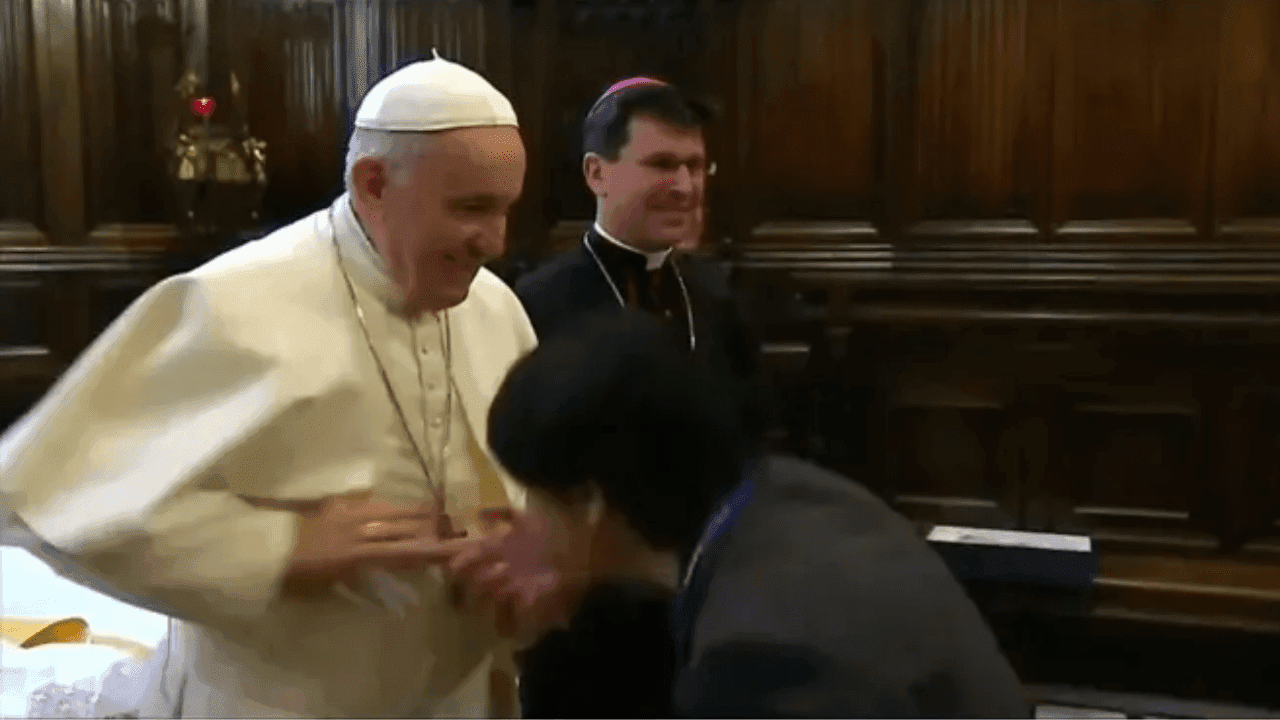
In a curious and much-discussed incident, Pope Francis recently addressed the reasons behind his decision to withdraw his hand when individuals attempted to kiss his ring during a public gathering. This occurrence, which took place during his visit to the Holy House of Loreto, quickly gained international attention and sparked a variety of interpretations and speculations. For many, the Pope’s actions appeared peculiar, especially considering the traditional significance that kissing the Papal ring holds as a gesture of respect and reverence towards the Pope.
Pope Francis clarified his actions in an open discussion, explaining that his primary concern was hygiene and preventing the spread of germs, as a long line of people eager to greet him had formed. The Pope noted that the sheer number of attendees posed a risk of contagion, not only to himself but also among the individuals present. This acknowledgment highlighted the practical considerations at play that often go unnoticed during such ceremonial interactions.
The ring-kissing gesture has been a part of Catholic tradition for centuries, symbolizing the submission and unity of the faithful with the Church through its leader. However, despite the historical significance, Pope Francis’s emphasis on maintaining health principles underscored his commitment to promoting a Church that is cognizant of modern challenges and realities.
While the explanations provided by Vatican officials and the Pope himself have clarified the situation, the incident has opened up broader discussions on the intersection of tradition, health, and public perception in the religious realm. This also highlights Pope Francis’s approach, often characterized by practicality and a break from formalism, reflecting his ongoing efforts to bring the Church closer to everyday concerns.
In conclusion, even as the ring-kissing debacle was initially bewildering, it serves as an example of how leaders navigate ceremonial traditions while addressing contemporary issues, ensuring the wellbeing of both leaders and their followers.