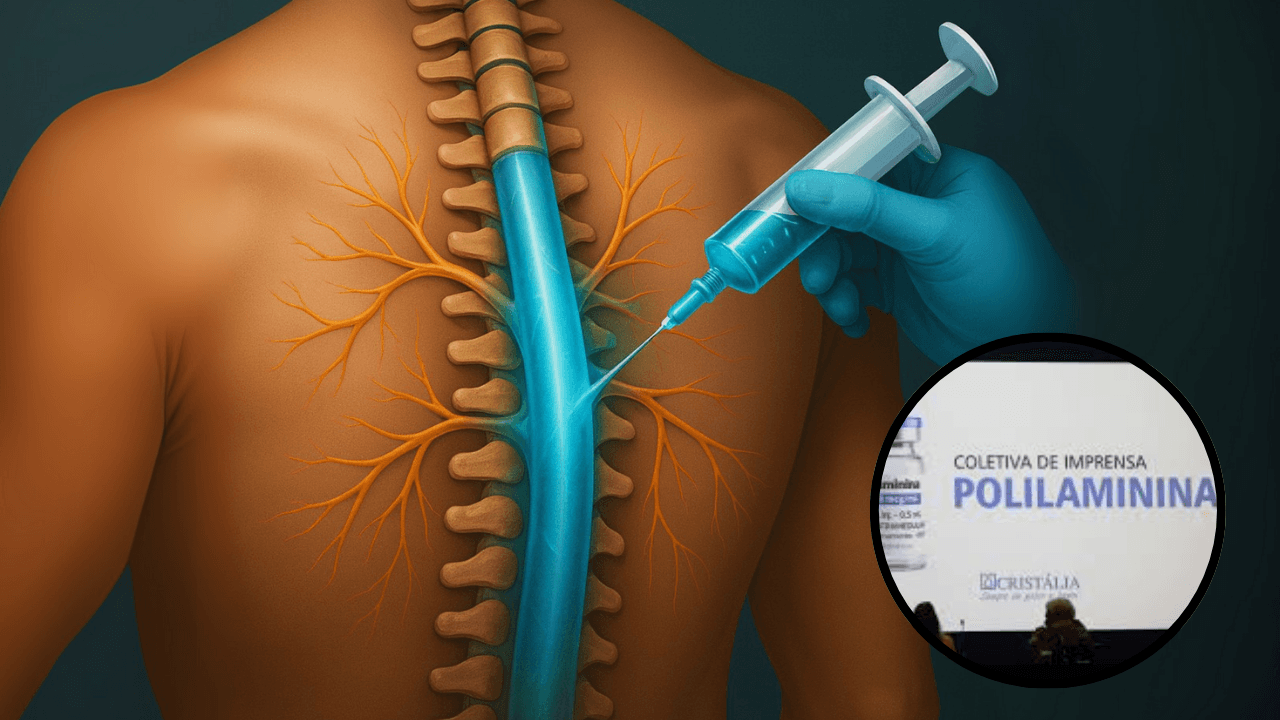
In September 2025, a new breakthrough in treating spinal cord injuries came from Brazil. Scientists at the Federal University of Rio de Janeiro introduced a drug called Polylaminin. Early research shows that it may help repair spinal cord damage—something once thought impossible.
Get Tested. Take Control. Change Your Future.
A breakthrough drug may reverse paralysis — but knowing your health markers is the first step. Discover 500+ lab tests with no doctor visit or insurance needed.
Explore HealthLabs NowA Scientist’s 25-Year Mission
Dr. Tatiana Coelho de Sampaio, the lead researcher, has worked on this for over two decades. She was inspired by the healing power of placental proteins. Her goal? To restore movement in people living with paralysis.

Image source : Folha
Polylaminin is based on laminin, a protein found in the placenta. Her team discovered that a stabilized version of this protein helps stimulate neuron growth. In lab and animal studies, the drug helped mature nerve cells grow again. This could offer new hope for repairing spinal cord injuries.
Animal Trials Show Signs of Recovery
In 2025, Dr. Sampaio’s team tested Polylaminin on six dogs with chronic spinal injuries. These dogs had been paralyzed for months or years. After receiving the drug, many began showing improved movement.
Veterinary researchers noted that some dogs had better gait control and muscle activity. However, the scientists were careful not to claim a full recovery. The results are still early, and more testing is needed.
A Glimpse Into Human Treatment
A pilot study in humans is underway. The team released a preprint (a non-peer-reviewed report) in early 2024. According to this early data, patients showed minor improvements in movement after the drug was applied.
The treatment involves a direct injection near the spine. This method is more targeted than traditional surgery, but still invasive. Researchers are closely monitoring patients for safety.
Patient Stories Raise Hope
Some local reports mention patients regaining slight movement. One woman reportedly described it as a “second birth” after wiggling her toes. But these personal stories have not yet been confirmed by independent medical sources or clinical databases.
While these stories are moving, experts urge caution. Much more research is needed before making big claims about full recovery.
Awaiting Regulatory Approval
Despite the early promise, Polylaminin is not yet approved for public use. Brazil’s health agency, Anvisa, still needs to review long-term safety data. The researchers are hoping to start larger human trials soon.
Dr. Sampaio remains confident. “We’re not just dreaming,” she said in a public statement. “We are working to change lives.”
Hope, With a Dose of Caution
Polylaminin could become a game-changer. It might shift how we understand healing in the nervous system. But the science is still early. Experts caution that the road from lab success to public use is long.
Still, this development has sparked new hope. People living with paralysis are watching closely. So is the global medical community.
If Polylaminin passes future tests and gets approved, it could mark the start of a new era. For now, the world waits—and hopes.
Disclosure: We may earn a commission when you make a purchase through the ads.