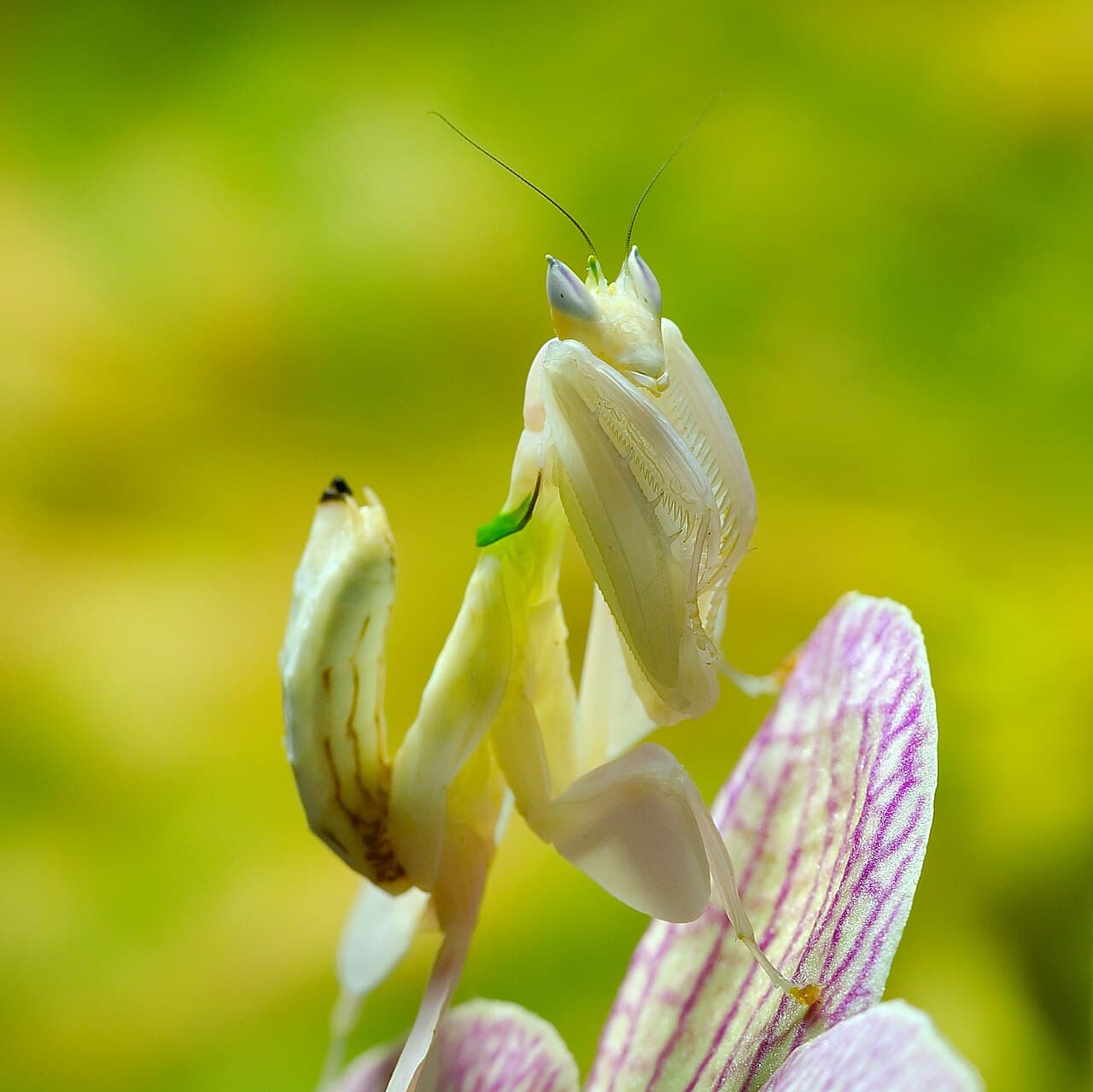
An orchid mantis does more than disappear against a flower. Research has shown that its flower-like appearance can attract visiting insects—even when it is not sitting on a real blossom.
That turns a pretty disguise into a remarkable hunting strategy.
A flower shape with grasping legs
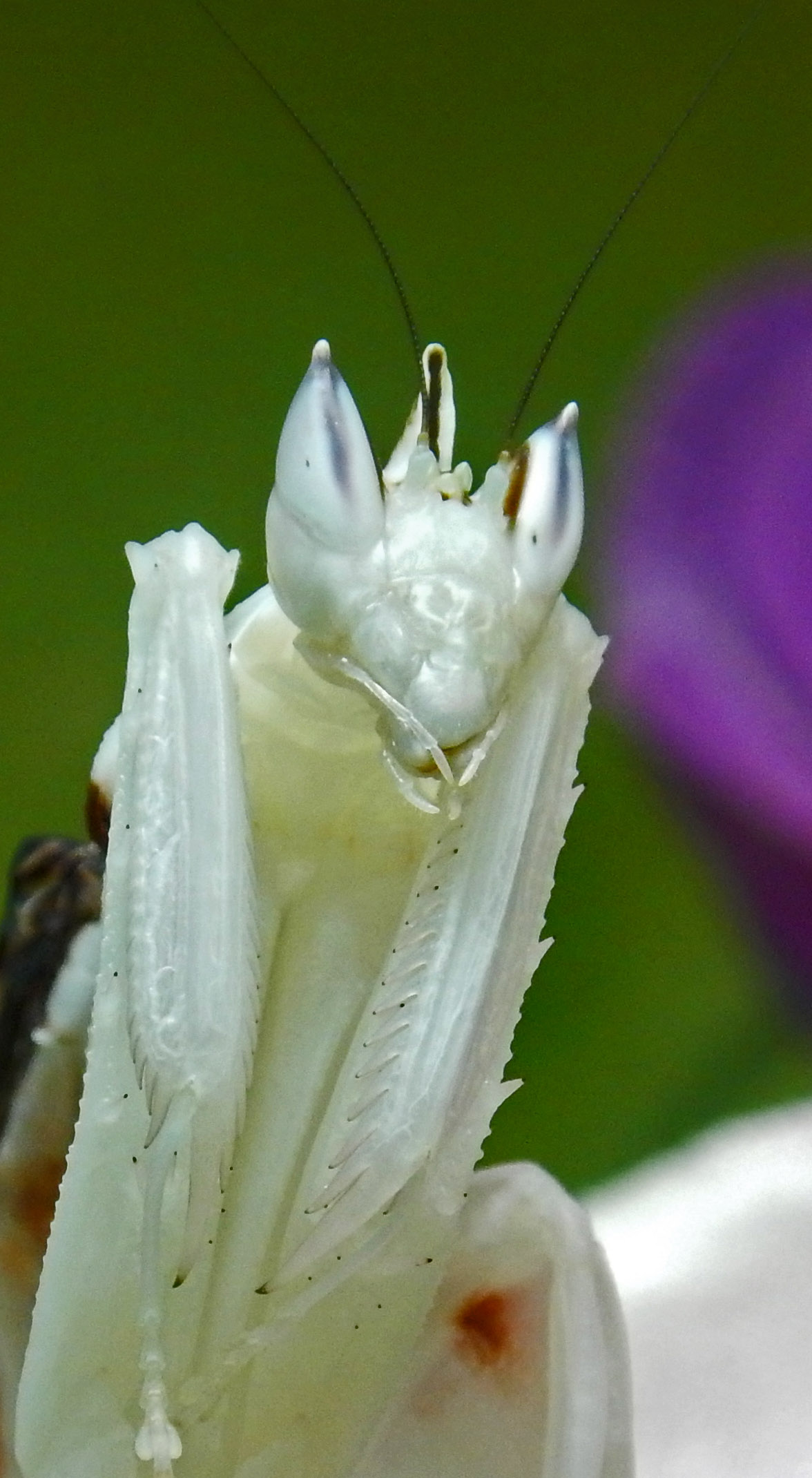
The orchid mantis, Hymenopus coronatus, lives in Southeast Asia. Pale colors and broad, petal-like leg lobes help create its floral appearance.
Its front legs are built to seize prey. The apparent blossom is a predator waiting for an insect to come close enough.
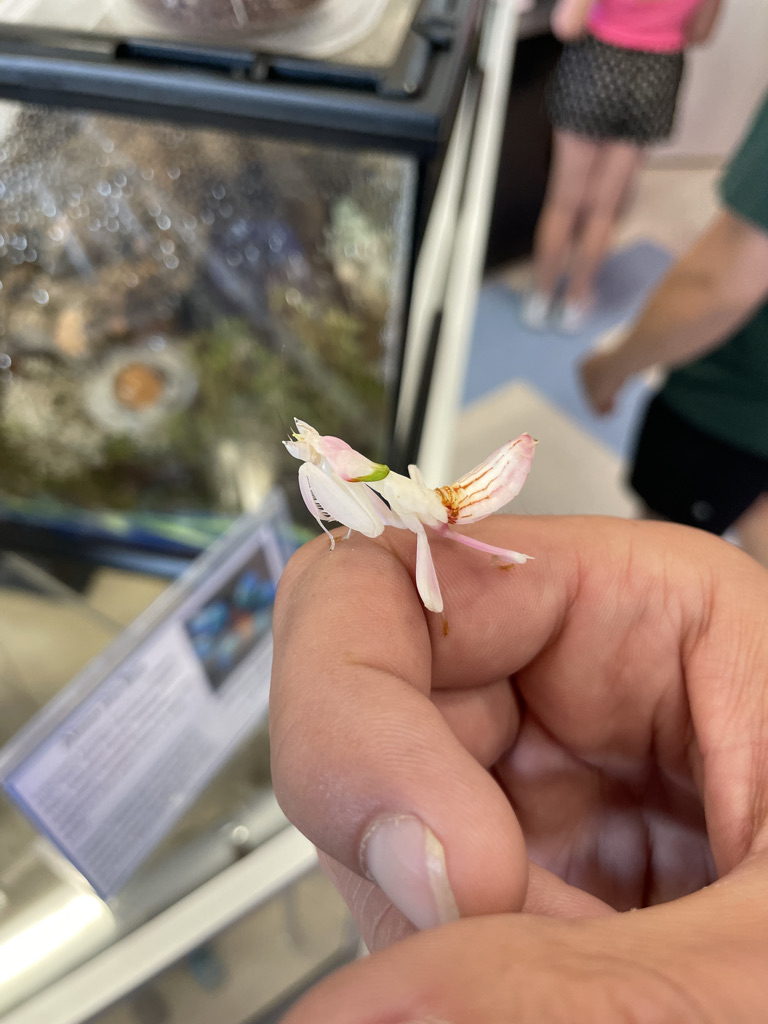
Not every individual or life stage looks identical, and photographs often show the most striking pale examples.
Scientists tested the illusion
Researchers did not rely only on the fact that the mantis looks flowery to human eyes. They studied its appearance in relation to insect vision and tested visits by wild pollinators.
The original study, “Pollinator Deception in the Orchid Mantis”, found evidence that the mantis could attract pollinators.
Macquarie University's account of the research explains why the result was surprising: resemblance could help draw prey toward the animal, rather than merely hide it.
It need not copy one orchid
The common name can suggest an insect perfectly copying one particular orchid species. The research supports a more interesting picture: floral signals can work without an exact match to a single flower.
A hungry visitor may respond to an appealing combination of shape and color. The mantis benefits when that response brings prey within striking distance.
A beautiful predator in a living system
The experiments demonstrate attraction under studied conditions; they do not mean every visiting insect is fooled or every hunt succeeds.
Appreciating the orchid mantis means seeing both beauty and behavior. What looks like a delicate petal arrangement is a living hunter—and its success depends partly on how another creature sees the world.
Photo credits
Featured image: Luc Viatour; Wikimedia Commons source; CC BY-SA 3.0. Resized for web display.

Body image 1: Lamiot; Wikimedia Commons source; CC BY-SA 4.0. Resized for web display.

Body image 2: Fungus Guy; Wikimedia Commons source; CC BY-SA 4.0. Resized for web display.
