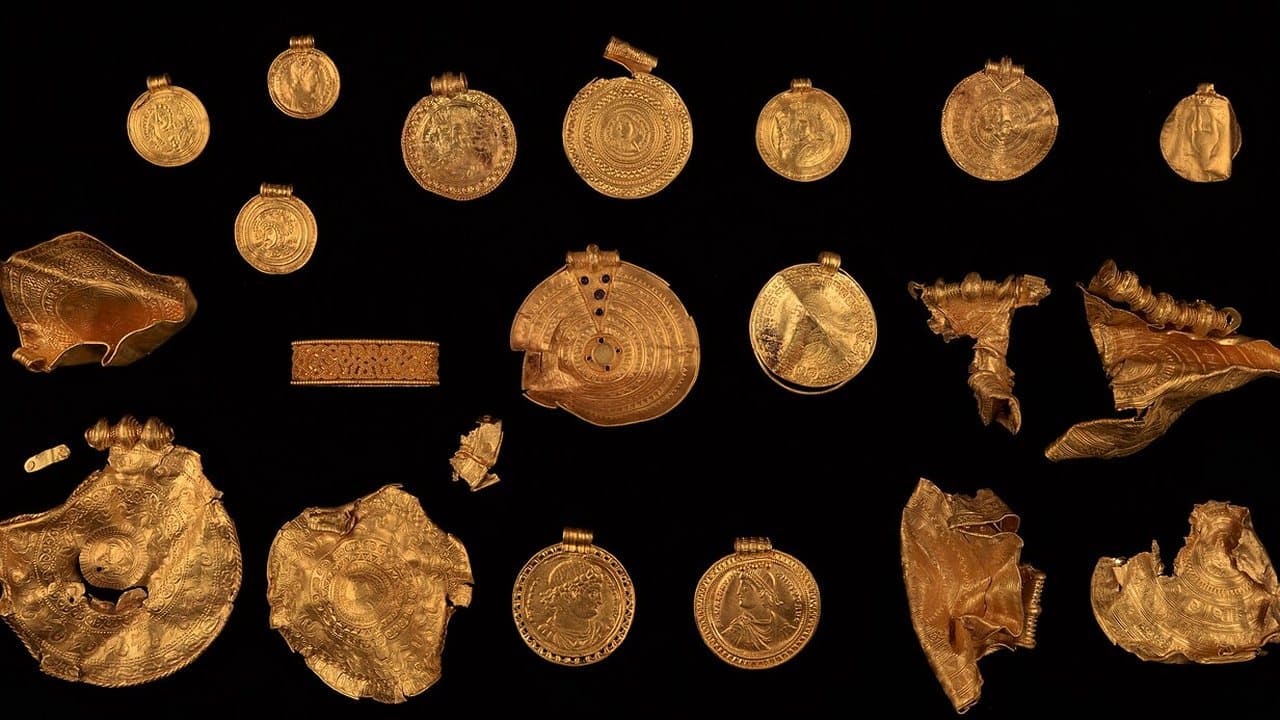
Ole Ginnerup Schytz had only recently bought a metal detector when he took it onto a friend's field near Jelling, Denmark. Within hours, his new hobby had led to an extraordinary find: gold objects buried for roughly 1,500 years.
The discovery became known as the Vindelev Hoard. Its importance grew as archaeologists studied what Schytz and his old schoolmate, Jørgen Antonsen, had brought to light.
A field visit in December 2020
Vejle Museums describes Schytz's first encounter with the treasure. Antonsen had allowed him to try the detector on his land. The finds soon brought professional archaeologists into the story.
A 2022 account in the Danish archaeological magazine Skalk dates the discovery to Christmas 2020 and records 23 pieces weighing 794 grams. The collection is generally described as about 800 grams of gold.
The weight was striking, but so were the craftsmanship and the information the objects carried.
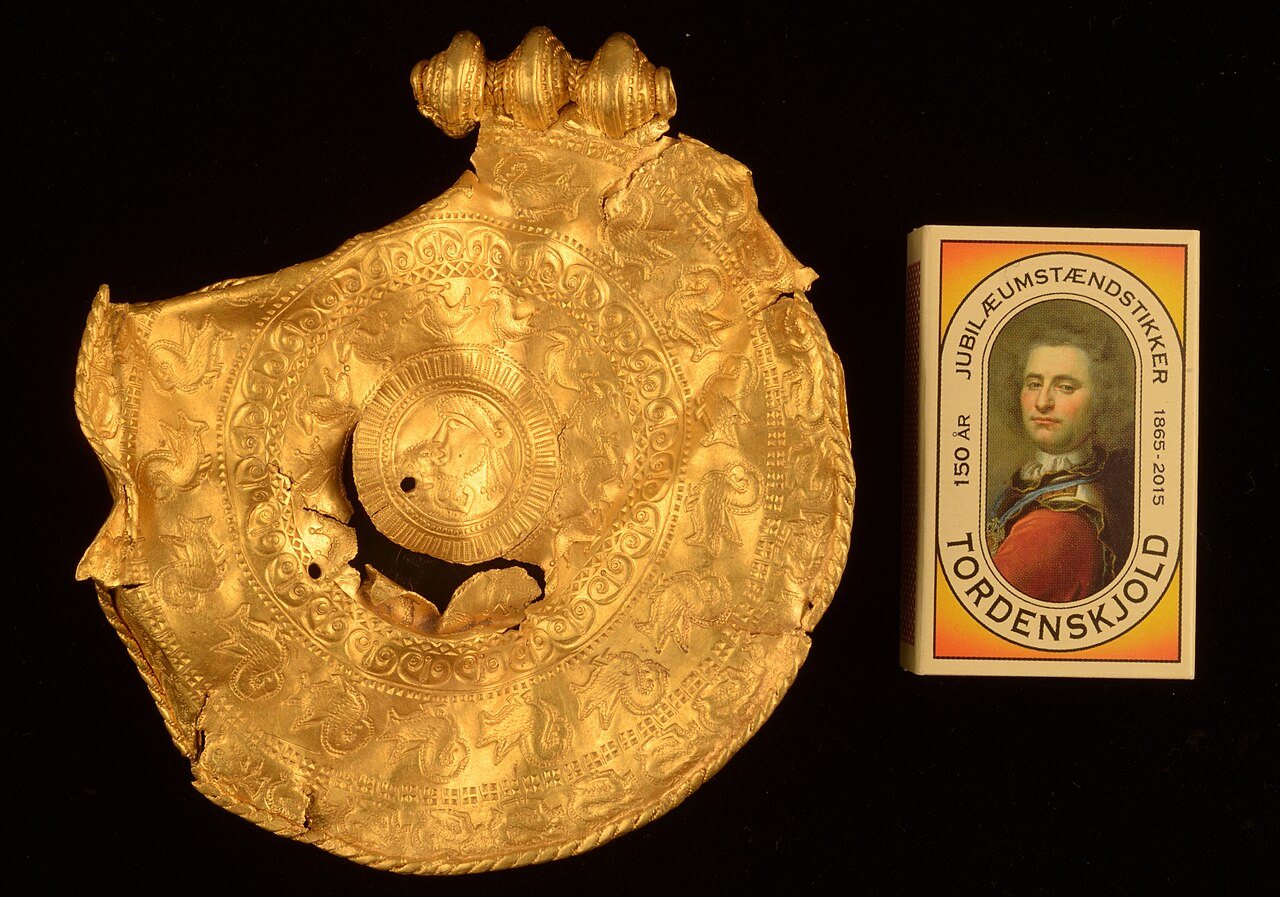
Photo: Vejlemuseerne / Konserveringscenter Vejle. Source. CC BY-SA 4.0. Resized; JPEG conversion. Image adaptation shared under the same CC BY-SA 4.0 license.

What the gold revealed
Archaeologists from Vejle Museums worked with specialists from the National Museum of Denmark. Excavation connected the deposit with a settlement and a longhouse.
The collection includes thin gold pendants known as bracteates, decorated with figures, symbols and runes. Roman medallions had also been turned into jewelry.
A National Museum research announcement in 2024 explored what the medallions suggested about the owner's connections with an elite extending beyond the local community.
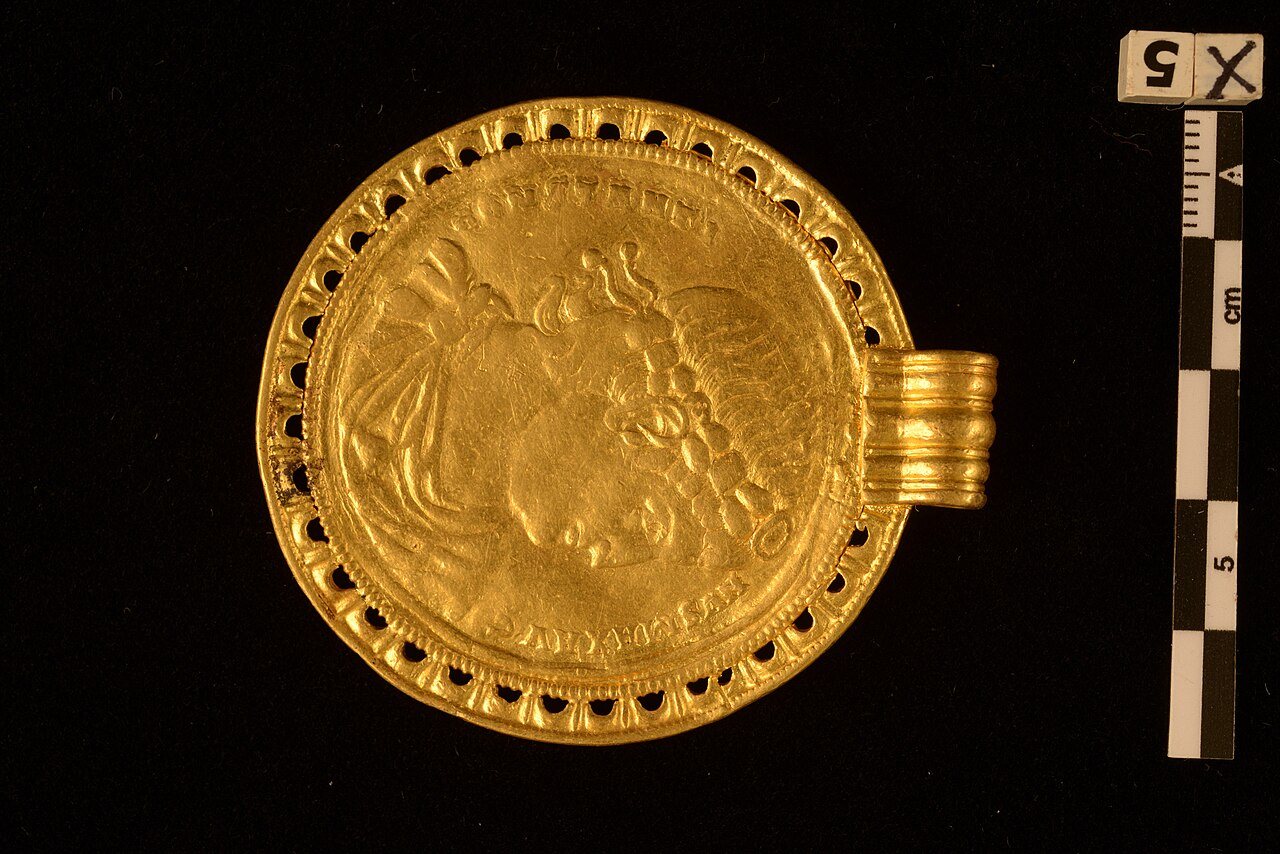
Photo: Vejlemuseerne / Konserveringscenter Vejle. Source. CC BY-SA 4.0. Resized; JPEG conversion. Image adaptation shared under the same CC BY-SA 4.0 license.

A discovery that kept producing discoveries
In 2023, researchers announced an early written reference to Odin on one of the gold pieces. The inscription added a new dimension to the find, linking it with the study of early religious beliefs.
The discovery and the interpretation happened at different times. Schytz's detector located the objects in 2020; conservation, excavation and specialist research continued afterward.
A new hobby had opened a window onto an ancient community. Each stage of study has helped turn objects found in a field into evidence about the people who made, wore and buried them.
Featured image: Objects from the Vindelev gold hoard, discovered in Denmark in 2020. Photo: Vejlemuseerne / Vejle Konserveringscenter. Source. CC BY-SA 4.0. Cropped to 16:9 and resized. Image adaptation shared under the same CC BY-SA 4.0 license.
