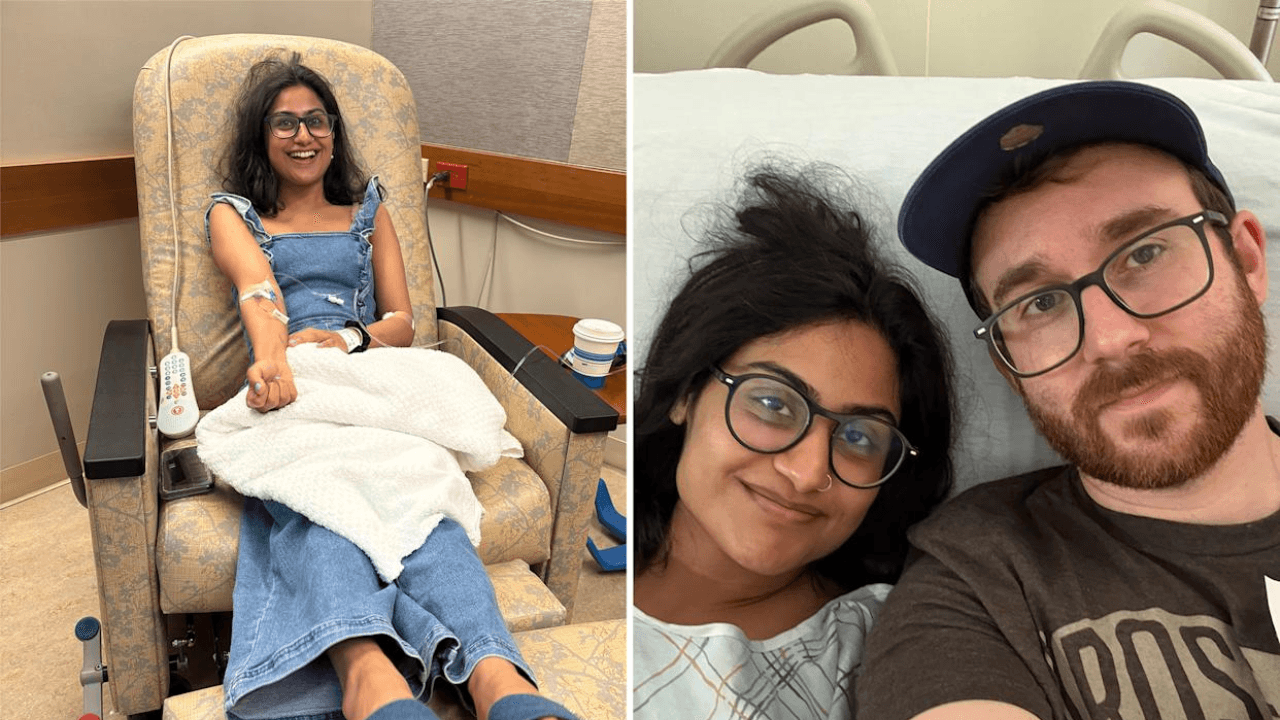
A young woman who thought she was dying is now cancer-free.
Mrinali Dhembla, 26, was diagnosed with Stage 3 rectal cancer that had spread to her spine. Less than a year later, she was declared cancer-free after receiving a new form of immunotherapy treatment.

A Shocking Diagnosis at 26
Dhembla said her symptoms began with severe back pain and fatigue. At first, she did not believe the diagnosis.
“That’s not possible. I’m just 26 years old,” she recalled thinking when doctors told her she had cancer.
Her story reflects a growing trend. Colorectal cancer cases are rising among younger adults, according to the American Cancer Society.
The Genetic Factor Behind Her Cancer
Doctors discovered that Dhembla had Lynch syndrome, a genetic condition that increases the risk of several cancers.
The Centers for Disease Control and Prevention states that Lynch syndrome is the most common cause of inherited colorectal cancer.
This condition affects how the body repairs DNA, allowing cancer cells to grow more easily.
A Breakthrough Treatment Approach
Dhembla became one of the first patients to receive a dual immunotherapy treatment. This approach works by helping the immune system recognize and attack cancer cells.
Dr. Nicholas Hornstein, an oncologist involved in her care, said patients with Lynch syndrome respond well to this method.
“It gives the immune system a boost to eliminate tumors,” he explained.
Life Without Chemotherapy
Unlike traditional cancer treatments, Dhembla avoided chemotherapy and radiation. She received three infusions over four months.
During treatment, she was strong enough to run a 5K race. This level of activity is rare for patients undergoing cancer therapy.
Doctors say the benefits of immunotherapy can last for years, and in some cases, decades.
A New Chapter After Cancer
In July 2025, doctors declared Dhembla cancer-free. She has since traveled and is planning her wedding.
Her experience has become a message of hope for others facing similar diagnoses.
She now urges people to listen to their bodies and seek medical care early if something feels wrong.
Why This Matters
This case highlights a major shift in cancer treatment. Immunotherapy is changing how doctors treat certain cancers, especially in younger patients.
As cases rise among people under 50, early detection and new treatments could save more lives.
For Dhembla, the breakthrough came just in time. Her story shows how fast medical science is evolving and how it can change outcomes once thought impossible.