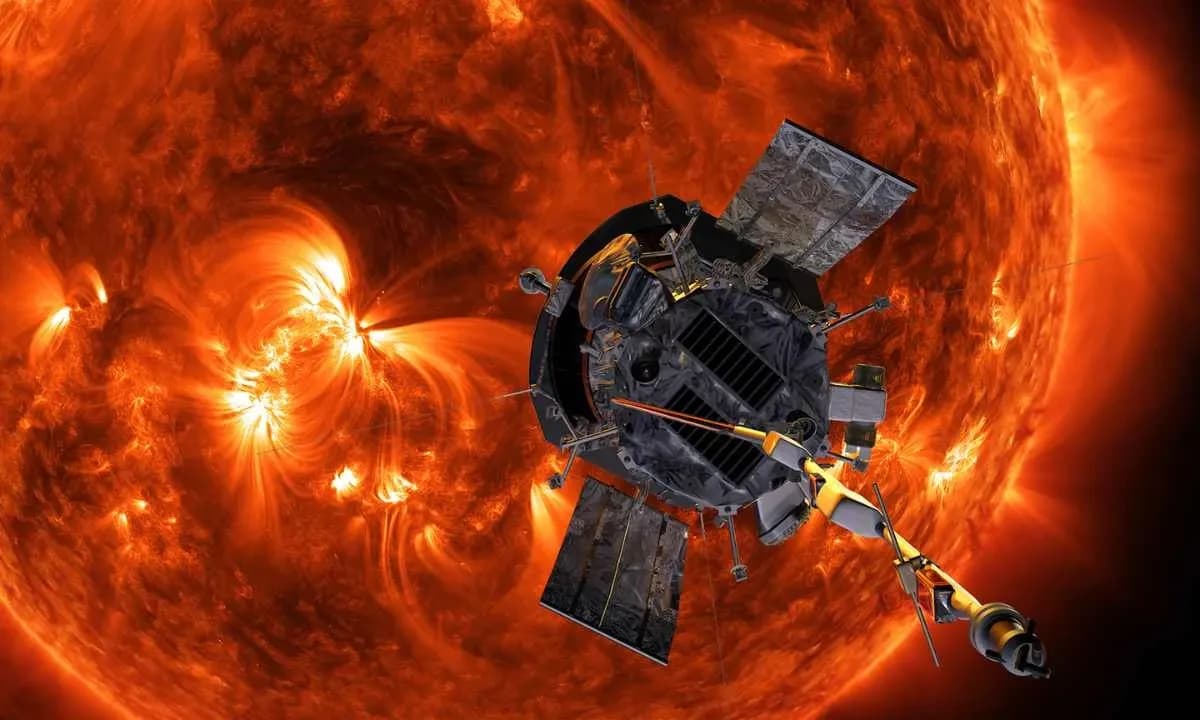
On Christmas Eve, NASA’s Parker Solar Probe will make history by flying closer to the Sun than any spacecraft before it. This daring journey will take it within just 3.8 million miles (6.1 million kilometers) of the solar surface, achieving what has long been considered impossible. The probe will move at an astonishing speed of 430,000 miles per hour (692,000 kilometers per hour). It will also become the fastest human-made object ever. To put that speed into perspective, it could travel from Washington, D.C., to Tokyo in under a minute!
Since its launch on August 12, 2018, this ambitious mission has been laying the groundwork for groundbreaking discoveries. Named after Dr. Eugene Parker, the pioneering astrophysicist who revolutionized our understanding of solar phenomena, the probe’s journey represents a monumental step in space exploration. Let’s have a closer look at why the Sun is NASA’s sudden interest.
Historic Flyby: Parker Solar Probe’s Record-Breaking Mission
The Parker Solar Probe is no stranger to pushing boundaries. It has already flown past the Sun 21 times, each approach bringing it closer. But this flyby is the most significant yet, bringing it just four centimeters from the Sun if the Sun and Earth were scaled to be one meter apart.
Mission Goals
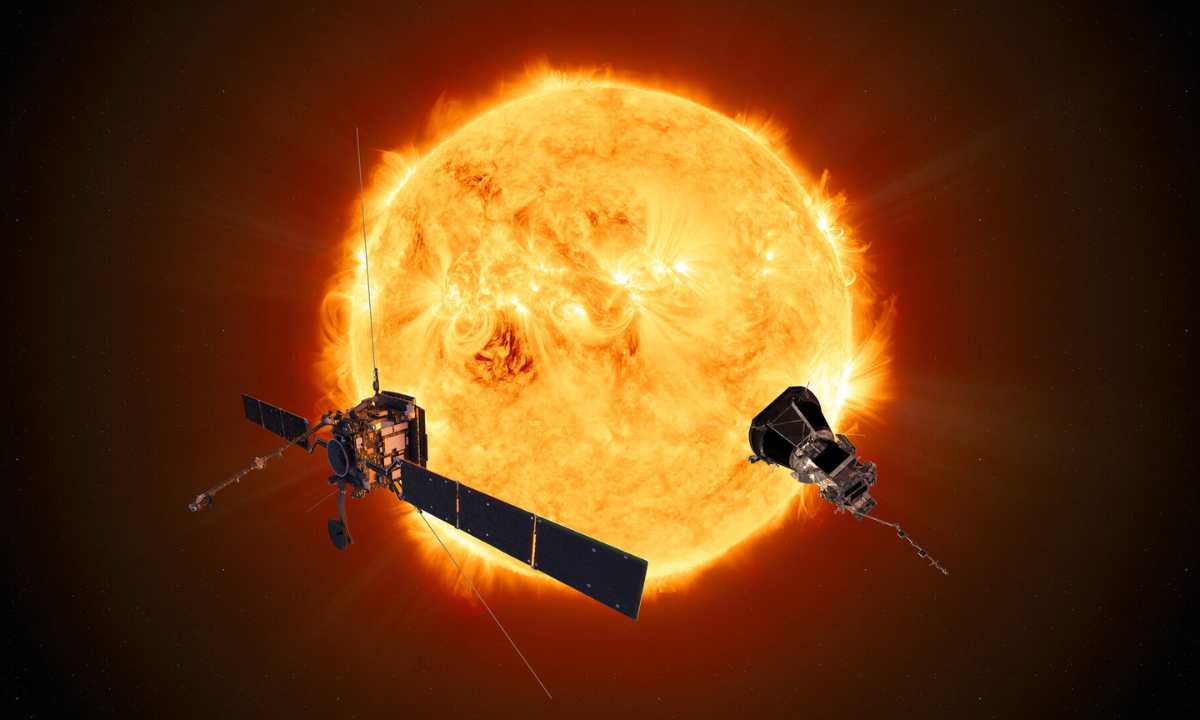
The spacecraft aims to achieve two major objectives:
- Explore the Sun’s Corona: The outer atmosphere of the Sun, known as the corona, is a region of mystery for scientists. Surprisingly, it is much hotter than the Sun’s surface, and no one knows why. Dr. Jenifer Millard explains, “The surface of the Sun is about 6,000°C, but the corona reaches millions of degrees, even though it’s farther from the Sun. How is that atmosphere getting hotter?”
- Understand Solar Winds: These streams of charged particles emanate from the corona and interact with Earth’s magnetic field, creating phenomena like auroras. However, solar winds can also disrupt power grids, satellites, and communication systems.
By studying these phenomena, scientists hope to unlock secrets about the Sun that could transform our understanding of space weather and its impact on Earth.
Engineering Marvel: Parker Solar Probe’s Design
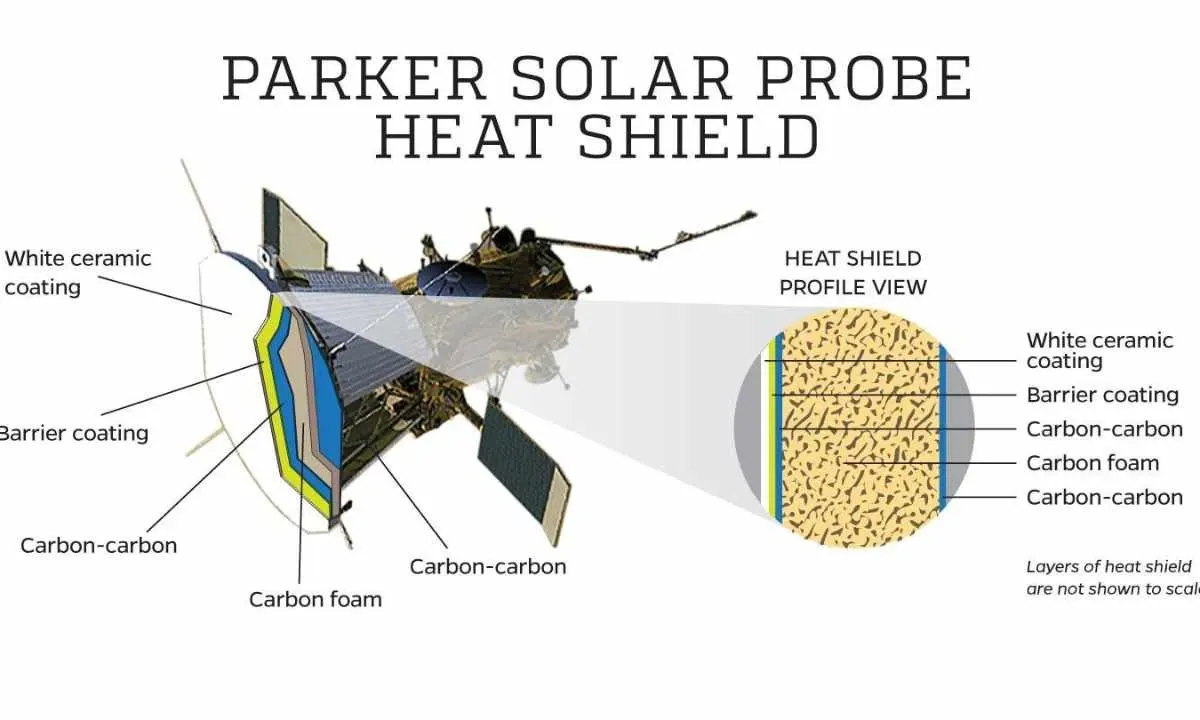
Surviving the Sun’s extreme environment requires extraordinary engineering. The probe is shielded by an 11.5 cm (4.5 inches) thick carbon-composite barrier, allowing it to endure temperatures up to 1,400°C and withstand intense radiation. This innovative design ensures the probe can “touch” the Sun without being destroyed.
As Dr. Nicola Fox, NASA’s head of science puts it, “We can’t really experience the atmosphere of our star unless we fly through it.” The spacecraft’s design reflects humanity’s determination to explore the unexplored, even under brutal conditions.
Risks and Challenges
The Parker Solar Probe faces immense challenges. The temperatures and radiation levels near the Sun are enough to “fry” most electronics. Precision navigation is crucial to avoid a catastrophe during its high-speed flyby.
Adding to the tension, the probe will lose communication with Earth during this approach, leaving scientists anxiously waiting for a signal on December 27. NASA has a unique protocol in place: as soon as the spacecraft sends its first signal, the team will receive a green heart emoji to confirm it has survived. Dr. Fox shared her nervousness about the mission, admitting, “I will worry about the spacecraft. But we really have designed it to withstand all of these brutal conditions.”
This phase of the mission highlights not only the risks but also the resilience of cutting-edge technology and the team behind it.
Why “Touch” the Sun?
Despite the dangers, the mission holds immense scientific value. Here’s why it matters:
- The Corona’s Heat Mystery: Scientists are eager to understand why the corona is much hotter than the Sun’s surface, a puzzle that defies conventional physics.
- Solar Winds and Space Weather: By studying how solar winds form and behave, scientists can better predict space weather events that might disrupt life on Earth.
Dr. Millard emphasizes the importance of understanding the Sun, saying, “The Sun’s activity impacts our everyday lives on Earth.” From dazzling auroras to potential threats to communication systems, this research is critical for both scientific knowledge and practical applications.
The Journey So Far
Since its launch in 2018, the Parker Solar Probe has achieved incredible milestones. With 21 successful flybys under its belt, it has steadily moved closer to the Sun, providing invaluable data about heliophysics—the study of the Sun and its influence on the solar system.
Dr. Millard explains the broader significance: “Understanding the Sun, its activity, space weather, and the solar wind is so important to our everyday lives on Earth.” The probe’s journey not only advances science but also underscores humanity’s unyielding curiosity about the universe.
Conclusion
The Parker Solar Probe’s record-breaking Christmas Eve flyby represents a giant leap for science and space exploration. Its journey reminds us of humanity’s relentless drive to uncover the mysteries of the universe. As we await its findings, this mission stands as a testament to our ability to dream big and push the limits of what’s possible.
Also read,