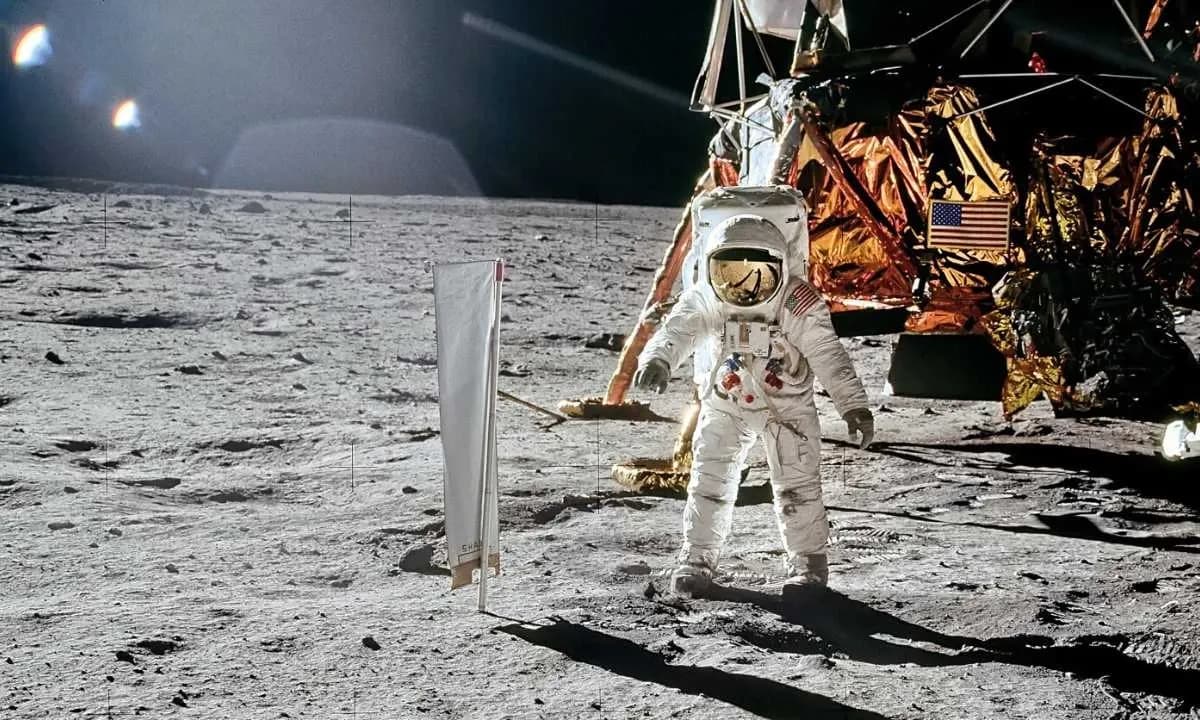
On July 20, 1969, more than 600 million people across the globe paused. Some were gathered around black-and-white television sets. Others listened on crackling radios. All were waiting to hear the words that would mark a new era in human history:
“That’s one small step for man, one giant leap for mankind.”
With those words, Neil Armstrong became the first human to set foot on the Moon, followed shortly after by Buzz Aldrin. What followed wasn’t just a technical triumph for NASA—it was a moment that transcended borders, ideologies, and even conflict. For a brief time, the world became one.
Apollo 11: The Journey to the Impossible
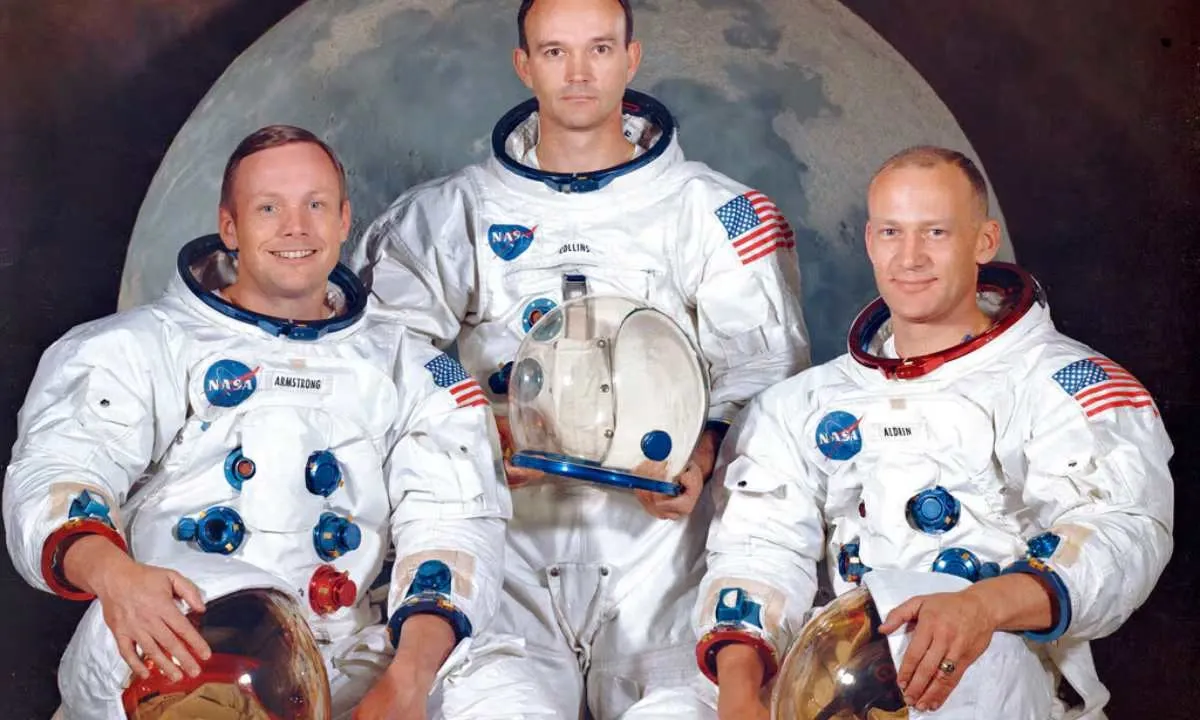
The Moon landing was the result of years of bold ambition, scientific risk, and human courage. The mission, launched by the Apollo 11 spacecraft, carried three astronauts: Neil Armstrong, Buzz Aldrin, and Michael Collins.
While Collins remained in orbit, Armstrong and Aldrin descended to the Moon’s surface in the lunar module “Eagle.” On July 20, 1969, at 10:56 p.m. EDT, Armstrong’s boot pressed into lunar dust—marking the first time humans had ever set foot on another celestial body.
Two Hours That Changed Everything
Armstrong was soon joined by Aldrin. The pair spent 2 hours and 15 minutes outside the spacecraft. During that time, they:
- Collected rock and soil samples
- Planted the American flag
- Took photographs of each other and the terrain
- Conducted basic scientific experiments
But perhaps the most powerful moment wasn’t a photo or a flag—it was the plaque they left behind.
A Plaque for All Mankind
Fixed to the lunar module was a metal plaque, etched with a simple but powerful message:
“Here men from the planet Earth first set foot upon the Moon, July 1969 A.D. We came in peace for all mankind.”
In the middle of the Cold War—when nations were divided by ideology, war, and fear—this was a declaration not of conquest, but of cooperation and peace. The Moon landing wasn’t just an American victory. It was a human victory.
The World Reacts: 600 Million Eyes on the Moon
The Moon landing was broadcast live, and an estimated 600 million people watched. That made it the largest television audience in history at the time. Streets were quiet, workplaces paused, and families gathered in living rooms. In cities from Tokyo to London to Cape Town, people stopped what they were doing to witness the unimaginable.
Despite differences in language or politics, the world shared the same awe, the same silence, and the same tear-filled pride.
July 20, 1969. “Contact light, engine stop.” The Apollo 11 lunar module Eagle touched down at Tranquility Base on the Moon.
— Dr. Buzz Aldrin (@TheRealBuzz) July 20, 2025
A few hours later, Neil Armstrong and I stepped foot on the Moon, with Michael Collins orbiting close-by.
An achievement resulting from years of… pic.twitter.com/VN4qCoHx0K
Why It Still Matters Today
In today’s world, headlines are often filled with division. But the memory of the Moon landing reminds us of what’s possible when we look beyond borders and work together. That moment showed us:
- The power of human cooperation
- The beauty of peaceful ambition
- That shared awe can bring us together—even from 240,000 miles away
The legacy of Apollo 11 continues through new missions, international partnerships in space, and global interest in science and exploration.
Final Thought
The Moon landing didn’t just lift two men into space. It lifted an entire planet’s hopes.
In a time when Earth was divided by conflict, we looked up and saw a single bootprint on lunar soil. It told us something deeply human:
That together, we are capable of the impossible.