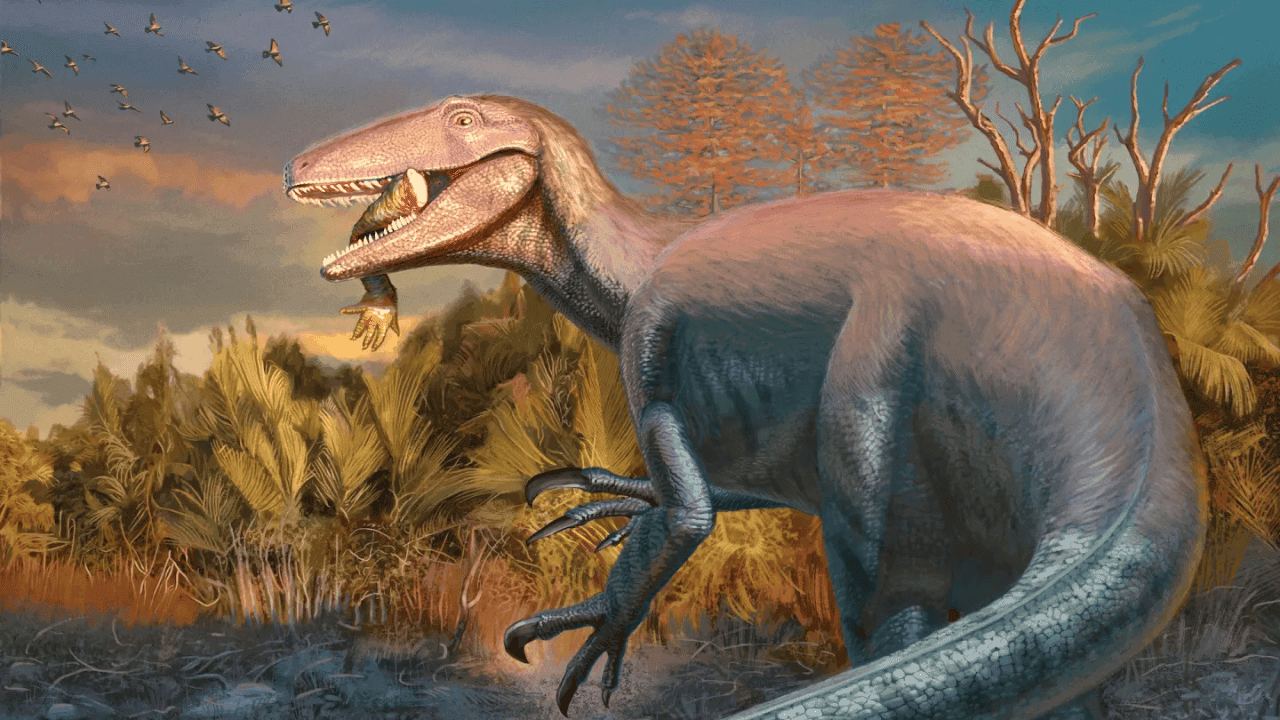
In the rugged landscapes of Argentina, beneath layers of sediment, a remarkable discovery has emerged. Paleontologists have uncovered a colossal dinosaur species named Joaquinraptor casali, one of the most complete megaraptors ever found. The skeleton stretches over 23 feet long and weighs more than a ton, envisioned as a swift predator prowling its territory during the late Cretaceous period.
Imagine the surprise of the research team when they unearthed this magnificent creature, only to find that it died with its last meal still firmly locked in its jaws. It wasn’t just any last meal; the remains indicate it was feasting on an ancient crocodile. This astounding detail paints a portrait of a fierce hunter engaged in its final act of survival—a scene frozen in time.
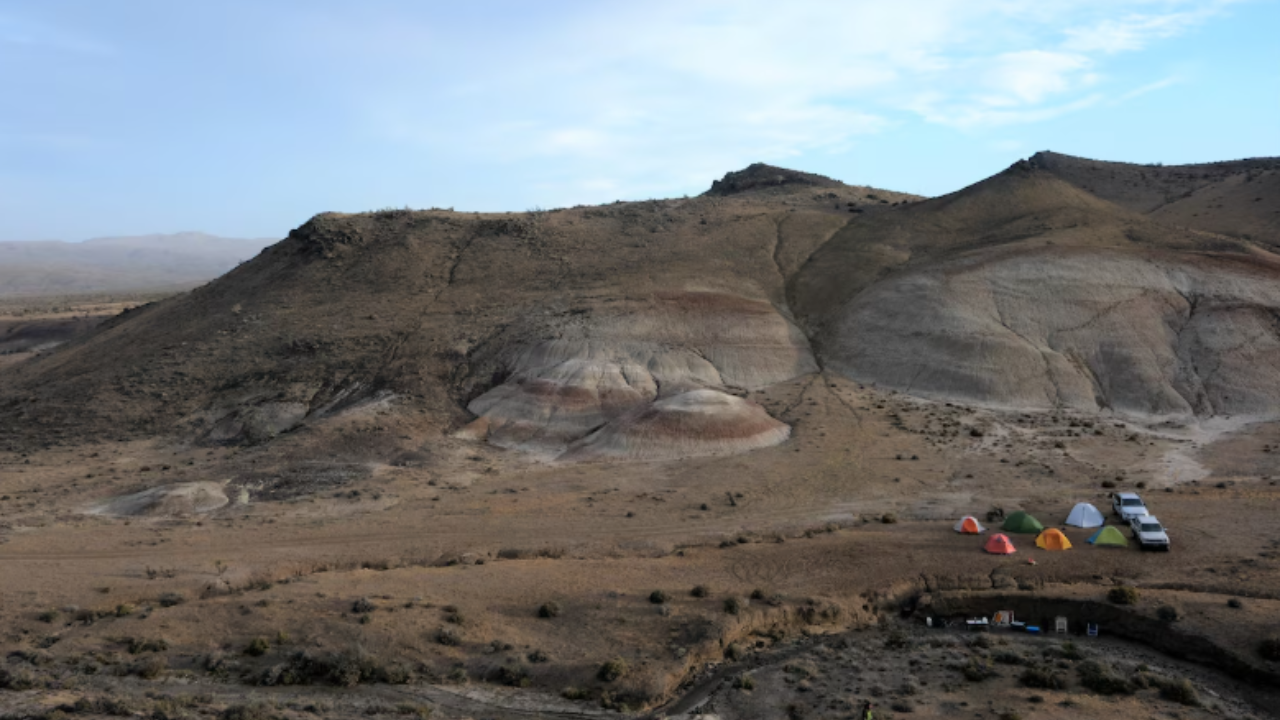
The dig site, located in southern Argentina’s Chubut province, has become a treasure trove for paleontologists. Every brush stroke against the earth brings them closer to understanding the lives of megaraptors, a group of large predatory dinosaurs that once reigned supreme. This discovery is invaluable as it sheds light on the diet, habits, and environment of these apex predators.
Dr. Casali, the lead paleontologist and namesake of this species, expressed excitement about the implications of their findings. He remarked,
‘Finding a dinosaur locked onto its last meal is profoundly rare and offers us a unique glimpse into its lifestyle… It reveals the predator-prey dynamics of its ecosystem.’
The fact that both the megaraptor and its prey can be studied simultaneously allows scientists to piece together a more comprehensive picture of life 70 million years ago. The crocodile’s fragments, found intertwined with the jaw of Joaquinraptor, suggest that these predators had formidable hunting skills and a dietary preference that included large reptiles.
This giant, nicknamed by some as the ‘claws like hedge trimmers,’ used its powerful forelimbs, equipped with sharp claws, to subdue its prey. What made this discovery all the more compelling was the revelation that such megaraptors were not merely scavengers but skilled hunters that actively engaged with their environment.
The aftermath of this find has sparked immense interest in the scientific community and beyond. Museums are eager to showcase the fossil, and educational programs aim to enlighten the public about this significant predator. Even online, discussions have erupted, with enthusiasts and amateur paleontologists sharing their excitement and theories regarding megaraptor behavior and ecology.
As paleoictorians work on reconstructing the life habits of Joaquinraptor casali, they also ponder deeper questions: What did the world look like during its reign? How did it relate to other large carnivores of its time? The tantalizing details of its life and death urge us to dive deeper into the mysteries of prehistoric life and evolution.
With each discovery, the past unfurls before us, challenging our understanding and kindling our curiosity. Yet, the questions remain—what other secrets lie buried beneath the earth, waiting to astonish us again?
Disclosure: We may earn a commission when you make a purchase through the ads.