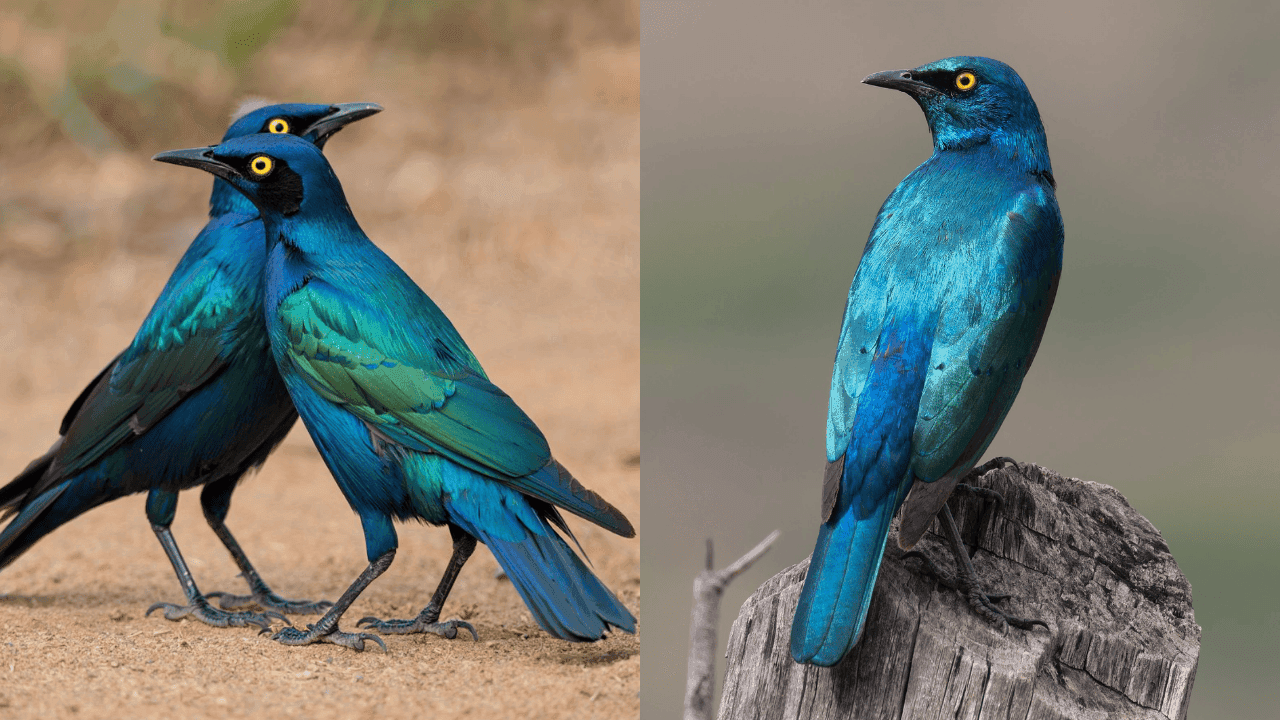
In the heart of Africa’s savannas, a true jewel glimmers in the sunlight — the Greater Blue-Eared Starling. Its shimmering plumage shifts from deep cobalt blue to a brilliant emerald green, catching the eyes of both nature lovers and casual observers alike.
This enthralling bird, known scientifically as Lamprotornis chalybaeus, is more than just a visual masterpiece. Its piercing orange eyes seem to hold wisdom far beyond its years, giving it an almost mystical presence among the vast grasslands. From Senegal to Ethiopia, these starlings have become a common sight, filling the air with sounds that mimic the world around them.

Their mimicry skills are astonishing. A Greater Blue-Eared Starling can effortlessly replicate whistles, clicks, and even the songs of other birds in its vicinity. Observers have reported hearing these starlings imitate the calls of nearby parrots and other songbirds. It’s a delightful symphony of sound that transforms the mundane savanna into a vibrant stage of nature’s music. According to research, these birds are among the best mimics in the avian world, often copying various sounds, including human-made noises like car alarms and mobile ringtones.
As if this ruby of the wild wasn’t captivating enough, its social behavior adds another layer of intrigue. These starlings are known to compete fiercely with other species for nesting sites, often pushing lesser species out of prime spots. The impressive ear patch, a signature of its striking appearance, sets it apart from similar species, making it a dominant figure among the starlings of Africa.
Visitors to Kenya and beyond may find themselves enchanted by these brilliant birds. Their fearless nature allows them to forage among tourists in search of food, showcasing their familiarity with human presence. This interaction not only highlights their intelligence but also fosters a connection between wildlife and humanity.

Yet, despite their stunning beauty and captivating behavior, the Greater Blue-Eared Starling faces challenges like habitat loss and changes in land use. Though currently listed as of Least Concern, the fate of these birds hinges on conservation efforts and awareness of their habitat needs.
Witnessing these remarkable starlings isn’t just a treat for bird watchers; it serves as a reminder of nature’s wonder and the fragile balance we share with it. Each time you hear a whistle that sounds suspiciously out of place, it may just be the Greater Blue-Eared Starling showing off its impressive mimicry.
As we marvel at these dazzling birds, we must consider our role in their survival. How can we better protect their habitats and support their existence in a rapidly changing world? The melodies of the savanna sing a powerful song, but it’s up to us to ensure that the Greater Blue-Eared Starling continues to grace our ears with its enchanting tunes for generations to come.
Disclosure: We may earn a commission when you make a purchase through the ads.