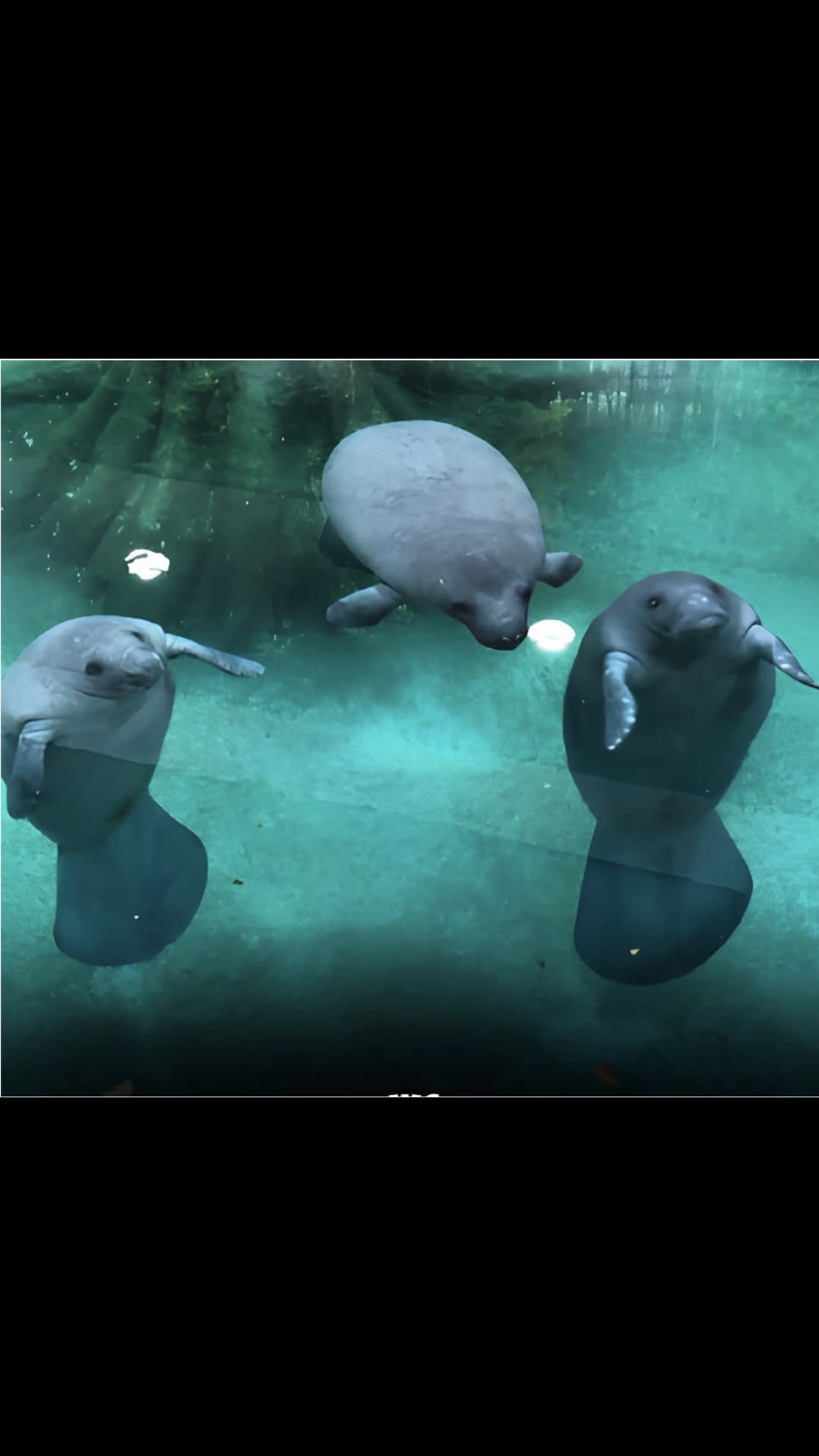
Manatees spend much of their time resting, traveling and grazing on plants. Their reputation as gentle giants is well earned, but a viral claim that they lack any physical means of causing harm goes beyond the biology.
The University of Florida’s wildlife specialists describe Florida manatees as large herbivores that feed extensively on aquatic vegetation.
Gentle does not mean toothless
Manatees have molars. Their teeth are continuously replaced as older ones wear down, an adaptation often called “marching molars.”
The U.S. Fish and Wildlife Service also explains this replacement system. It suits a diet containing material that wears teeth down.
Being a grazing animal does not establish that an individual is biologically incapable of harming another living thing. Nor can a pleasant-looking photograph demonstrate an absence of aggression in every possible circumstance.
Give them room
The appropriate response to a manatee encounter is respectful observation. Florida’s wildlife agency advises viewers to keep their distance, avoid pursuing the animals and refrain from feeding or handling them.
Those precautions protect manatees and allow them to continue resting, moving and feeding. Their calm reputation is a reason to appreciate them, rather than an invitation to interfere.
The animals face documented pressures including collisions with boats, loss of feeding habitat and loss of warm-water refuges. Understanding those needs offers a more useful picture of a manatee’s life than the appealing but absolute claim that it exists without any capacity for harm.