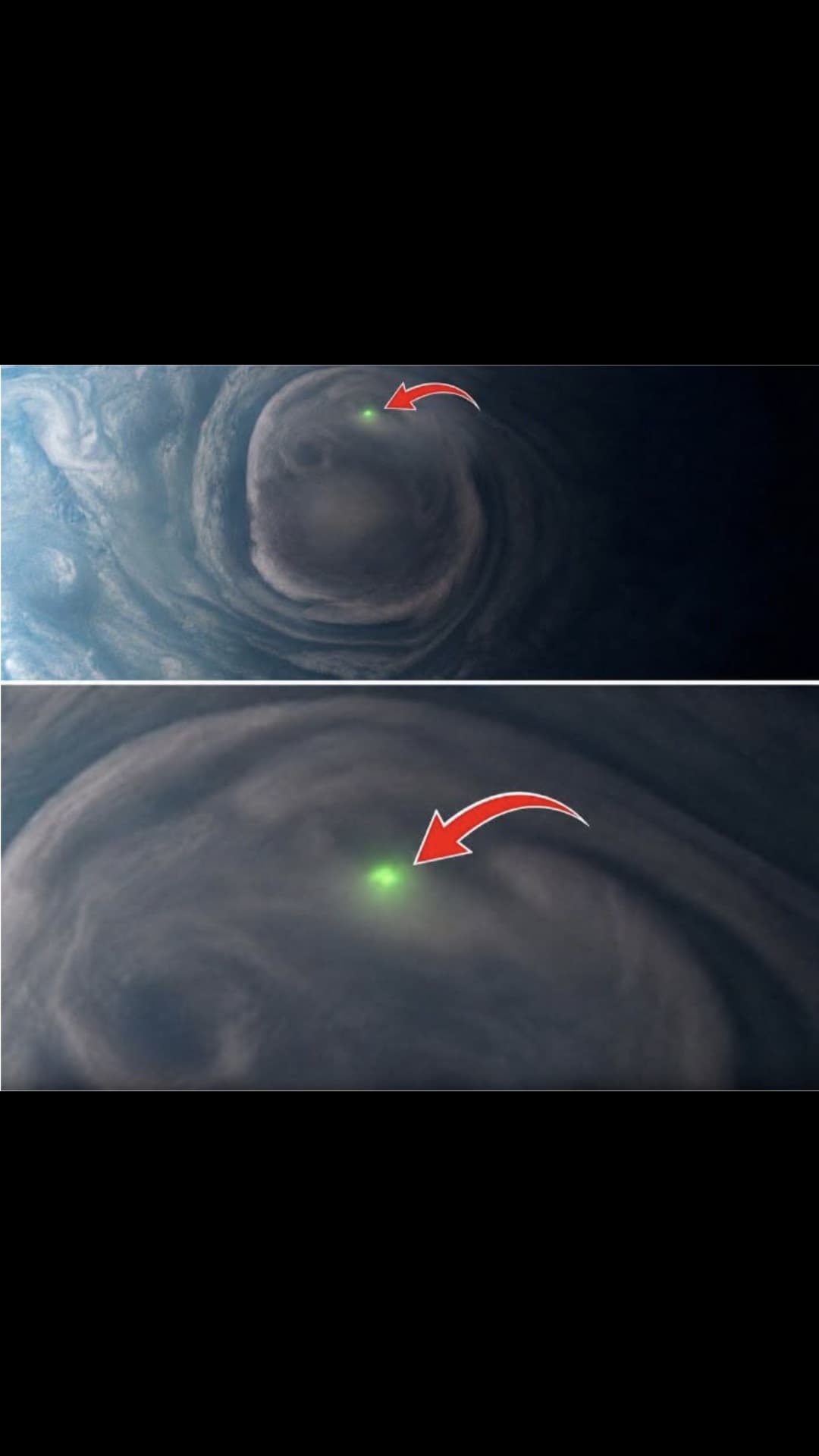
The bright glow in a widely shared Jupiter image has an explanation from NASA: it is light from a lightning bolt.
NASA’s image release identifies the scene as a vortex near Jupiter’s north pole, observed by the Juno spacecraft on December 30, 2020.
A real observation, processed for viewing
At the time, Juno was about 19,900 miles above Jupiter’s cloud tops. Citizen scientist Kevin M. Gill processed the JunoCam data into the published image in 2022.
That processing is part of the image’s provenance. The picture should be described as an enhanced spacecraft image, rather than a view a person would necessarily see looking out a window.
The agency’s identification also means the glow need not be framed as an unexplained signal. Its appearance is unusual, but NASA has supplied a physical interpretation.
What lightning reveals about Jupiter
Juno has provided other evidence of electrical activity in the giant planet’s atmosphere. A 2020 study in Nature reported brief, relatively low-energy flashes associated with shallow electrical storms.
Separate research on possible sprites or elves concerned short-lived ultraviolet emissions high in the atmosphere. Those findings should not be casually merged with this particular JunoCam photograph.
The image is compelling because a small flash appears amid enormous atmospheric structures. Its scientific value comes from that setting and the mission’s measurements, without needing an unsupported claim that researchers have no explanation for it.