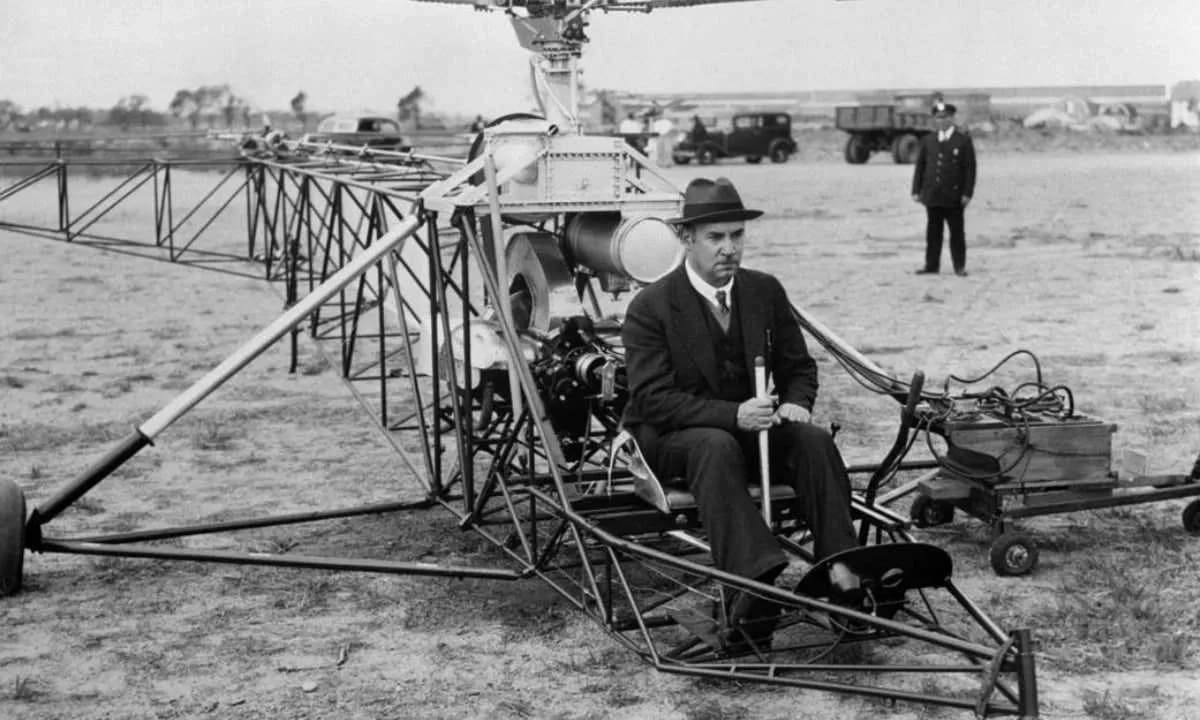
He stood in a tiny workshop in America, clutching the blueprints of his dreams. Igor Sikorsky, an immigrant from Ukraine, envisioned a flying machine that could lift straight up, hover and change the world. But what might sound like a miraculous breakthrough today was met with mockery, derision, and unfathomable challenges in the early 20th century.
Born in Kiev, in 1889, Sikorsky was captivated by flight from a young age. His childhood fascination with Leonardo da Vinci’s ideas about flight laid the groundwork for his later innovations. As he honed his skills in Paris, he achieved early successes with fixed-wing aircraft, sowing the seeds for his future vertical dreams. Yet, while his tenacity flamed bright, the currents of fate often pushed him against the rocks of adversity.
In those days, the skepticism of his peers was palpable. Despite Sikorsky designing the world’s first multi-engine airplane in Russia in 1913 and many fixed-wing successes, engineers would scoff at his idea of a helicopter. The first prototype crashes were devastating, nearly costing him a leg in a near-amputation incident. Each setback fueled the disbelief around him.
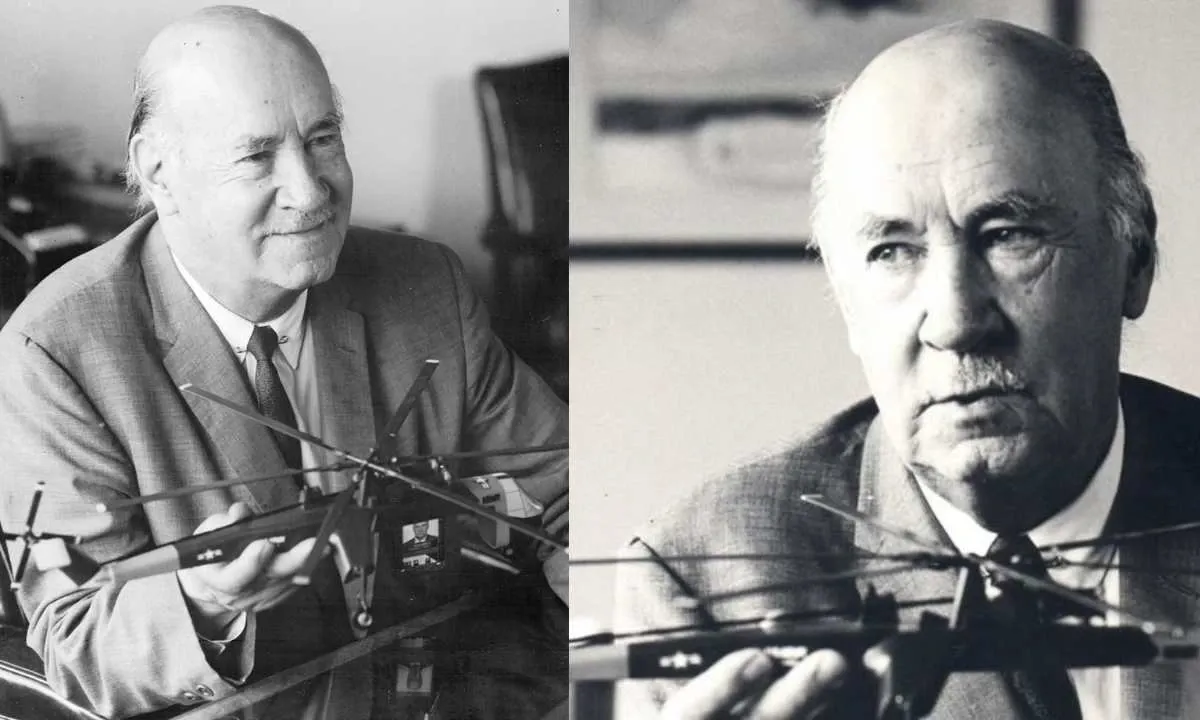
Then came the Russian Revolution of 1917, uprooting his life yet again. With his factory seized and dreams dashed in his homeland, he fled to America, arriving at Ellis Island in 1919. He carried nothing but the tattered blueprints of his helicopter hidden in his luggage, a flicker of hope amidst the uncertainty of exile.
Sikorsky’s early days in America were a hard grind. Working odd jobs and learning English, he faced the formidable hurdles of immigrant life while nurturing his dream. His tiny workshop echoed with the sounds of perseverance and relentless innovation. It was here that Sikorsky transformed from a janitor into an entrepreneur, meticulous in pursuit of his vision.
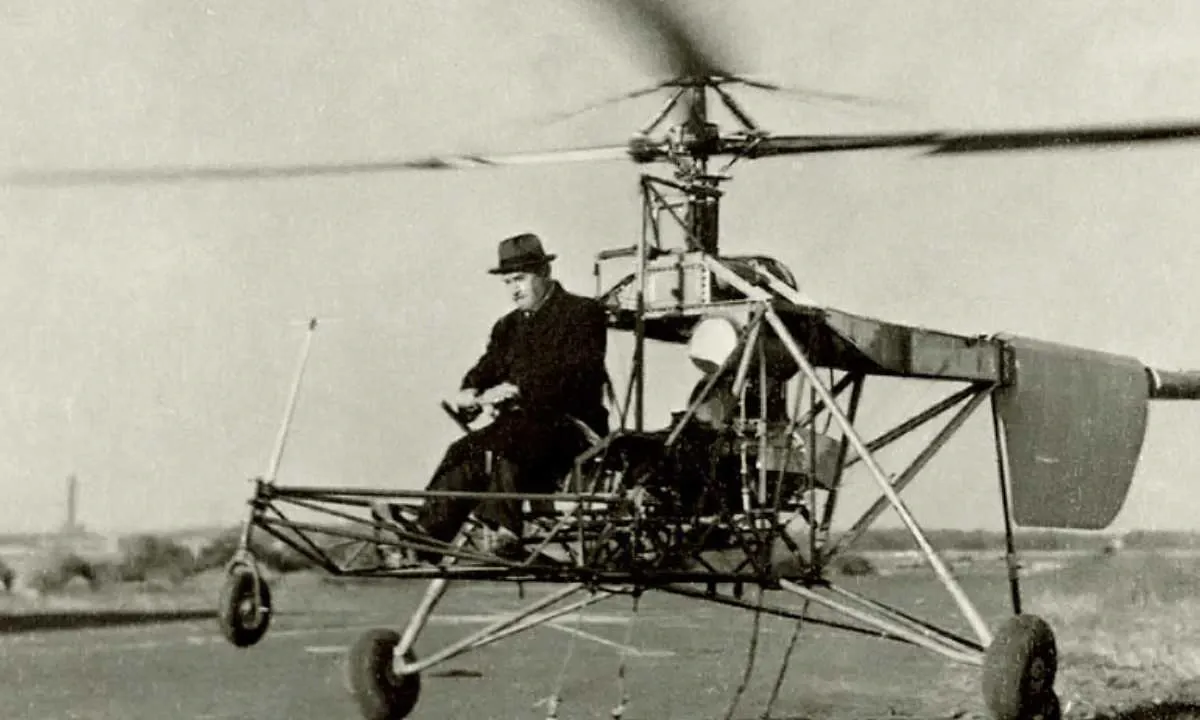
Finally, after years of sacrifice and relentless dedication, March 14, 1939, marked the moment of truth. The VS-300 took to the skies and hovered for the first time. With its single main rotor and innovative tail rotor design, the helicopter lifted off the ground, transcending the boundaries of aviation as nobody had ever seen before. Eyewitnesses were awestruck, exclaiming, ‘It’s like watching a dream come true!’
This pioneering flight was not just another achievement; it was a pivotal moment in aviation history. The VS-300 proved that a helicopter could operate efficiently and handle itself gracefully in the air without requiring two counter-rotating rotors. The world was forever changed.
During the war years that followed, Sikorsky’s invention not only played a vital role in military operations but also shifted several paradigms in aviation technology. The helicopter offered quick evacuation for medics in Korea and Vietnam, becoming a lifeline during emergencies. It enabled offshore oil extraction and became indispensable in mountain rescues, transforming how rescues were conducted.
Sikorsky’s relentless spirit turned the tides from tragedy to triumph, leaving an indelible mark on aviation. His story is a testament to the power of perseverance against overwhelming odds, and a reminder of how one man’s vision can reshape an entire industry. As we reflect on Sikorsky’s journey, we may ask ourselves: What dreams lie within us that, despite ridicule and setbacks, we are willing to pursue with unyielding resolve?